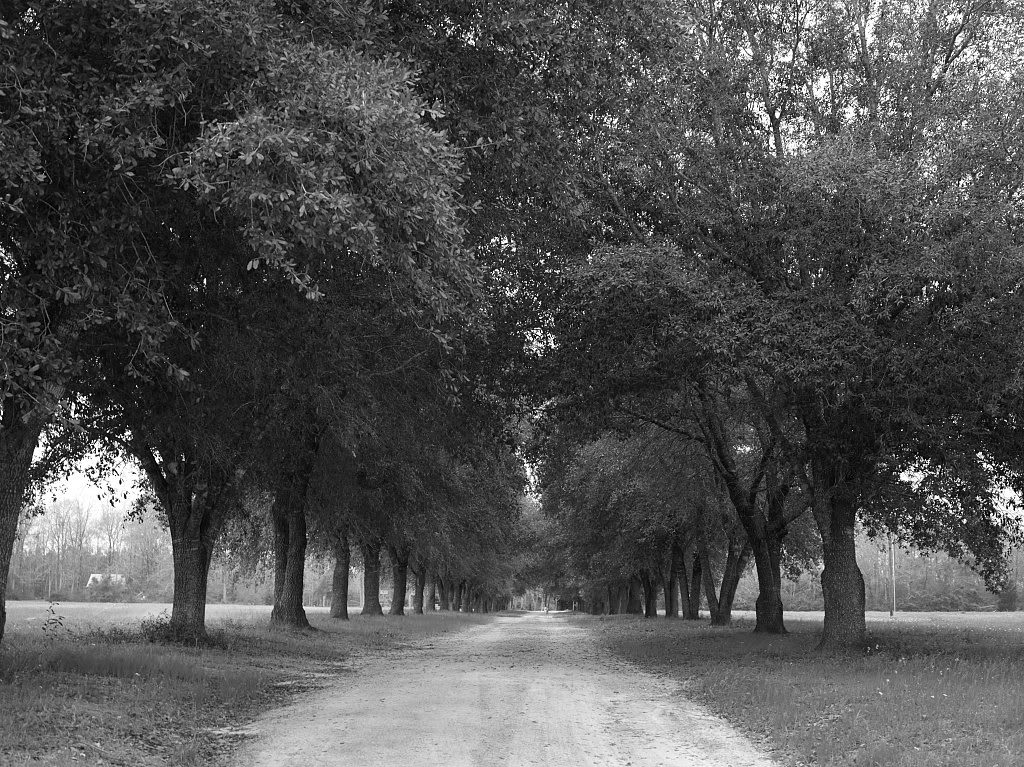
The Alabama, who say Alibamu, and the Koasati, called Coushatta in English, speak related Muskogean languages and have married across them since early times. Both lived along the Coosa and Tallapoosa rivers, and after 1763 many moved west into Louisiana. The tribe's own history puts the crossing of the Sabine into Spanish Texas in the 1780s, and historians date the move of most of the people anywhere from the 1780s to the early 1800s. Spanish officials at Nacogdoches welcomed them. By 1830 the Alabama lived in three towns in northwestern Tyler County, the largest Peach Tree Village, and about 600 Koasati lived on or near the Trinity.
Houston and the grants
The tribe's account says that in 1836 Sam Houston brokered a treaty giving the two peoples title to the land between the Neches and the Sabine, in return for staying out of any Mexican alliance. Other accounts have Houston's delegation reach Long King's village days before San Jacinto. The battle came first, and the Koasati fed and sheltered settlers on the Runaway Scrape. No title followed. In 1840 the Republic's Congress granted two leagues to each people, but settlers already held the land. On October 29, 1853, Chief Antone and others petitioned the legislature, and an act of February 3, 1854 led the state to buy land in Polk County for the Alabama, 1,110.7 acres by one count and 1,280 by another. About 500 people settled there in the winter of 1854-55. The 640 acres voted for the Koasati in 1855 never materialized, so most joined the Alabama in 1859 and the rest later.
Trustees
In June 1928 Congress appropriated $40,000, and $29,000 bought 3,071 acres beside the reservation. The deed named both peoples, making Alabama-Coushatta the official name. The tribe organized under the Indian Reorganization Act, approved a constitution in 1938 and received a federal charter in 1939.
On August 23, 1954, Public Law 83-627 ended federal supervision. Texas would hold the Polk County land in trust, the charter was revoked, the debt owed under the 1928 act was canceled and federal Indian services ended. A quitclaim deed effective July 1, 1955 made the state trustee. The Restoration Act of August 18, 1987, Public Law 100-89, restored federal recognition and the trust relationship, undid the 1954 act and told the Interior Secretary to accept any land the state held in trust for the tribe.
A sovereign government
The tribe describes itself as a fully functioning sovereign government, with more than 1,400 members, about half on a reservation of about 11,000 acres east of Livingston. An elected Tribal Council governs, advised by traditional chiefs appointed for life. On January 1, 2023, Donnis Battise, Chief Kanicu, became principal chief and Millie Thompson Williams, Chief Poliika Istaaya, became the first woman to serve as second chief. The Tribal Historic Preservation Office keeps an archive of photographs and a dictionary. Alibamu is the language of choice among people over fifty, Koasati is spoken by fewer, and summer programs and preschool introduce both to children.
The tribe's Welcome Center and Museum stands on Colabe Road near Livingston. Big Thicket National Preserve, with its visitor center at Kountze, protects the forest where both peoples settled.