After the fight at Adobe Walls in June 1874, Generals William T. Sherman and Philip Sheridan settled on a plan. Bands that stayed peaceful were to be counted at their agencies in Indian Territory. The rest were to be driven into their old refuges in the canyons along the Caprock and beaten or forced to surrender. By late July five columns had their orders to converge there: Nelson Miles from Fort Dodge, William Price from Fort Union in New Mexico, Ranald Mackenzie from Fort Concho, John Davidson from Fort Sill and George Buell from Fort Griffin.
Five columns
Some 3,000 soldiers took the field against perhaps 700 warriors, who moved with their families and horse herds. When the Texas Historical Commission searched six of the battlefields with metal detectors between 1998 and 2003, the bullets and points it found suggested fewer warriors, armed with older and shorter-range guns, than the army's reports had claimed. The fighting was a run of pursuits. On August 30 Miles's column chased a large Southern Cheyenne band across some 35 square miles of the lower Palo Duro, and the warriors held the soldiers off until their families got away onto the plains. On September 12 Kiowa and Comanche warriors attacked Price's column on Sweetwater Creek, which kept the troops from the families, and the families went on toward the upper Palo Duro to join the winter camps.
Under the canyon walls
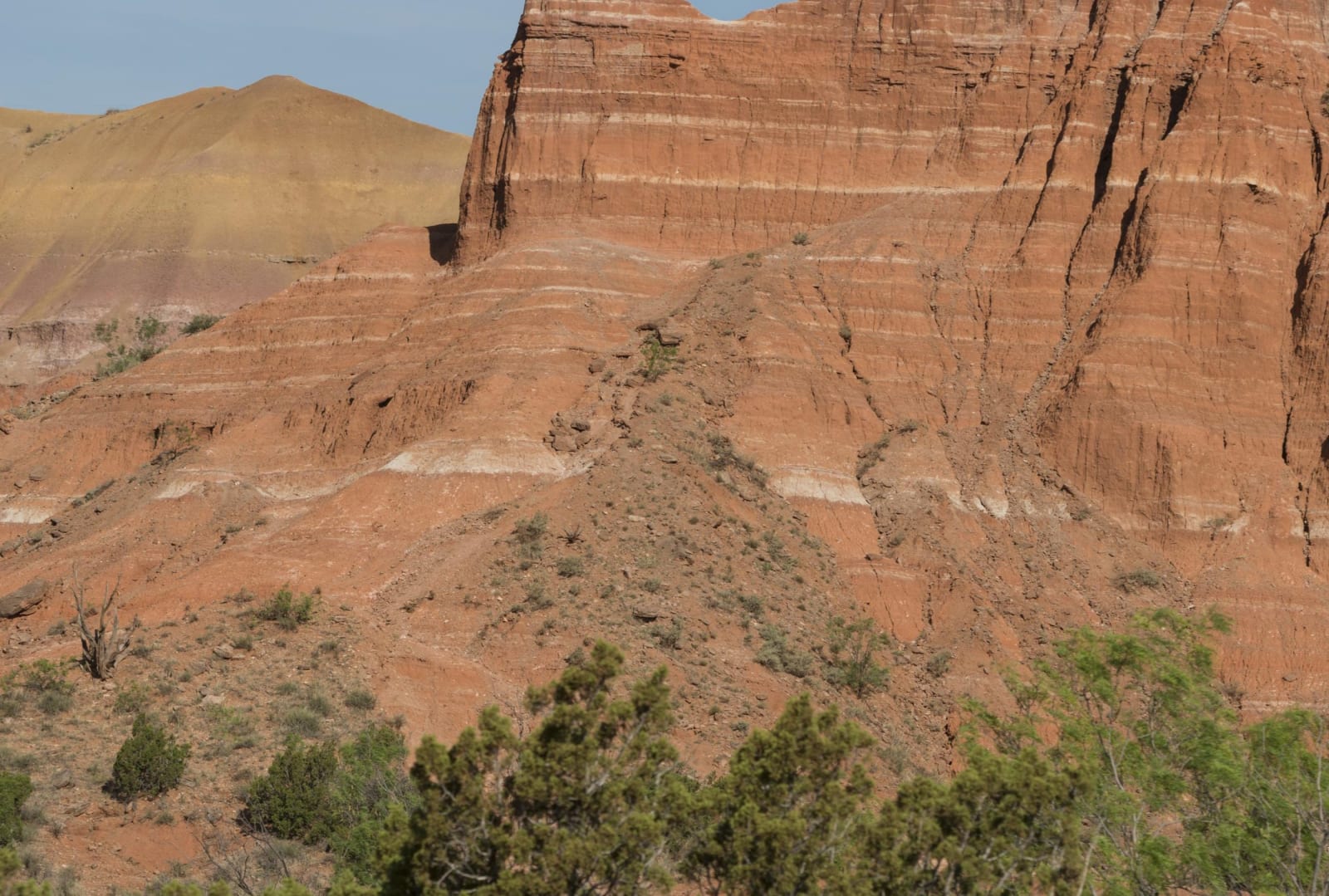
The Kiowa medicine man Maman-ti had told his people they would be safe beneath the walls of Palo Duro Canyon. Comanche, Kiowa and Cheyenne camps lay scattered along the canyon floor, too far apart to defend together, when Mackenzie's troopers and Tonkawa scouts came down a trail at dawn on September 28. Families fled up the canyon and left nearly everything. The Handbook of Texas counts three warriors killed. The soldiers burned the lodges and the winter food, and they took more than 1,400 horses. Forty went to the Tonkawa scout Johnson and 300 to the other scouts, and the rest were shot. The Handbook's entry on Mackenzie judges that the killing of the horses, more than the battle itself, broke the resistance.
The walk in
Then the weather turned. The fall of 1874 was unusually wet, and the people still out on the plains, short of food and many of them on foot, called the soldiers' pursuit the Wrinkled Hand Chase. Small fights went on into the winter. Lone Wolf and Maman-ti brought their Kiowa bands in to Fort Sill in February 1875. On June 2, 1875, Quanah Parker reached Fort Sill with 407 Quahadi Comanche and 1,500 horses, the last free band to come in. A reservation census that year counted 1,597 Comanche.
The Comanche Nation, the Kiowa Tribe and the Cheyenne and Arapaho Tribes are all in Oklahoma today. Their own accounts are kept at the Comanche National Museum and Cultural Center and the Kiowa Tribal Museum. On the Texas side, the canyon is Palo Duro Canyon State Park, and the White Deer Land Museum in Pampa and the Saints' Roost Museum in Clarendon keep exhibits on the war.