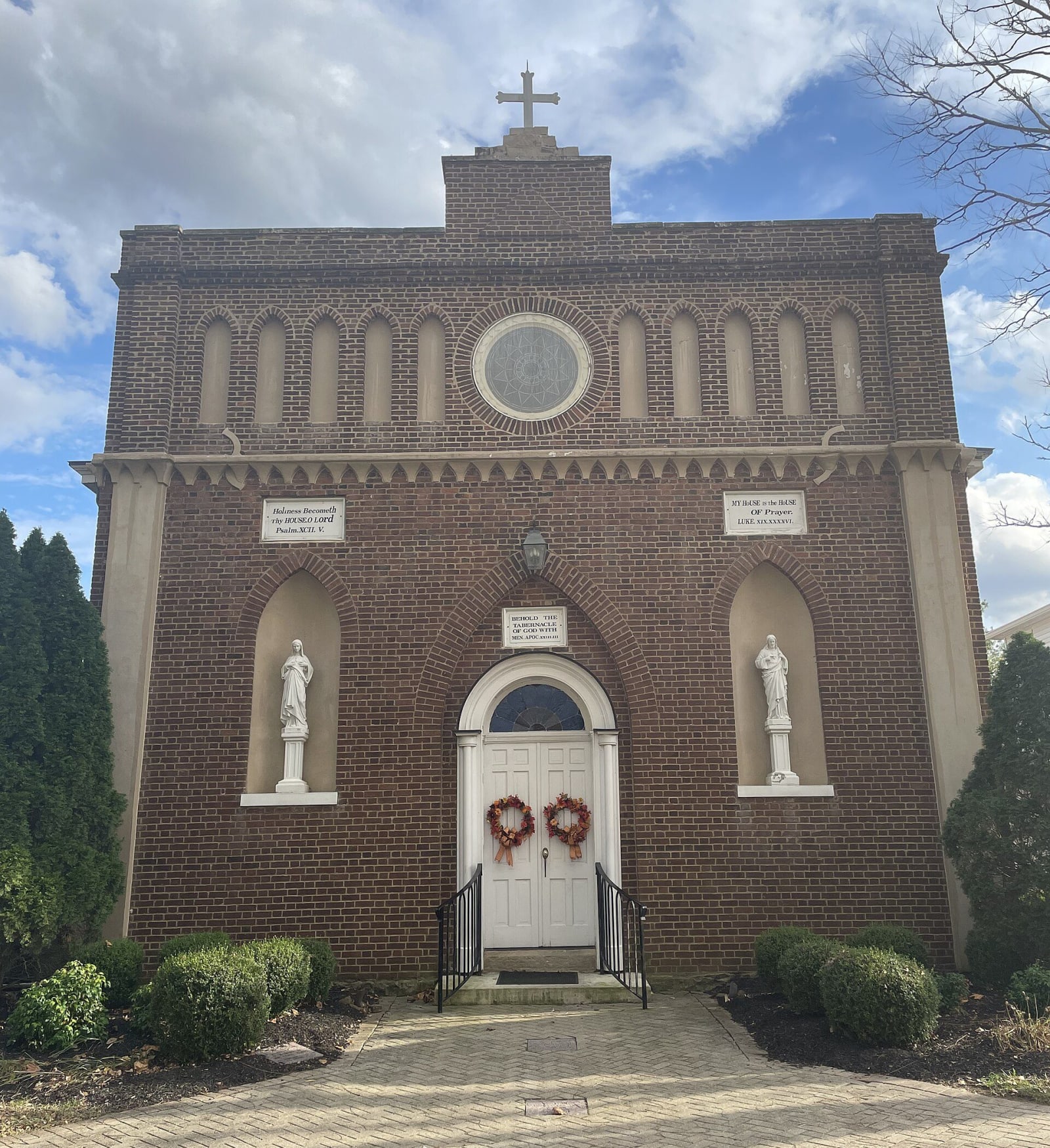
In December 1812 the Rev. John Baptist Mary David, who was setting up a seminary on the St. Thomas farm near Bardstown for Bishop Benedict Joseph Flaget, called for young women to teach the children of the Catholic families who had come west from Maryland. Teresa Carrico offered herself first. Catherine Spalding, born in Charles County, Maryland, in December 1793 and orphaned soon after her family reached Kentucky, followed, and so did Harriet Gardiner. Six were soon living together in a log house David named Nazareth. In 1813 the women elected Spalding, then nineteen, their first mother superior.
A rule from Emmitsburg
The women had no older sisters to train them. Elizabeth Seton, who had founded a community at Emmitsburg, Maryland, sent no teachers, but she sent a copy of the Rule of St. Vincent de Paul, the same copy Flaget had carried from France. Their school opened in 1814, and the first sisters took vows in February 1816. In 1822 the motherhouse moved to a farm bought near Bardstown. A convent church and academy building were finished in 1825, and in 1829 the legislature chartered the Nazareth Literary and Benevolent Institution.
In 1831 Spalding went to Louisville and opened the city's first Catholic school, now Presentation Academy. In 1832 she took in two orphans left on the city's wharf, and when cholera came the sisters nursed its victims. Out of those years grew St. Vincent's Orphan Asylum and St. Joseph's Infirmary. She died in Louisville on March 20, 1858, of bronchitis caught in her charity work, and was buried at Nazareth.
The people the sisters enslaved
Nazareth also ran on slavery. Some of the first women brought enslaved people with them, and others came to the community by dowry, inheritance, gift and purchase. Because the sisters could not own property, a priest or bishop made the purchases. The community bought and sold people. Eleven enslaved men worked the farm under an overseer, and the papers hiring a new one in 1862 said he was needed to "control Blacks." The historian Jacqueline Willy Romero has found Mother Frances Gardiner writing of Matilda, who had lately lost both her children, and in the same letter comparing an enslaved child, Emily, to an animal. Jane, giving birth to her eighth child, refused the sisters' pressure to name him Paul; he was baptized William Pius. The sisters sold one woman they suspected of poisoning buttermilk. About 30 people were enslaved at Nazareth in 1865.
The enslaved made bricks, put up early buildings, raised livestock and cooked for the sisters and students.
Apology and names
In 2000 the Sisters of Charity of Nazareth, with the Sisters of Loretto and the Dominican Sisters of St. Catharine, held a joint service asking forgiveness for their part in slavery. In July 2012, in the order's bicentennial year, they dedicated a monument beside their cemetery with a bronze relief by Ed Hamilton and the 28 names their records preserve, among them Seraphine, Solomon and Winny. A grave beside it is believed to hold more than 20 people moved from an older burial ground.
Nazareth lies just north of Bardstown, where the Basilica of St. Joseph Proto-Cathedral tells the diocese's own history of slavery.