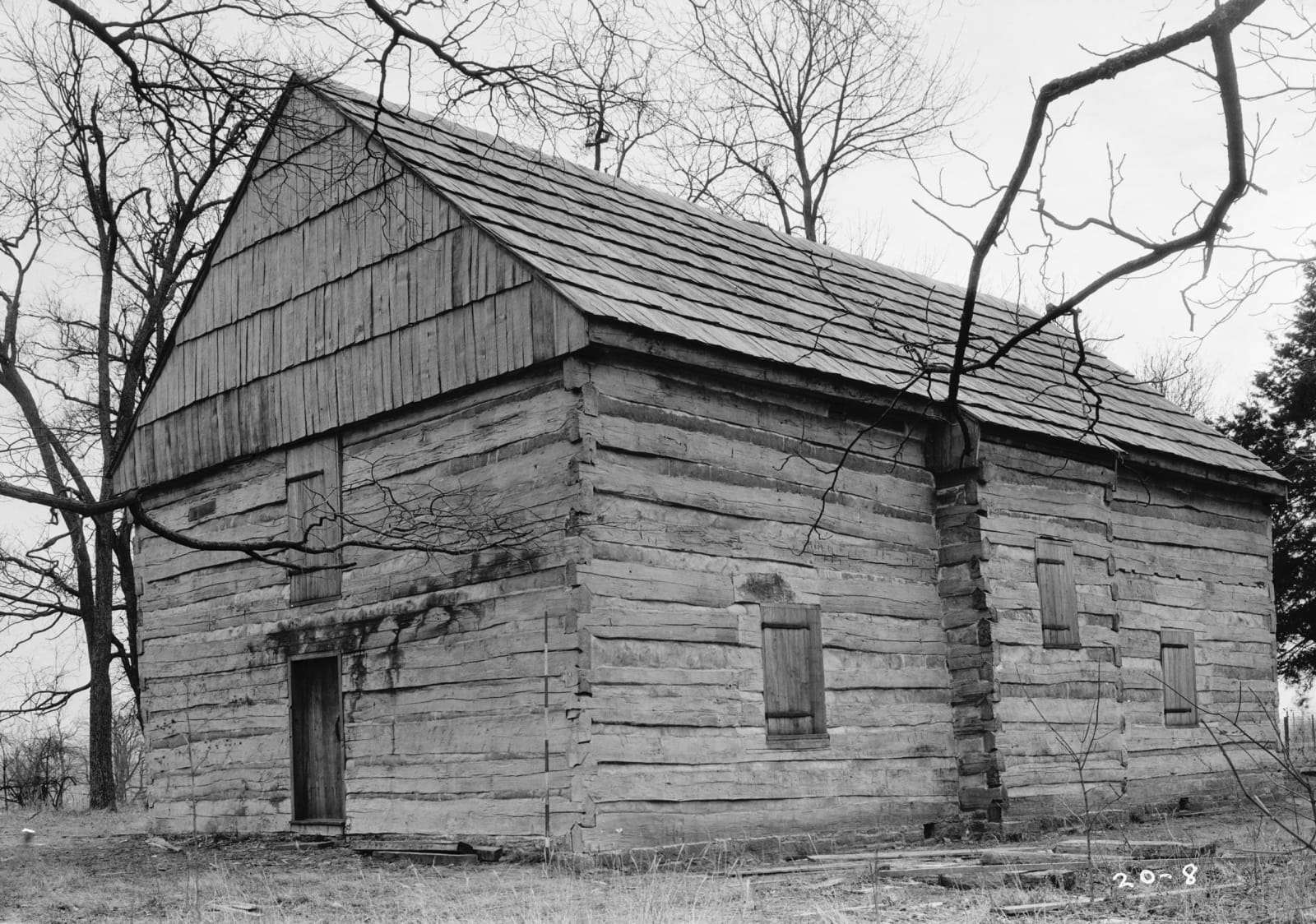
The Cane Ridge meetinghouse went up in 1791, a Presbyterian church of blue ash logs about 50 by 30 feet, northeast of Lexington in Bourbon County. Its three-sided gallery rested on eighteen posts. African American members sat there in the early years, climbing a ladder through an upper window. Barton W. Stone, a Maryland-born minister, began preaching to the congregation in 1796 and was ordained there in October 1798.
A Scottish sacrament on the frontier
What happened in August 1801 grew out of an old Presbyterian custom with roots in the Church of Scotland: a communion season of four days, Friday to Monday, with the Lord's Supper on Sunday. Methodists had begun joining Presbyterian sacraments in Logan County in the summer of 1800, and people there had been falling to the ground under the preaching ever since. Stone and the Methodist William Burke promoted the Cane Ridge meeting as a united sacrament.
Matthew Houston preached the opening service on Friday, August 6, in a meetinghouse that held at most 400. By Saturday the crowd had spilled into a neighboring grove, and preaching ran from the church and from a covered stand about 100 yards away. Robert Marshall preached the main sermon from the stand, and communicants were served at long tables in the aisles, no more than 100 at a time. Burke preached from a fallen tree east of the building. About 150 yards southeast, an African American preacher whose name the record does not keep addressed a largely Black crowd.
How many came
Estimates of the weekend crowd run from 10,000 to 20,000 and beyond. Historians of the movement that grew from Cane Ridge judge that no more than 10,000 could have been on the grounds at once, but that perhaps 20,000 different people came during the week, nearly a tenth of the population Kentucky recorded in 1800. Men, women and children rose to exhort the crowds, and Stone wrote that four or five preachers were often speaking at once without confusion. The meeting ran past its Monday close into Wednesday or Thursday, and Stone said it would have lasted longer had the neighborhood's provisions held.
A church that dissolved itself
In 1803 Stone and four other ministers broke with the Kentucky Synod and formed the Springfield Presbytery. On June 28, 1804, at Cane Ridge, they dissolved it in a paper called the Last Will and Testament of the Springfield Presbytery, taking the Bible as their only rule and the plain name Christians. On January 1, 1832, many of Stone's churches joined with Alexander Campbell's followers; the Disciples of Christ, the Churches of Christ and the independent Christian Churches trace their beginnings here. Stone, who by 1833 favored immediate abolition, moved his family to Illinois in 1834 so they could free the people his wife had inherited. He died in Missouri in 1844 and was reburied at Cane Ridge in 1847.
The congregation stopped meeting in 1921, and restorers reinstalled the gallery in 1932. Since 1957 a limestone superstructure has sheltered the log church outside Paris, where services are still held. Shaker Village of Pleasant Hill, where Shaker missionaries who walked from New York in 1805 gathered their first Kentucky converts, lies southwest of Lexington.