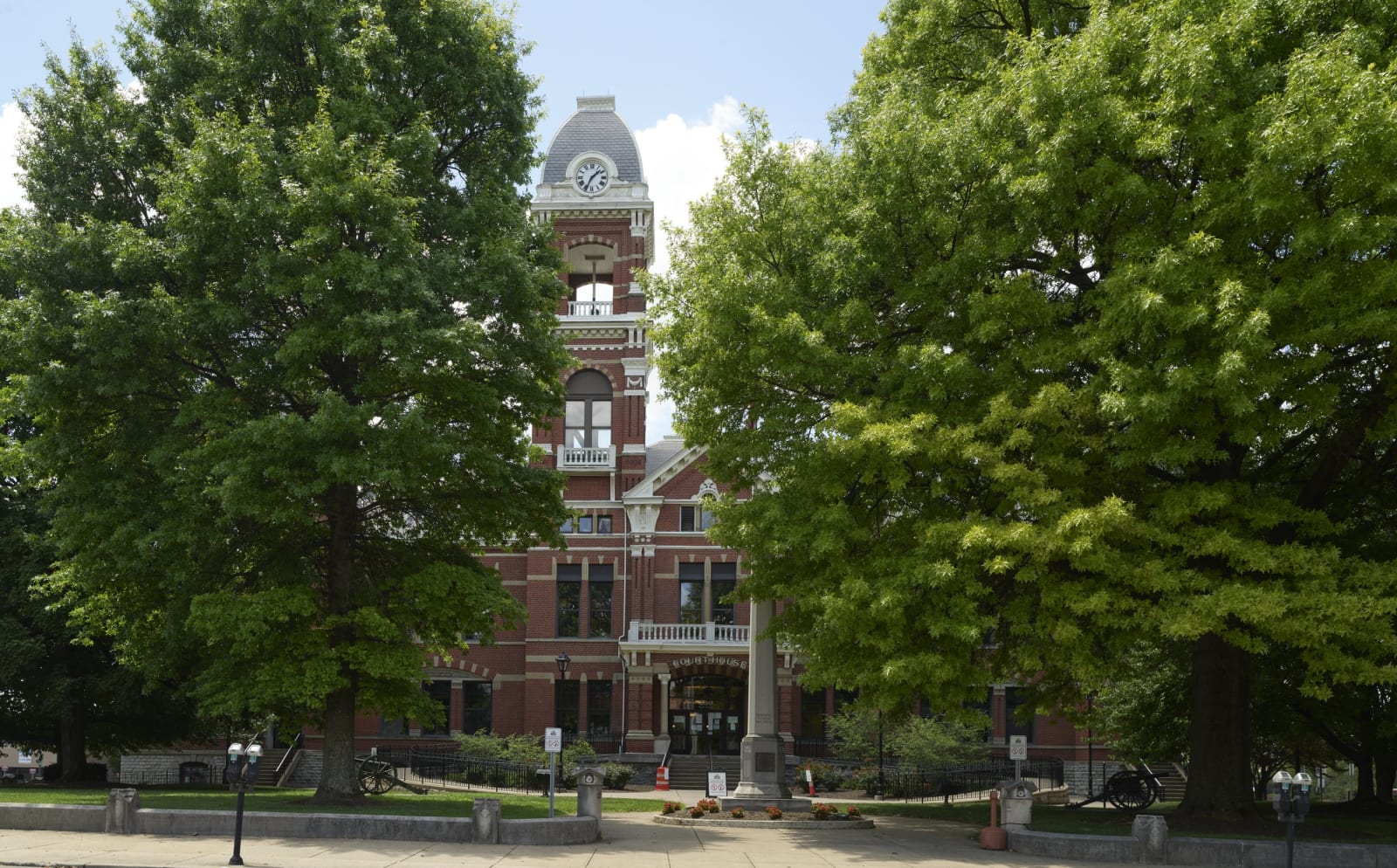
For most of the twentieth century, Newport and the rest of Campbell County sold Cincinnati what Ohio would not: casino gambling and after-hours drinking. Reformers tried from the early 1900s on, and the local historian Richard Challis writes that they kept failing, partly because Protestant and Catholic reformers distrusted each other and partly because vice brought money into town.
The syndicate and the reformers
In 1951 the Senate committee led by Estes Kefauver heard that a Cleveland syndicate had bought into Northern Kentucky's casinos. Newport's police chief, Edward Gugel, testified that he had never visited a gambling house in the city. Challis writes that the syndicate quietly financed a Newport Civic Association whose slogan was "Clean up, not Close up." Across the Licking River in Kenton County, Protestant ministers hired an assistant state attorney general, Jesse Lewis, who had the commonwealth's attorney disbarred, and state police raided the Lookout House casino on March 7, 1952.
After a 1957 Esquire article called Newport "Sin City," a mail carrier, Christian Seifried, organized a Social Action Committee of Protestant ministers and laymen. For nearly four years it made little headway, Challis writes, because many officials were on the syndicate's payroll or sympathetic to gambling. Early in 1961 it gave Governor Bert Combs affidavits seeking the removal of Campbell County officials, and Combs held off. Northern Kentucky business owners then formed the Committee of 500, nonsectarian and nonpartisan, which drew in Catholics. Its candidate for sheriff was George Ratterman, a Fort Thomas stockbroker, father of eight and former professional quarterback.
May 9, 1961
In the early hours of May 9, Newport police entered a room at the Glenn Hotel and found Ratterman in bed with a dancer, Juanita Jean Hodges, who performed as April Flowers. He was arrested, and so were Hodges and Tito Carinci, manager of the hotel's Tropicana club. Ratterman said he had been drugged after dinner in Cincinnati, and a blood test found chloral hydrate. Carinci told a different story.
The case went to trial in Newport police court before large crowds. On the third day Ratterman's lawyer called Thomas Withrow, a Highland Heights photographer, who testified that a man later identified as a co-owner of the hotel had asked him to photograph a man and woman in a room there, and that he had backed out. The charges against Ratterman were dropped.
The vote and the cleanup
On October 27, Attorney General Robert F. Kennedy announced federal indictments of Newport's police chief and five others for plotting the arrest. In November Ratterman beat his Republican and Democratic opponents by what Challis calls a landslide, though reform candidates for the city commission lost. FBI agents worked with a federal grand jury, a grand jury returned 140 indictments, and four senior police officials were pushed out. Carinci was acquitted in 1963; the Tropicana's attorney and a nightclub operator were convicted of conspiracy and sentenced to a year each.
The casinos closed, but the strip clubs on Monmouth Street outlasted Ratterman's single four-year term, and reformers took full control of city hall only in the early 1980s. Across the Licking in Covington, the John A. Roebling Suspension Bridge still carries traffic to Cincinnati.