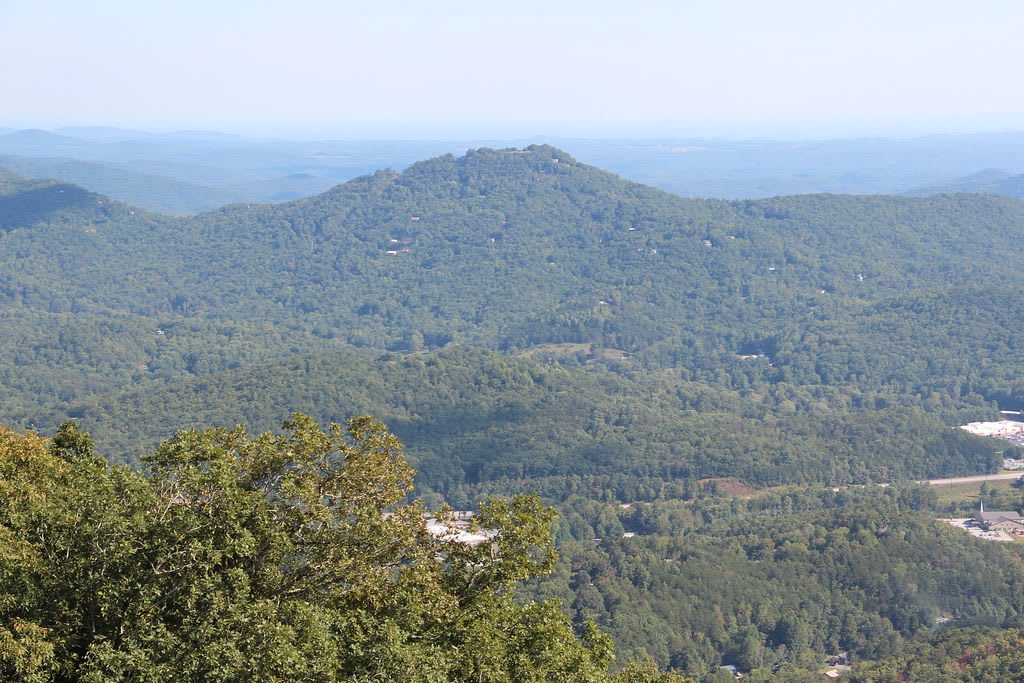
Lillian Eugenia Smith was born on December 12, 1897, in Jasper, Florida. When the family business collapsed in 1915, the Smiths moved to their summer cottage on Old Screamer Mountain above Clayton, in Rabun County, and there they ran a summer camp for girls; accounts date its opening to 1915 or 1920. Lillian studied at Piedmont College in Demorest and at the Peabody Conservatory in Baltimore, and in 1922 she went to China to teach music at a Methodist mission school. When her parents' health failed in 1925, she came home and took over Laurel Falls Camp.
A camp that asked questions
She directed it until 1948. The campers were daughters of well-off white Southern families, and Laurel Falls became known for teaching the arts, music, drama and the new ideas of modern psychology. The Georgia Historical Society records that she pressed them to question and talk through religion, race, segregation, women's roles and world affairs. To one camper's mother she wrote that she meant "to wake up the little sleeping beauties" whom American culture had put to sleep. Historians describe the camp as a laboratory for her ideas about raising children and about the South.
Paula Snelling, a counselor from Pinehurst, Georgia, came to Smith through the camp and became her partner for life, a relationship the two kept private and their letters now show. In 1936 they founded a small quarterly, Pseudopodia, renamed the North Georgia Review in 1937 and South Today in 1942. It gave Southern writers, Black writers among them, a place to publish, and Smith closed it in 1945.
Strange Fruit and after
Strange Fruit, her 1944 novel of a love affair between an educated Black woman and the son of a white doctor in a small Georgia town, became a best seller and a Broadway play. Boston banned it, and it was barred for a time from the U.S. mail. Killers of the Dream followed in 1949, essays arguing that segregation corrupted white Southerners and harmed women and children above all. Critics largely ignored it. The camp closed about then, and the Georgia Historical Society suggests she ended it expecting the reaction to the book.
From the mountain she held interracial gatherings and toured the South speaking against Jim Crow. She was fighting cancer by the early 1950s. In November 1955 two white boys set fire to her house, destroying her belongings, thousands of letters and unpublished manuscripts. Writing to Martin Luther King Jr. the next spring, she said she found it hard to believe the fire was racially motivated, and tied the boys' lawlessness to their elders'. King's Letter from Birmingham Jail later named her among the white Southerners who had written of the struggle with understanding.
The chimney on the mountain
Smith died on September 28, 1966, and was buried on the camp ground near the chimney of its old theater. Piedmont University now keeps more than 150 acres of the property as the Lillian E. Smith Center, with residencies for artists and writers, and the Georgia Historical Society put up a marker on Hershey Lane in 2022. The Lillian Smith Book Awards have been given since 1968.
Rabun County's mountain folkways are kept a few miles north at the Foxfire Museum in Mountain City.