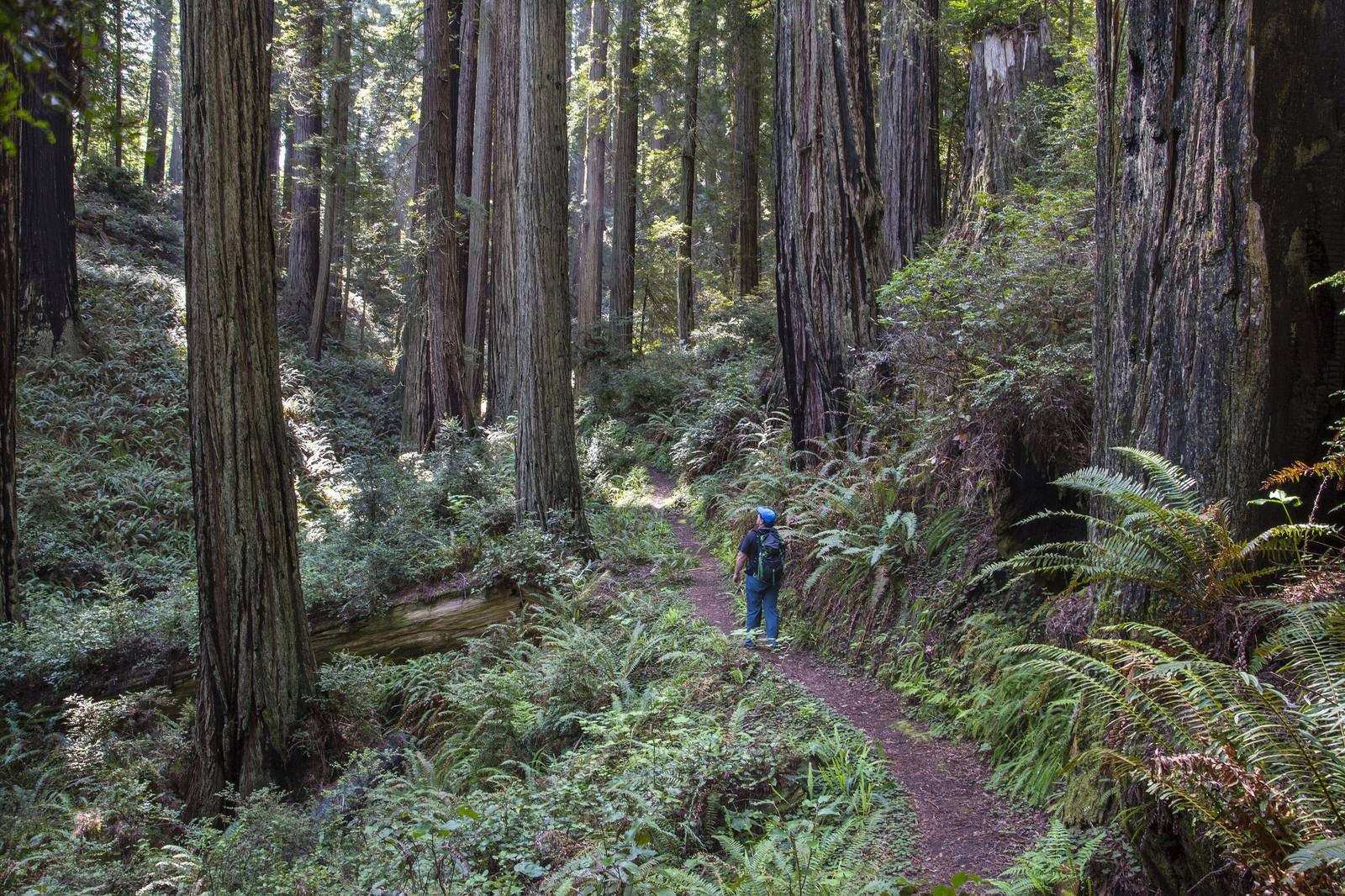
Scotia is a company town, built by the Pacific Lumber Company on the Eel River south of Eureka, and for much of the twentieth century it was the kind of company town people pointed to. Pacific Lumber, founded in 1863, had moved away from clear-cutting to selective logging and a rule of sustained yield: cut no more in a year than the forest grew back. It had sold the Bull Creek flats that became Rockefeller Forest in 1931. It reportedly carried no debt. And it still owned one of the largest private holdings of old-growth redwood left anywhere.
That last fact is what made it a target.
The takeover
In 1985 Charles Hurwitz's Maxxam, based in Houston, went after Pacific Lumber, and in February 1986 the hostile takeover closed. The $863 million purchase was financed largely with high-yield bonds placed through Michael Milken's firm, Drexel Burnham Lambert. The debt now sat on the company, and the company's real asset was its trees.
The cut went up at once, roughly doubling by most accounts, and old-growth stands the old management had been rationing came down to meet the interest. The sustained-yield rule was gone.
The fight
Activists blocked logging roads and sat in trees, and in 1990 Redwood Summer brought protesters into the woods from across the country. The biggest untouched block of old growth left on the company's land, around the headwaters of the Elk River and Salmon Creek east of Eureka, became the center of it all, and its name, Headwaters, became shorthand for the whole campaign. In September 1996 protesters massed at the company's Carlotta mill; organizers counted nearly eight thousand people there and more than a thousand arrests for blocking the haul road. From December 1997 Julia Butterfly Hill lived in a redwood called Luna on company land for 738 days, until the company agreed to spare the tree.
Pacific Lumber and Maxxam answered that the land was theirs, that they had the right to log it, and that if the public wanted the trees it should pay for them. In the end the public did.
The price
On March 1, 1999, after years of negotiation in which Senator Dianne Feinstein played a central part, the deal closed. The United States and California paid about $480 million, and the Headwaters Forest Reserve was created: 7,472 acres, about three thousand of them old growth, managed by the Bureau of Land Management. The agreement also bound the company to a habitat plan for the rest of its lands.
It did not save Pacific Lumber. The company said the state had failed to keep to the agreement's terms; its critics said the debt had never been payable. In January 2007, unable to meet payments on some $714 million in bonds, it filed for bankruptcy, and in 2008 its forests and the town of Scotia passed to the Humboldt Redwood Company, formed by the Fisher family's Mendocino Redwood Company, which said it would seek Forest Stewardship Council certification for the land.
Going in
The reserve's north end is open year-round. The Elk River Trail follows an old logging road up the South Fork, past the site of a mill town that once held a few hundred people, to a view into the old growth. The south end, the Salmon Pass Trail, goes through the old growth itself, but only on guided hikes booked in advance, from late spring into fall.
The trees on that trail are what the fight was about. The price tag is what the takeover left behind.