Fulton Allen was born in Wadesboro, one of ten children of Calvin Allen and Mary Jane Walker. Most accounts give the year as 1907; the blues researchers Bob Eagle and Eric LeBlanc put it at 1904. After his mother died the family moved to Rockingham, where he learned the guitar along with the field hollers and country rags of the rural poor. He married Cora Martin in 1926, and soon after his eyes began to fail. A 1937 examination traced his blindness to an infection left untreated at birth. By about 1928 he could not see at all, and music was the work left to him.
The warehouse crowds
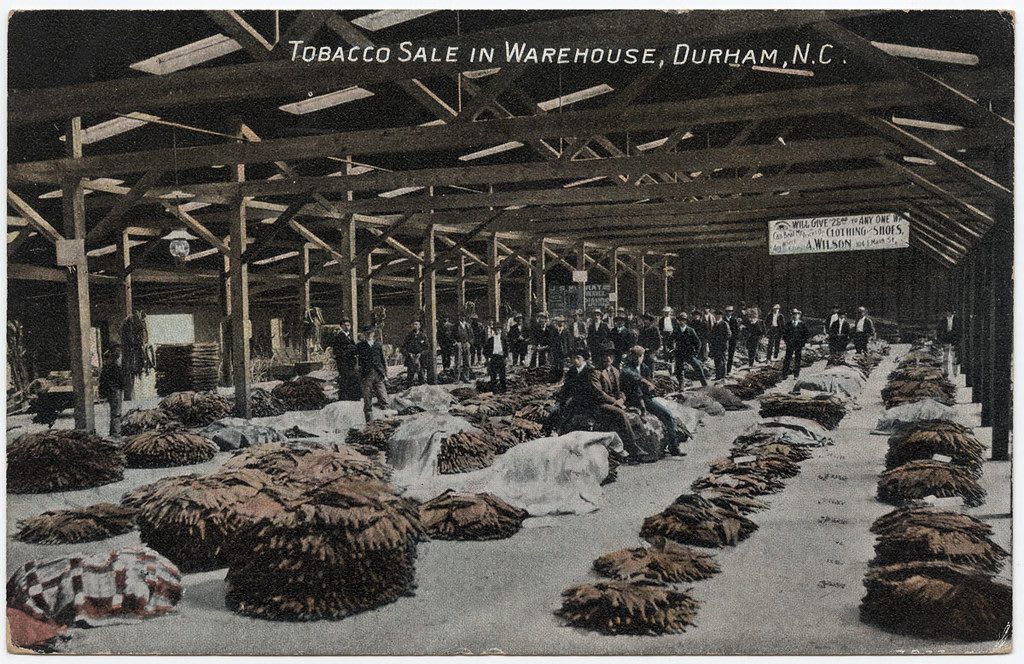
He played the sidewalks of Winston-Salem for tobacco factory shifts, then settled in Durham in 1928 or 1929, living first on Colfax Street and later on Massey Avenue. Durham's tobacco plants kept hiring Black workers through the Depression, and Allen played for the crowds in the warehouse district and along East Pettigrew Street. The South Carolina harmonica player Peg Leg Sam Jackson later told the folklorist Glenn Hinson that a serious bluesman had to come to Durham.
Allen learned from the records of Blind Blake and from Gary Davis, a blind guitarist and preacher who worked the same streets. Around him gathered the harmonica player Saunders Terrell, known as Sonny Terry, the washboard player and guitarist George Washington, and the guitarists Floyd Council and Richard Trice.
Blind Boy Fuller
In July 1935 James Baxter Long, a white merchant and talent scout whose store accounts place in Burlington or Durham, took Allen, Davis and Washington to New York to record for the American Recording Corporation. To sell the records, Long billed Allen as Blind Boy Fuller and Washington as Bull City Red. Over five years Fuller cut between 120 and 135 sides for Vocalion, Decca and other labels, and historians count him the most prolific and best-selling East Coast blues artist of his day. His songs ran from rags like "Step It Up and Go" to double-entendre hokum to "Big House Bound," about jail. "Truckin' My Blues Away" later gave Robert Crumb his "Keep On Truckin'."
In 1938 Fuller was jailed for shooting at Cora and wounding her in the leg, and so missed John Hammond's From Spirituals to Swing concert at Carnegie Hall. Terry played in his place, the start of a long career. Fuller's last sessions came in 1940. He grew ill, refused the hospital, and died at home on Massey Avenue in February 1941, on the 12th or the 13th by different records.
After Fuller
Brownie McGhee recorded "The Death of Blind Boy Fuller" and, reluctantly, spent a stretch billed as Blind Boy Fuller No. 2. Years later the English musician Syd Barrett named a band after Pink Anderson and Floyd Council, names in the notes of a 1962 Fuller album. Fuller was buried in Grove Hill Cemetery, and his grave is unmarked and lost. A state marker for the Bull City blues stands on Fayetteville Street at Simmons Street, and in 2001 the city set a plaque on the American Tobacco Trail beside the old cemetery ground.
The tobacco trade that filled those warehouses began at the Duke Homestead.