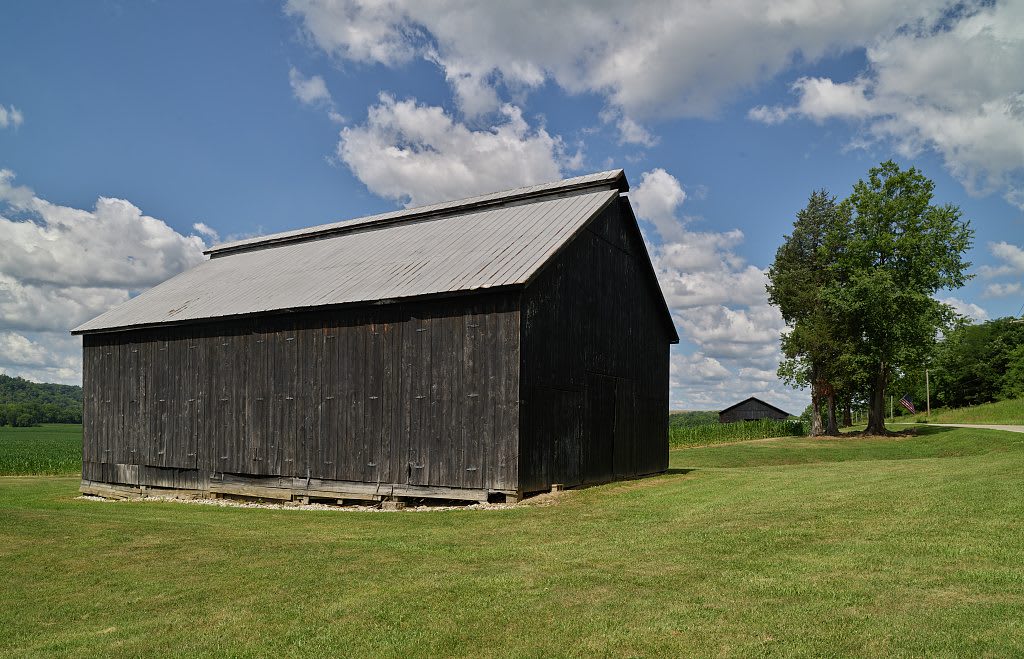
Margaret Garner was born in 1834 at Maplewood, the Gaines family farm near Richwood in Boone County, to parents the family held in slavery. At about seven she was taken across the river to Cincinnati as a nursemaid. Her husband, Robert Garner, and his parents, Simon and Mary, were enslaved by James Marshall on a neighboring farm. In 1849 Archibald K. Gaines bought Maplewood, and the people enslaved there, from his brother John. By 1856 Margaret and Robert had four children: Thomas, about six; Samuel, about four; Mary, not yet three; and the baby, Priscilla, called Cilla. Margaret was pregnant again. Historians, Steven Weisenburger among them, argue that Gaines forced himself on Margaret and fathered some of her children.
Across the ice
On the night of Sunday, January 27, the Garners and nine people from nearby farms took a sleigh and two horses from one of their enslavers and drove about 16 miles north over icy roads. The Ohio had frozen hard. At daylight they left the sleigh on the Covington shore, walked across to Cincinnati and split up to draw less notice. The eight Garners went to the house of Elijah Kite, a free Black man and Margaret's kin, below Mill Creek. They had to ask the way, and they were seen.
Kite hurried to the Quaker abolitionist Levi Coffin, who told him to move the family at once. Before he could, Gaines, Marshall, deputy U.S. marshals and a posse surrounded the house. Robert fired a revolver and wounded a deputy. When the door gave way, Margaret killed her daughter Mary rather than see her taken back into slavery, and wounded two of her sons before she was overpowered.
The hearing
The case went before U.S. Commissioner John L. Pendery on January 30 under the Fugitive Slave Act of 1850. The Garners' lawyer, John Jolliffe, argued that Margaret had been brought into Ohio by her enslavers years before and was therefore free, and so were her children. Ohio issued murder warrants for the four adults; her defenders hoped a state trial would at least keep her on free soil. Lucy Stone, who had visited Margaret in jail, spoke in court of what slavery did to mothers. Pendery ruled for the enslavers: by going back to Kentucky, he held, the Garners had returned to slavery.
Sold south
Gaines took the family to the Covington jail on the understanding that Margaret would be produced for Ohio's trial. Instead he shipped them downriver. In early March the steamboat Henry Lewis collided with another boat; Margaret went into the water with Cilla, and the baby drowned. Agents of Ohio's governor, Salmon P. Chase, followed to Frankfort and Louisville and never caught up. The family was sent to New Orleans and in 1857 sold to a Mississippi planter, DeWitt Clinton Bonham. Margaret died of typhoid fever in 1858. Robert later told a Cincinnati reporter that she had asked him "never to marry again in slavery." He served in the Union army, returned to the Cincinnati area and died in 1871.
Work on the John A. Roebling Suspension Bridge between Covington and Cincinnati began in 1856, the year the Garners walked across the ice.