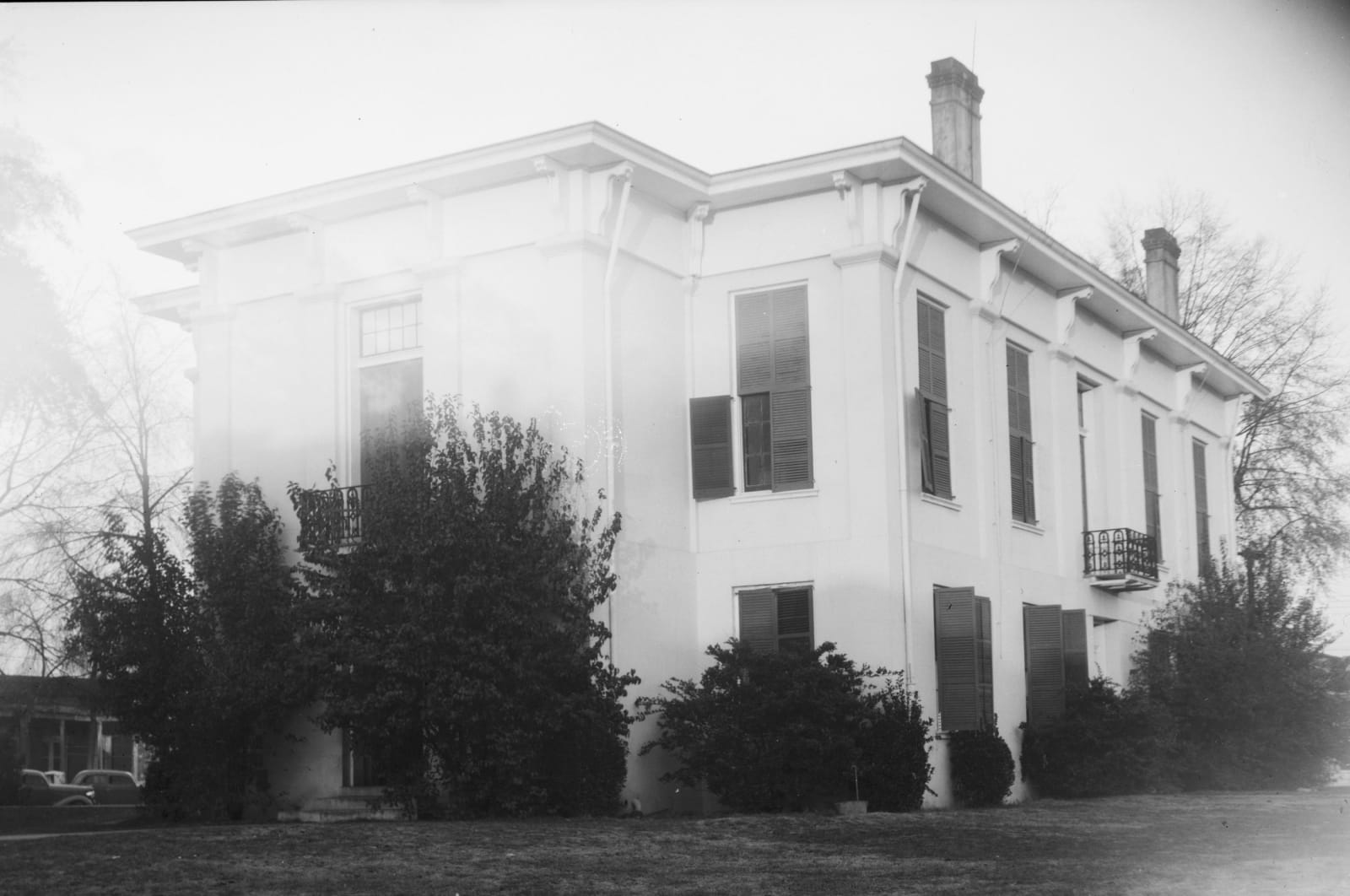
In the early 1960s, in Greene County, only about 5.5 percent of roughly 5,000 eligible Black adults were registered to vote. The white rolls, never purged, listed more voters than there were white adults. William McKinley Branch, a Eutaw teacher fired over his political work, and his former student Thomas Gilmore set out to change the count with help from national civil rights groups. In 1965 students boycotted Carver High School and the county's other Black schools, and Martin Luther King Jr. told a crowd at First Baptist Church in Eutaw to vote themselves into office. Gilmore later remembered a registration meeting where "the whole church moved to the left." Within three years almost 80 percent of eligible Black residents were on the rolls.
The ballot of 1968
The vehicle was a new party. The Huntsville dentist John Cashin filed for a state charter for the National Democratic Party of Alabama on December 15, 1967, and its first convention met on July 20, 1968. In Greene County it ran six candidates: Vassie Knott, Harry C. Means, Levi Morrow Sr. and Franchie Burton for the county commission, and Robert Hines and James A. Posey for the board of education. Probate Judge James Dennis Herndon left all six off the November ballot except on absentee papers, citing state filing rules. Voters responded anyway. The Democratic nominees drew about 1,700 votes each, while 1,938 ballots were marked for the new party's straight ticket, whose candidates in Greene County were not printed on them.
The Supreme Court and July 29
The party sued. In Hadnott v. Amos, decided in March 1969, Justice William O. Douglas wrote for the Supreme Court that Alabama had changed its rules for independent candidates without the federal approval Section 5 of the Voting Rights Act required, and had applied its campaign-finance filing law unequally. The Court ordered a new election in Greene County with the six names on the ballot, and it held Herndon in contempt.
The special election was held on July 29, 1969, and the six won every contested seat. They took office on August 1, giving Black officials a majority on both the commission and the school board for the first time. Peter J. Kirksey of the Dollarhide community, already the county's first Black elected official, became school board president; the board hired the Birmingham lawyer Orzell Billingsley as its attorney and, in 1970, Robert Brown as the county's first Black superintendent.
November 1970
In the general election of November 3, 1970, about 4,700 ballots were cast. Branch defeated Herndon for probate judge by 92 votes, becoming the first Black probate judge in the country since Reconstruction. Gilmore won the sheriff's office by 87 votes, the second Black sheriff in Alabama. The party also took the circuit clerk's and coroner's offices and two more school board seats. Since then Black officials have held a majority on the county commission and the school board, and the courthouse in Eutaw, where Greene County has held Freedom Day celebrations, now carries Branch's name.
Down Highway 14 in Greensboro, the Safe House Black History Museum keeps the photographs and arrest records of Hale County's own movement.