Victorio was probably born in the Black Range of New Mexico around 1825 and grew up among the Eastern Chiricahua, the people often called the Warm Springs Apache. By the 1870s he led a band of Chiricahua and Mescalero people, and army officers who fought him called him a sound tactician. On April 20, 1877, the government ordered his band moved to the San Carlos Reservation in Arizona. Victorio protested leaving his half-ripe crops but went. Conditions at San Carlos were, in the Handbook of Texas's word, abominable, and he led several hundred people away toward Mexico. Three years of raiding in Mexico, New Mexico and Texas followed.
A screen across the desert
In Texas the Black troopers of the Ninth and Tenth Cavalry rode after him. Col. Benjamin Grierson of the Tenth, commanding the District of the Pecos, marched 1,500 miles in one fruitless search and was back at Fort Concho on May 20, 1880. That summer he changed his method. Grierson had made sure his officers knew every water hole, pass and campsite in the district, and he knew that no band could cross the dry Trans-Pecos without water. He set his headquarters at Eagle Spring, a stage stop on the San Antonio-El Paso road about 100 miles west of Fort Davis, and spread his troops across the springs.
Rocky Ridge
Late in July, returning from Fort Quitman, Grierson's escort sighted a lone Apache above Tinaja de las Palmas, a seasonal water hole south of present Sierra Blanca that he had judged too small to guard. Grierson camped there with eight men, among them his nineteen-year-old son Robert, built stone breastworks on a hill they called Rocky Ridge, and sent for help. On the morning of July 30 about 125 warriors came for the water. Reinforcements from Eagle Spring, unable to tell friend from foe in the dust, fired on both, but the troopers held until the dust of a third company, coming from Fort Quitman, came into sight and Victorio broke off.
Sixty-five miles
Victorio crossed back into Mexico, then returned north. On August 5 Grierson set out at 3 A.M. with five companies, 170 officers and men, keeping mountains between his column and the Apaches. They covered sixty-five miles in less than twenty-one hours and reached Rattlesnake Springs, north of present Van Horn, ahead of their quarry. On the afternoon of August 6 the companies of Capt. Charles Viele and Capt. Louis Carpenter turned the warriors back, and infantry guarding the wagons beat off an attack on the supply train. Capt. Thomas Lebo's company had already destroyed the band's supply camp in the Sierra Diablo.
Denied water, Victorio went back across the Rio Grande. On October 15, 1880, Chihuahua militia under Joaquín Terrazas surrounded his band at Tres Castillos and killed him and his warriors. The women and children who survived were held as prisoners in Chihuahua City for years.
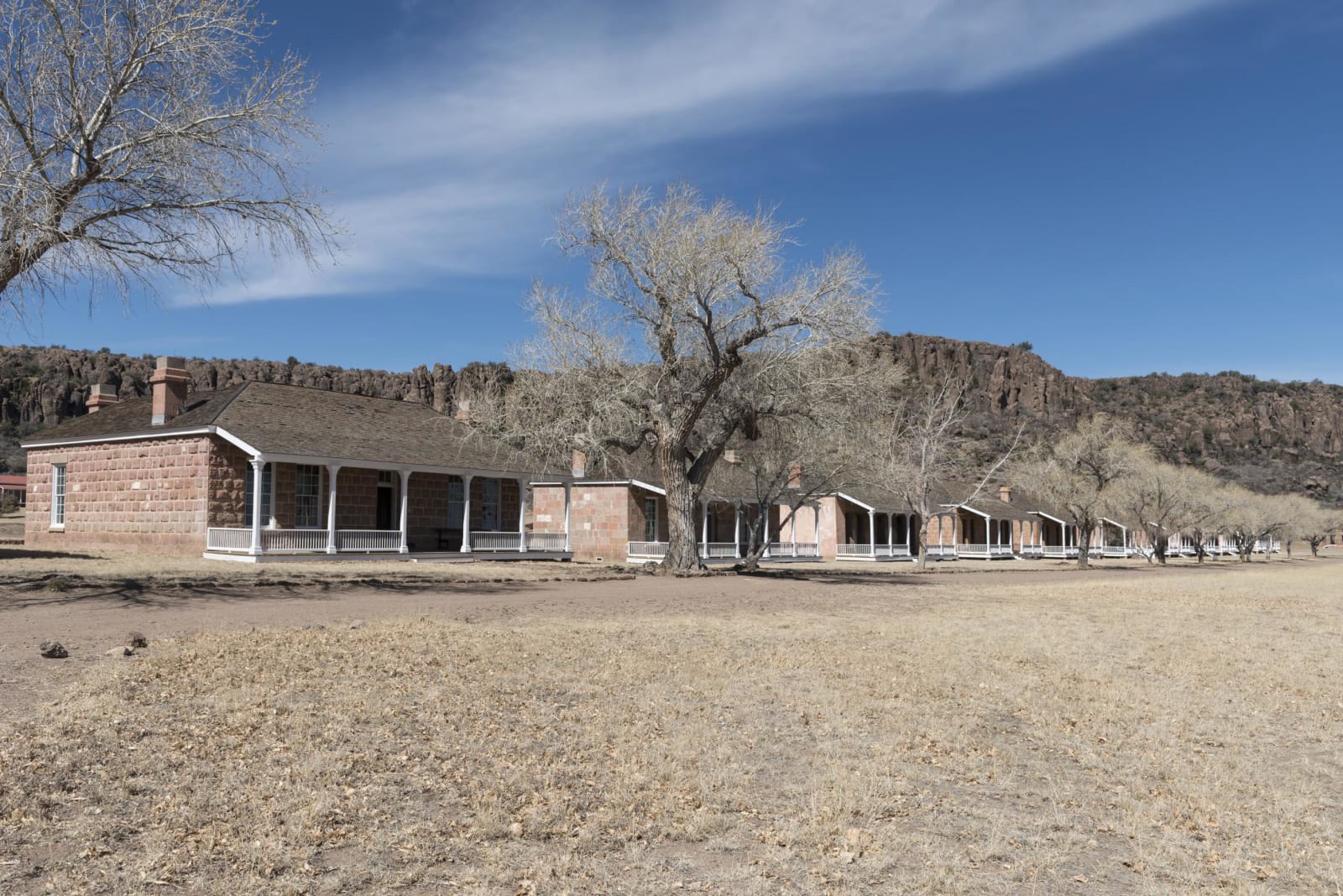
The Buffalo Soldiers' post is now Fort Davis National Historic Site, and the mountains Victorio was trying to reach are Guadalupe Mountains National Park.