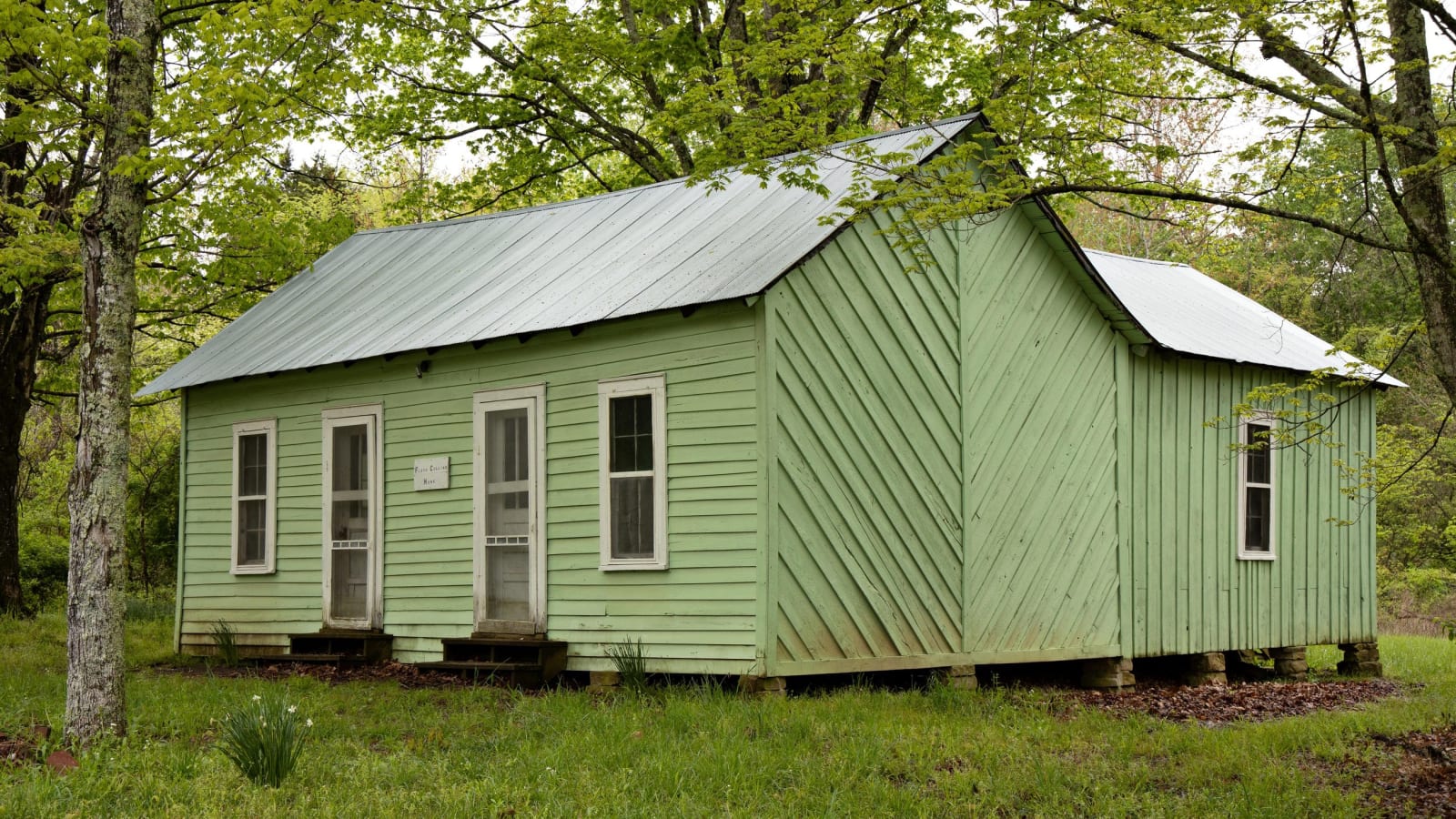
Floyd Collins found his cave in 1917, under his father's farm on Flint Ridge. Great Crystal Cave held gypsum formations and delicate helictites, and the family opened it to paying visitors. It made little money. The farm sat off Flint Ridge Road, away from the traffic, and by the 1920s more than twenty caves in the region were open to the public, their owners chasing the same motorists. Roadside touts called cave cappers, after their caps, staffed booths offering "official cave information," and George Morrison had blasted a New Entrance to Mammoth Cave on land along the Cave City Road.
Collins wanted a cave on the road. He made a deal with a neighbor, Beesly Doyel, to explore Sand Cave, beside Cave City Road, and split any profits.
Pinned
On January 30, 1925, Collins went in alone with a kerosene lantern, crawling on his stomach through a tight passage. On the way out he dislodged a 27-pound rock that wedged his ankle, about 60 feet below the surface. Neighbors found his coat at the entrance the next day, and Jewell Estes, 17, crawled far enough to find him. William "Skeets" Miller, a young Louisville Courier-Journal reporter, crawled down to bring him food and talk with him, interviews that won Miller a Pulitzer Prize.
Early on February 4 the passage collapsed and cut the rescuers off. Governor William J. Fields put the National Guard in command, and Henry Carmichael of the Kentucky Rock Asphalt Company started a shaft six feet square, dug by about 75 men around the clock with picks and shovels.
Carnival Sunday
The story went national. By the Park Service's count about 10,000 people came on Sunday, February 8, and by nightfall some 4,500 cars from 20 states had reached the hill. Guardsmen strung barbed wire. Rumors spread that the entrapment was a tourism hoax, and a military court of inquiry sat in Cave City.
On February 16 a side tunnel reached Collins. He had died of exposure and starvation, and the Park Service dates his death to about February 13. With his leg still pinned, the rescuers left him where he lay. In April his brother Homer and friends dug in from another side, brought the body out and buried it on the family farm.
The cave that took his name
In 1927 Dr. Harry B. Thomas bought the homestead and Crystal Cave and renamed it Floyd Collins Crystal Cave. He had the body exhumed and set in a glass-topped coffin inside the cave as an attraction. In 1929 it was stolen, then found dumped near a river and returned. The Park Service bought the cave in 1960, by its own account. Collins was reburied in the Mammoth Cave Baptist Church cemetery, beside his family, in 1989.
Congress authorized Mammoth Cave National Park in 1926, and the Park Service credits the Sand Cave publicity with speeding the campaign; the park was established in 1941. Collins's frame house still stands off Flint Ridge Road. It was the first headquarters of the Cave Research Foundation, whose cavers in 1972 linked the Flint Ridge system to Mammoth Cave.
Sand Cave lies within Mammoth Cave National Park, its interior closed to visitors as unsafe.