Orangeburg, Sumter & the Santee
Briggs v. Elliott at Summerton, the Orangeburg Massacre memorial, the Santee mound at Fort Watson, Lake Marion, Poinsett's CCC park and Stateburg's rammed-earth church.
The Santee, the "people of the river," gave their name to the stream that crosses this country, and the Wateree hunted the High Hills above it. On the north shore of Lake Marion a Mississippian mound that holds burials still rises over Scott's Lake; in 1781 Marion and Lee took the British stockade on its summit. Barnwell is named for the man who burned the Tuscarora towns and led the war on the Yamasee.
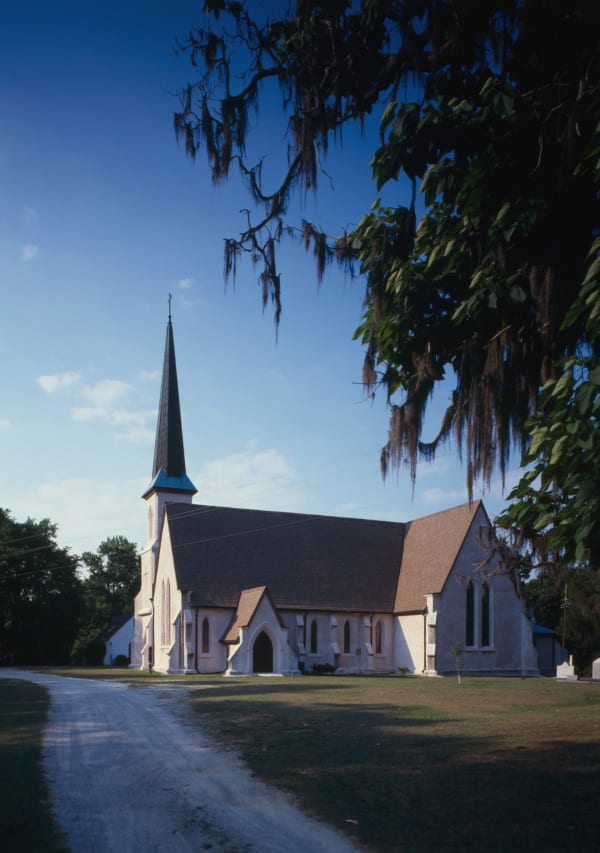
Cotton and slavery made Black majorities across these counties, and their story runs through Stateburg's rammed-earth Church of the Holy Cross, where William Ellison, born enslaved, sat in his own pew as an enslaver of sixty-three. Rivers Bridge holds the only major stand against Sherman in the state, and the Lost Cause memory raised there in 1876. Elizabeth Evelyn Wright built Voorhees in Denmark after her earlier schools were burned.
At Liberty Hill near Summerton, parents planned Briggs v. Elliott, the first of the cases decided as Brown v. Board. In Orangeburg the university remembers Samuel Hammond Jr., Henry Smith and Delano Middleton, killed by patrolmen on the State College campus in 1968. Santee State Park sits on a New Deal lake that drowned the Santee swamp; Poinsett's CCC park, Sumter's Swan Lake and Orangeburg's Edisto gardens fill out the drive.
What to See in Orangeburg, Sumter & the Santee
11 places across the region, grouped by what they are.
Natural Areas
Hikes & Trails
Historic Sites
Architecture
Orangeburg, Sumter & the Santee rewards the unhurried. Pick a base, fan out, and let the country between the headline stops surprise you.
← Explore more of Open Road Guide