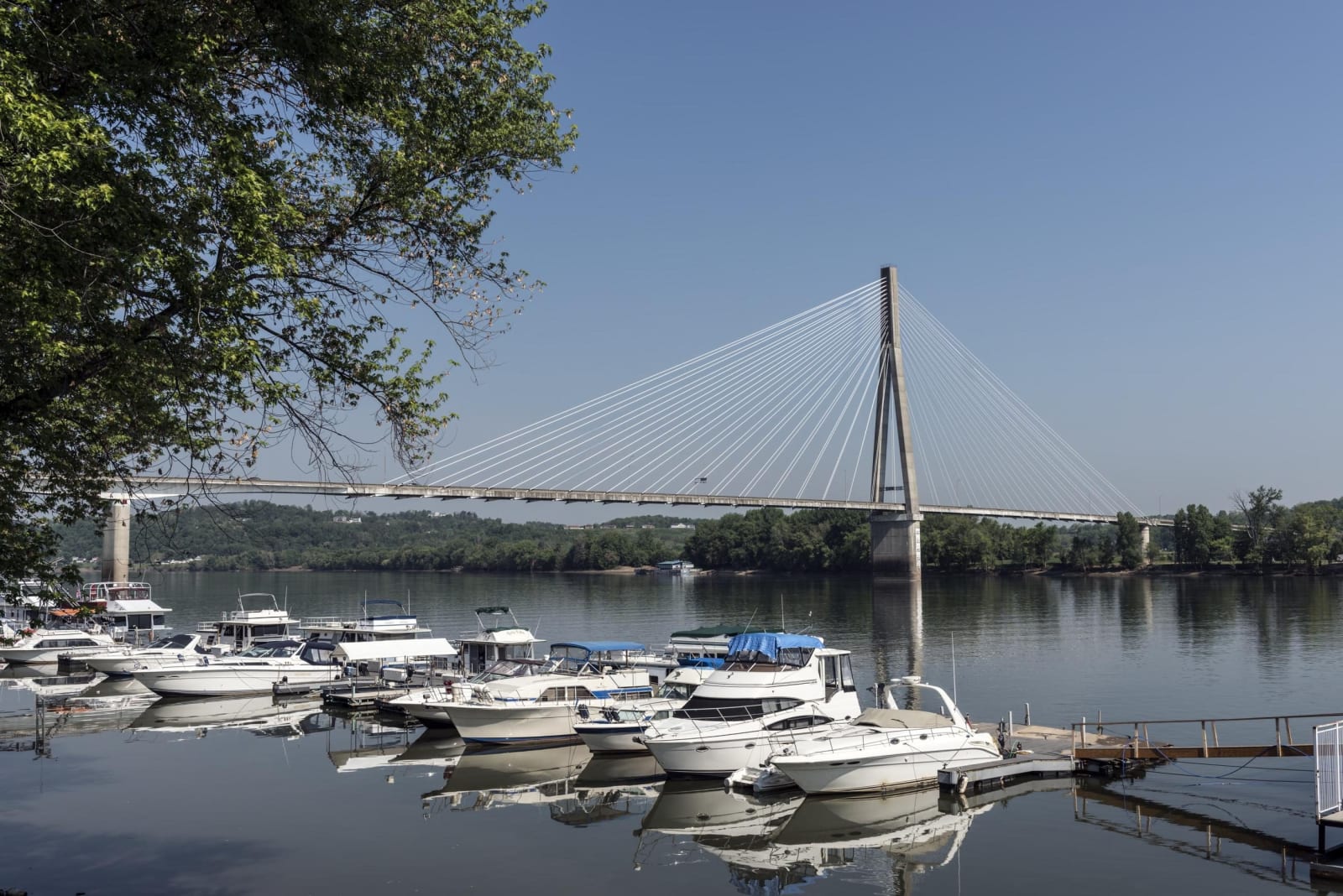
A cable-stayed bridge crossing the Ohio River at Huntington, with pleasure boats moored at a marina in the foreground.
Carol M. Highsmith / public domain via Library of Congress
West Virginia · Region

Huntington & the Lower Ohio

The Ohio River's lower West Virginia shore: Point Pleasant's 1774 battle and Fort Randolph, the Silver Bridge, Huntington's Douglass High School and Marshall's fountain.

12 places to explore

Before the river towns, this was Shawnee hunting country, and earlier still Fort Ancient people farmed the Ohio bottoms; one of their villages stood at Green Bottom around 1600. At the point where the Kanawha meets the Ohio, Cornstalk's Shawnee fought Virginia militia for that land on October 10, 1774. Three years later, at Fort Randolph, militiamen murdered Cornstalk, his son Elinipsico and Red Hawk while they were held under a truce.

Green Bottom became a plantation, where 53 enslaved people worked in 1820, and in 1857 antislavery New Englanders founded Ceredo just downriver. Huntington grew from 1871 as a railroad town, and its Black families built the Douglass school, where Carter G. Woodson graduated and later served as principal before he began Negro History Week.

The river towns carry their griefs plainly. The Silver Bridge fell at Point Pleasant on December 15, 1967, killing 46 people, and 75 died when Marshall's team plane crashed in 1970, mourned each November at Bertoia's fountain. There is lighter ground too: the Keith-Albee's ceiling of painted stars, the art museum on its wooded hill, glass blown by hand at Blenko in Milton, herons on the ponds of the old TNT plant, and the lakes of Beech Fork and East Lynn in the Wayne County hills.

What to See in Huntington & the Lower Ohio

12 places across the region, grouped by what they are.

Natural Areas

Green Bottom Wildlife Management Area

Huntington

An Ohio River bottom north of Huntington: a wetland refuge for birds on land that held a Fort Ancient village and then a plantation worked by enslaved people.

View details →

McClintic Wildlife Management Area

Point Pleasant

The TNT Area north of Point Pleasant: a World War II explosives works turned 3,655 acres of ponds, marsh and woods, with bird life and the earth-covered bunkers of the plant.

View details →

Hikes & Trails

Beech Fork State Park

Barboursville

The Corps of Engineers lake on the forks of Twelvepole Creek, south of Huntington, with a state park of campsites, cabins and trails along its coves.

View details →

East Lynn Lake

Wayne

A twelve-mile Corps of Engineers lake on the East Fork of Twelvepole Creek in southern Wayne County, ringed by almost 23,000 acres of state wildlife land.

View details →

Historic Sites

Douglass High School

Huntington

Huntington's Black high school from 1924 to 1961, heir to the Douglass School where Carter G. Woodson graduated in 1896 and returned as principal in 1900.

View details →

Fort Randolph

Point Pleasant

A reconstruction of the 1776 stockade at Point Pleasant where militiamen murdered the Shawnee leader Cornstalk, his son Elinipsico and Red Hawk under a truce in 1777.

View details →

Marshall University Memorial Fountain

Huntington

Harry Bertoia's bronze fountain outside Marshall's student center, for the 75 people killed when the team's chartered plane crashed near Ceredo on November 14, 1970.

View details →

Silver Bridge Memorial

Point Pleasant

The corner in downtown Point Pleasant where the Silver Bridge met the town, with the names of the 46 people killed when it fell into the Ohio on December 15, 1967.

View details →

Tu-Endie-Wei State Park

Point Pleasant

The point where the Kanawha meets the Ohio, where Cornstalk's Shawnee fought Andrew Lewis's Virginians on October 10, 1774, over the hunting lands south of the river.

View details →

Towns & Gateways

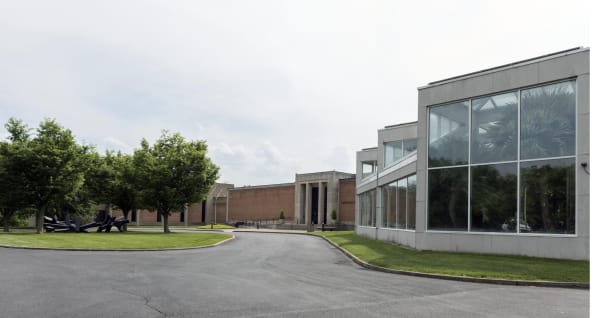
A low brick museum with a columned entrance and a glass-walled conservatory wing, reached by a curving drive past lawns and trees.

Huntington Museum of Art

Huntington

West Virginia's largest art museum, opened in 1952 on a wooded hill above Huntington, with a great Ohio Valley glass collection and Walter Gropius's only museum design in the country.

View details →
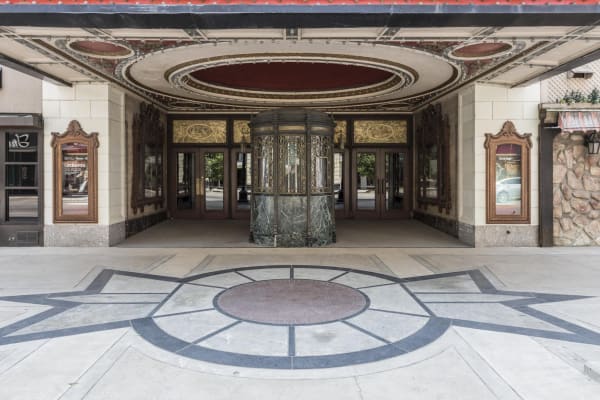
The Keith-Albee entrance under its ornate marquee, with a marble and bronze ticket booth between glass doors and a star pattern set in the sidewalk.

Keith-Albee Performing Arts Center

Huntington

Thomas Lamb's 1928 atmospheric movie palace on Fourth Avenue, 3,000 seats under a ceiling of stars and clouds, still showing films and staging touring Broadway.

View details →

Industry & Mining

Blenko Glass

Milton

The Milton glassworks William John Blenko founded in 1921, where visitors watch glass blown by hand from a free observation deck.

View details →

Huntington & the Lower Ohio rewards the unhurried. Pick a base, fan out, and let the country between the headline stops surprise you.

← Explore more of Open Road Guide