 Carol M. Highsmith / public domain via Library of Congress
The Story
This point between the Kanawha and the Ohio was Shawnee country before it was anything else. The Shawnee held the land south of the Ohio, present West Virginia and most of Kentucky, as their hunting grounds, and they never accepted the Iroquois sales of it to colonial governments in 1744 and 1768. In the spring of 1774 Virginia surveyors came down the Ohio to lay out soldiers' bounty claims in Kentucky, and that April settlers murdered relatives of the Mingo leader Logan at Yellow Creek. The Ohio nations went to war, and Lord Dunmore sent two armies against the Shawnee towns on the Pickaway Plains.
Cornstalk, a Shawnee leader, chose to strike one army before the two could meet. On the night of October 9 some 900 warriors crossed the Ohio above the point, and at daybreak they met Andrew Lewis's force of about 1,100 Virginians. The fighting ran most of the day through fog, often hand to hand. Among the Shawnee dead was Pukeshinwau, father of the six-year-old Tecumseh. When Cornstalk withdrew across the river, the treaty Dunmore dictated at Camp Charlotte ended Shawnee hunting south of the Ohio.
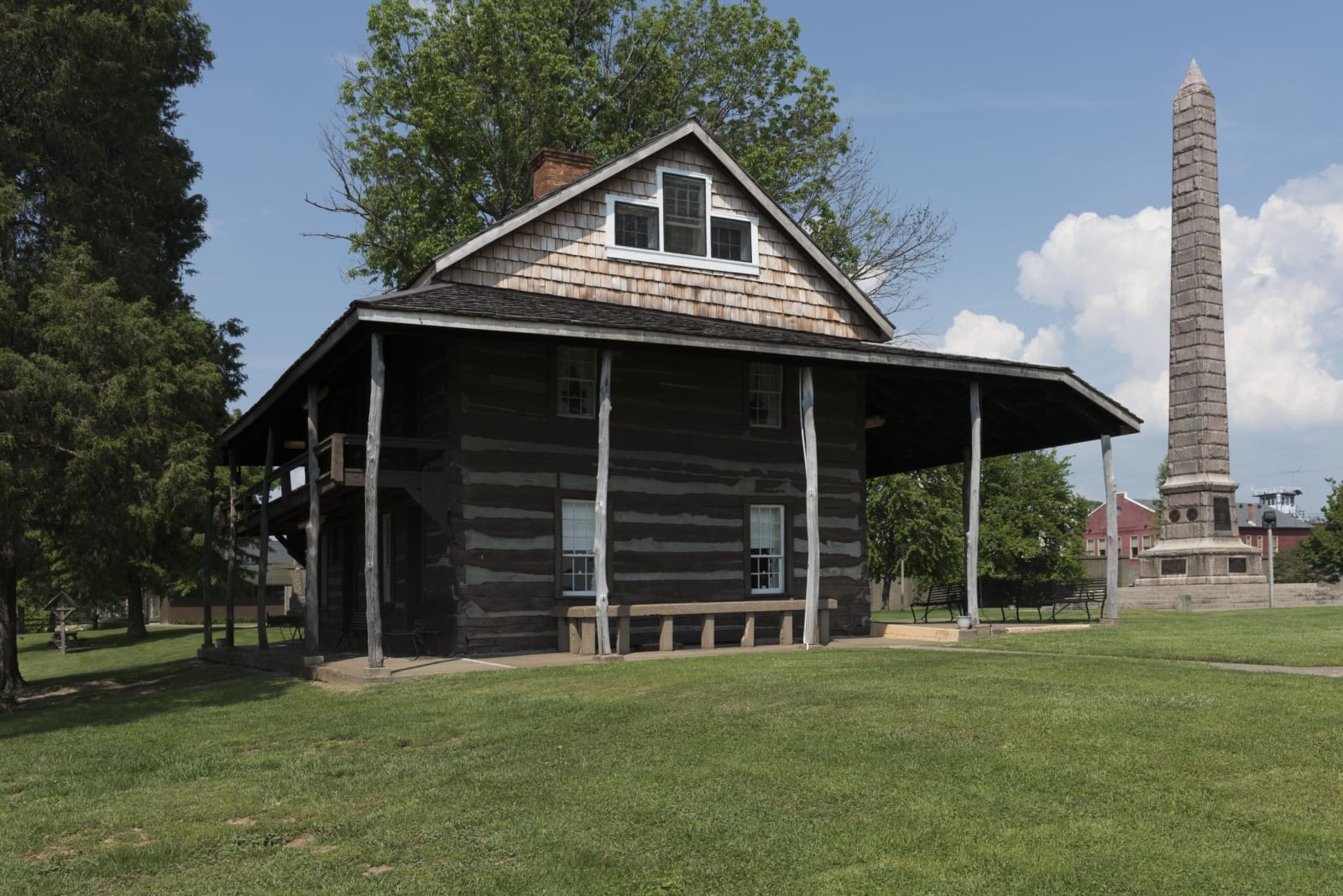
The park is a small lawn on the point. Its 84-foot granite obelisk, provided for by Congress in 1908, honors the Virginians, and local boosters long called this the first battle of the Revolution, a claim most historians reject. Walter Newman's 1796 log tavern, the Mansion House, is a museum, and a monument to Cornstalk stands nearby. Stand where both rivers show, and remember whose land the fight was over.
Visitor Info
On the Map
Nearby
The closest stops worth working into your route
Historical markers nearby
Roadside plaques and monuments within a short detour