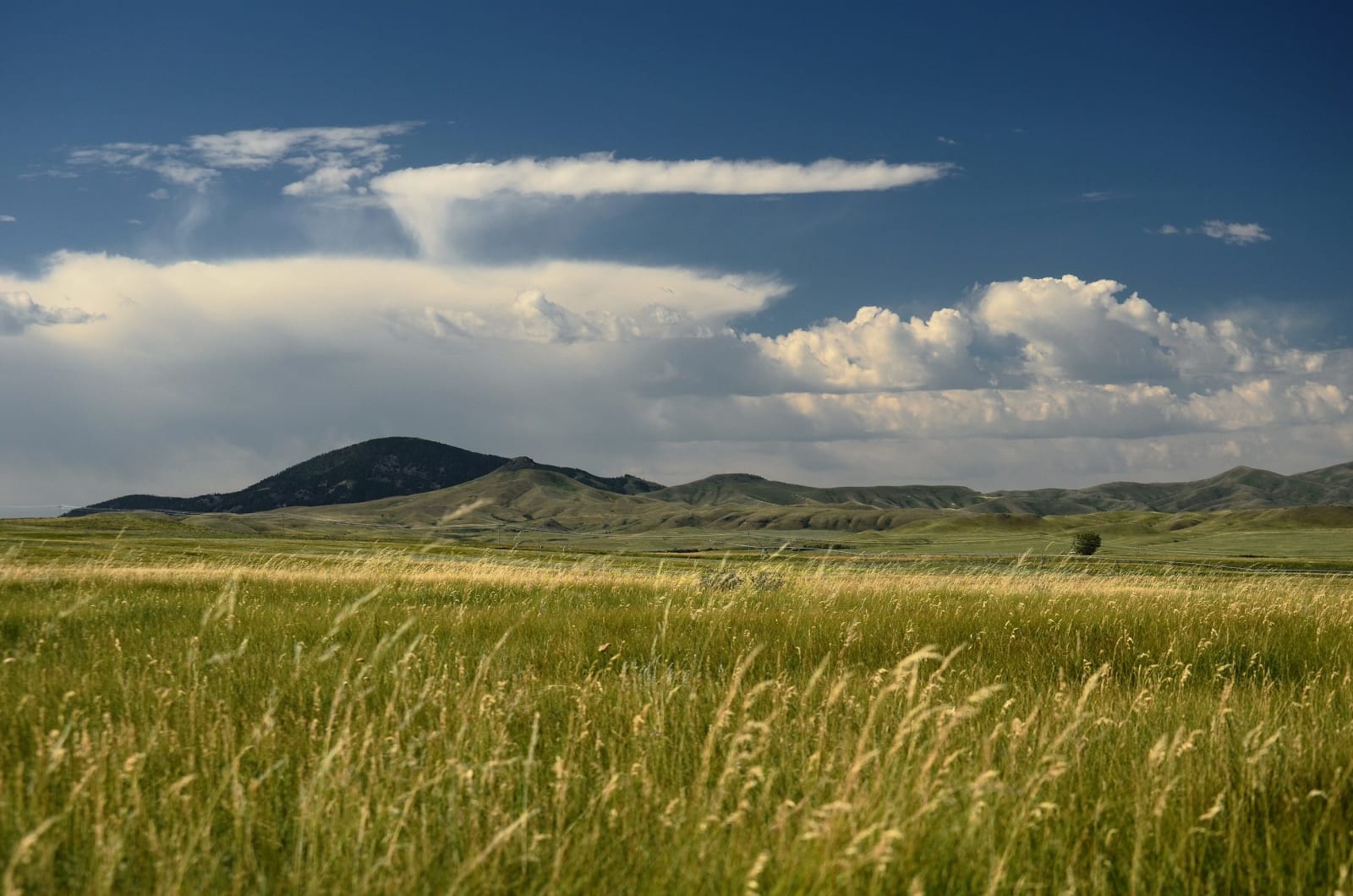
The Hi-Line
The Chippewa Cree, Aaniiih, Nakoda, Assiniboine and Sioux reservations, the Marias Massacre, the Nez Perce surrender at Bear Paw, the homestead line and Fort Peck Dam.
The Hi-Line is reservation country: the Chippewa Cree at Rocky Boy's, the Aaniiih and Nakoda at Fort Belknap, the Assiniboine and Sioux at Fort Peck. Two of the worst days of Montana's Indian wars came here. At dawn on January 23, 1870, Major Eugene Baker's cavalry fell on a Piikani camp on the Marias River. It was the wrong camp, Heavy Runner's peaceful band, with smallpox in the lodges and the young men away hunting; Baker was told and attacked anyway. The Army counted 173 dead, most of them women, children and old men, and Heavy Runner was shot as he pleaded with the soldiers to stop. In late September 1877 the Nimiipuu who had survived the Big Hole stopped to rest north of the Bears Paw Mountains, about forty miles short of Canada. Colonel Nelson Miles struck on September 30, and after a five-day siege Chief Joseph surrendered on October 5, while White Bird and some two hundred others slipped north to Sitting Bull's Lakota.
The name comes from the Great Northern Railway, which James J. Hill laid across the top of the state from 1887, with U.S. 2 later running beside it. After Congress enlarged homesteads in 1909, settlers filed 114,620 claims in Montana by 1923, and the drought that began in 1917 drove many of them out. The Empire Builder still runs the tracks.
In the Depression the Army Corps of Engineers threw an earthfill dam nearly four miles long across the Missouri at Fort Peck. At its peak, in July 1936, the job employed 10,546 workers, and boomtowns with names like New Deal grew up around it; the project made the first cover of Life that November, in a photograph by Margaret Bourke-White. In 1938 part of the dam slid into the reservoir and killed eight men, six of whom were never recovered. The dam was finished in 1940.
What to See in The Hi-Line
8 places across the region, grouped by what they are.
Historic Sites
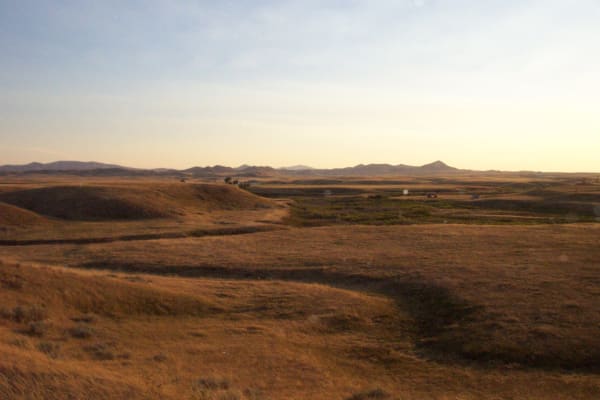


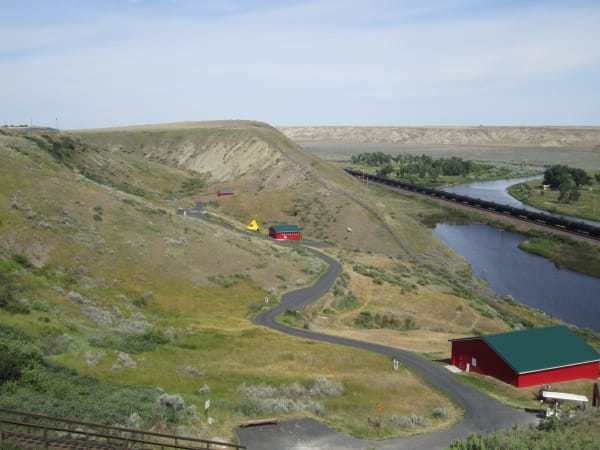
Towns & Gateways
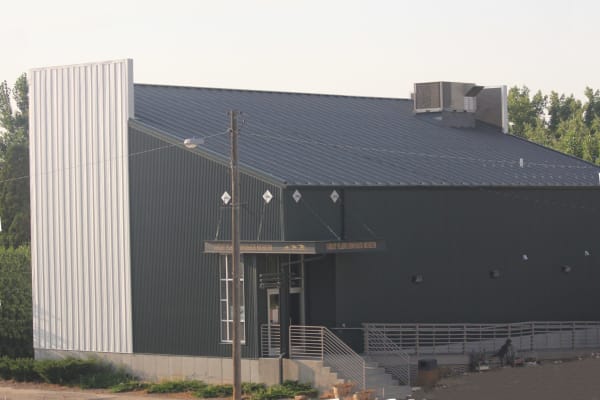
Architecture

Stories from The Hi-Line
The Herd at the North Gate
Every winter Yellowstone's bison walk down the valley to Gardiner, and Montana's cattle law meets them at the park line. A quarantine program now sends some of them on to the Fort Peck Reservation instead of to slaughter.
The Sweet Pine Hills
Three buttes rise out of the wheat just south of the Canadian line. The nations of the northern plains have fasted on them for generations; in the 1990s they kept a gold mine off them.
The Hi-Line rewards the unhurried. Pick a base, fan out, and let the country between the headline stops surprise you.
← Explore more of Open Road Guide