Hattiesburg & the Pine Belt
Choctaw land, timber rail and Freedom Summer: Hattiesburg's courthouse and Freedom School, Camp Shelby, Black Creek, the Longleaf Trace and Jones County.
This was Choctaw country. The treaties of 1805, Mount Dexter, Doak's Stand and Dancing Rabbit Creek passed the longleaf pine land to the United States, and Black Creek's side tributaries hold a record of people reaching back some 11,000 years. At the Lauren Rogers Museum in Laurel, contemporary Choctaw basketry is still collected on land the Choctaw once held.
The railroads and sawmills came next. Hattiesburg grew from a depot site chosen in 1880 into the hub of the Southern pine trade, and the Longleaf Trace now follows the timber line that carried the forest out. The Free State of Jones is best read at the Amos Deason House in Ellisville, where the record is plainer than the legend. At Prentiss, a school founded in 1907 for Black Mississippians still stands, and its 1926 Rosenwald building is now a museum.
Hattiesburg was a center of Freedom Summer. Start at the courthouse where Freedom Day was held in 1964 and Vernon Dahmer is remembered, then the church where the Freedom School met, then the USO club built for Black soldiers training at Camp Shelby. The state's armed forces museum sits inside the camp, and the Salmon Site, where two nuclear tests were fired underground in 1964 and 1966, is a long forest drive southwest.
What to See in Hattiesburg & the Pine Belt
12 places across the region, grouped by what they are.
Natural Areas
Hikes & Trails
Historic Sites
Towns & Gateways
Architecture
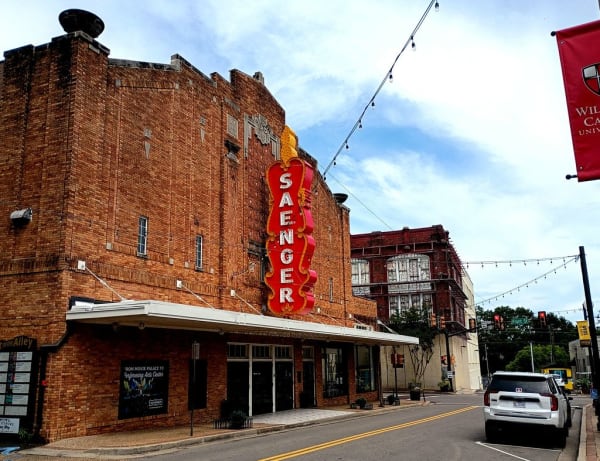
Hattiesburg & the Pine Belt rewards the unhurried. Pick a base, fan out, and let the country between the headline stops surprise you.
← Explore more of Open Road Guide