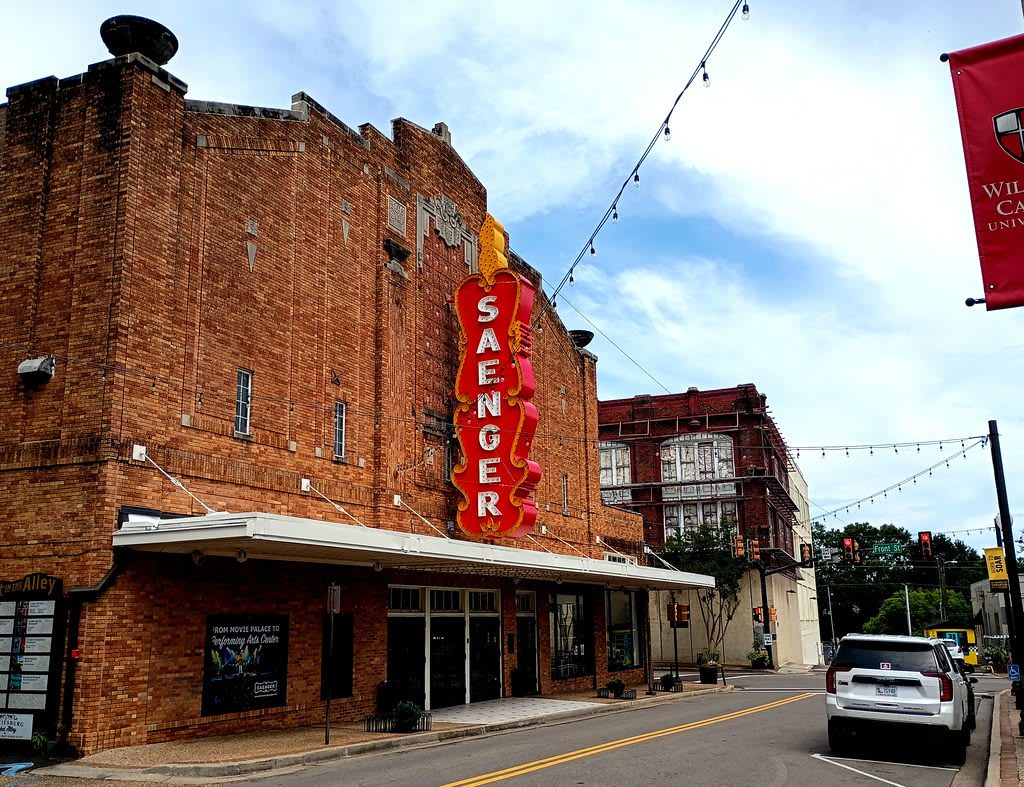
 Paul Lowry / CC BY 2.0 via Flickr
The Story
The Piney Woods around Hattiesburg were ceded by the Choctaw in 1805 and stayed a cattle-and-timber frontier until the railroad came. In 1880 William H. Hardy, surveying the New Orleans and Northeastern line, chose a depot site near the Leaf and Bowie rivers and named it for his wife, Hattie. The first train ran in 1883, the town was incorporated in 1884, and a fire in 1893 burned the frame business district, after which new buildings had to be fireproof. That is why most of downtown is brick.
The timber boom did the rest. The Gulf and Ship Island Railroad gave the sawmills a line to deep water at Gulfport in 1897, and Hattiesburg became the distribution center of the Southern pine trade. By 1912 it called itself the metropolis of South Mississippi, and by 1920, with 13,270 people, it was the fourth largest city in the state. Forrest County was cut out of Perry County in 1908 with Hattiesburg as its seat, and Mississippi Normal College, now the University of Southern Mississippi, opened here in 1912. Camp Shelby, from 1917, added to the city's economy.
The National Register district covers twelve blocks and some sixty buildings, mostly two- and three-story brick rows with arched windows and cast-iron columns. Its larger landmarks include the Old Federal Building, the Art Deco Saenger Theater, the post office and the Forrest County Courthouse. The Southern Railway built the depot in 1910. Walk to the courthouse, where the 1964 Freedom Day picket stood.
Visitor Info
On the Map
Nearby
The closest stops worth working into your route