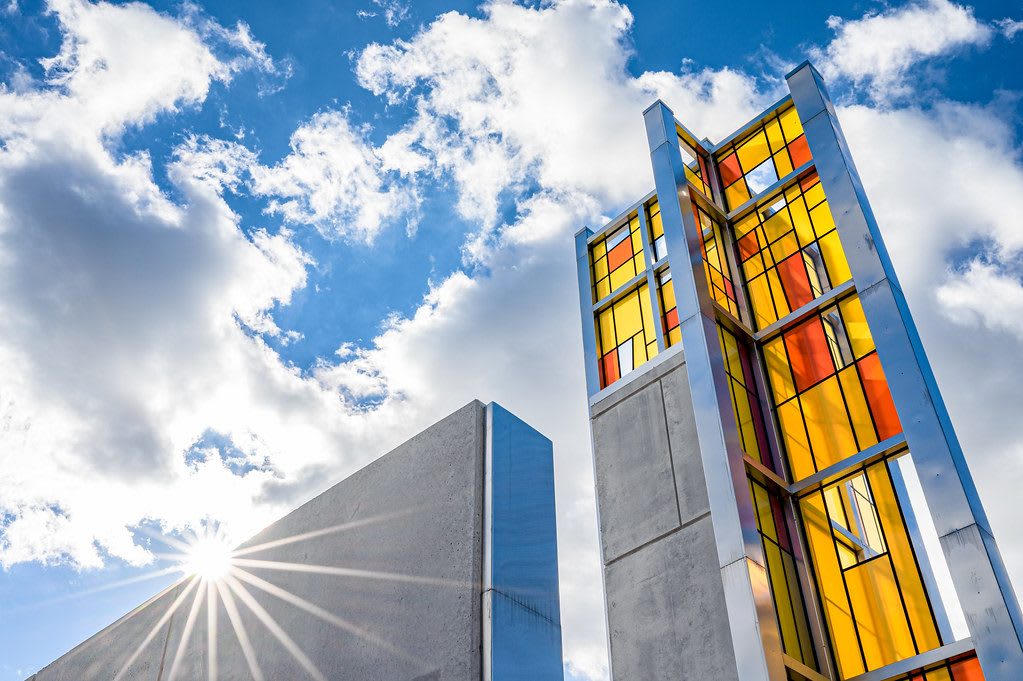
 Aaron Hines, City of Greenville / public domain via Flickr
The Story
In the winter of 1860, twenty-two Black worshippers began gathering in the home of Ruth Armond on North Greene Street in Greenville. When slavery ended in 1865 they built a church of their own at First and Greene streets, called the African Baptist Church until the 1880s, when it took the name Sycamore Hill Missionary Baptist Church from the trees around it. It grew through years when the Ku Klux Klan terrorized Pitt County, and for more than a century it was the center of a close-knit Black neighborhood of homes and businesses between the Tar River and Fourth Street.
That neighborhood is gone. Greenville set up a redevelopment commission in 1958, and its Shore Drive project, approved in 1960, aimed at downtown. In the late 1960s urban renewal cleared the area and scattered its residents, and an arson that has never been solved destroyed the church building, which had stood on the corner since 1917. The congregation moved twice and now worships on Hooker Road. The cleared land became the Town Common, a park along the river.
Former residents and church members helped shape the memorial built on the corner decades later. Tall walls of stained glass rise on the outline of the old church, following its walls, windows and bell tower, and benches set like pews stand where the sanctuary was. Paths lead on through the Town Common to the river. A self-guided African American Cultural Trail continues to the sites of The Block on Albemarle Avenue and the 1924 St. Frances Hospital for Black patients.
Visitor Info
On the Map
Nearby
The closest stops worth working into your route
Historical markers nearby
Roadside plaques and monuments within a short detour