 Luckiewiki / CC BY-SA 4.0 via Wikimedia Commons
The Story
By 1950 the Black high school in Farmville, built in 1939 for 180 students, held 477, and the county's answer was a set of tar-paper shacks heated by stoves. On the morning of April 23, 1951, sixteen-year-old Barbara Johns and a few classmates called an assembly without the principal's knowledge and led the student body out on strike. They stayed out two weeks and called the NAACP lawyers Oliver Hill and Spottswood Robinson III, who agreed to take the case if it challenged segregation itself.
The suit, Davis v. County School Board of Prince Edward County, was filed that May and became one of the five cases decided together as Brown v. Board of Education in 1954, the only one begun by students. Prince Edward then went further than any place in the country to resist. In June 1959 the supervisors cut off money for the public schools, which stayed closed for five years. White children went to a new private academy carried by state tuition grants; most Black children had no school at all until the Free School opened in 1963, and the Supreme Court's Griffin decision reopened the public schools in September 1964.
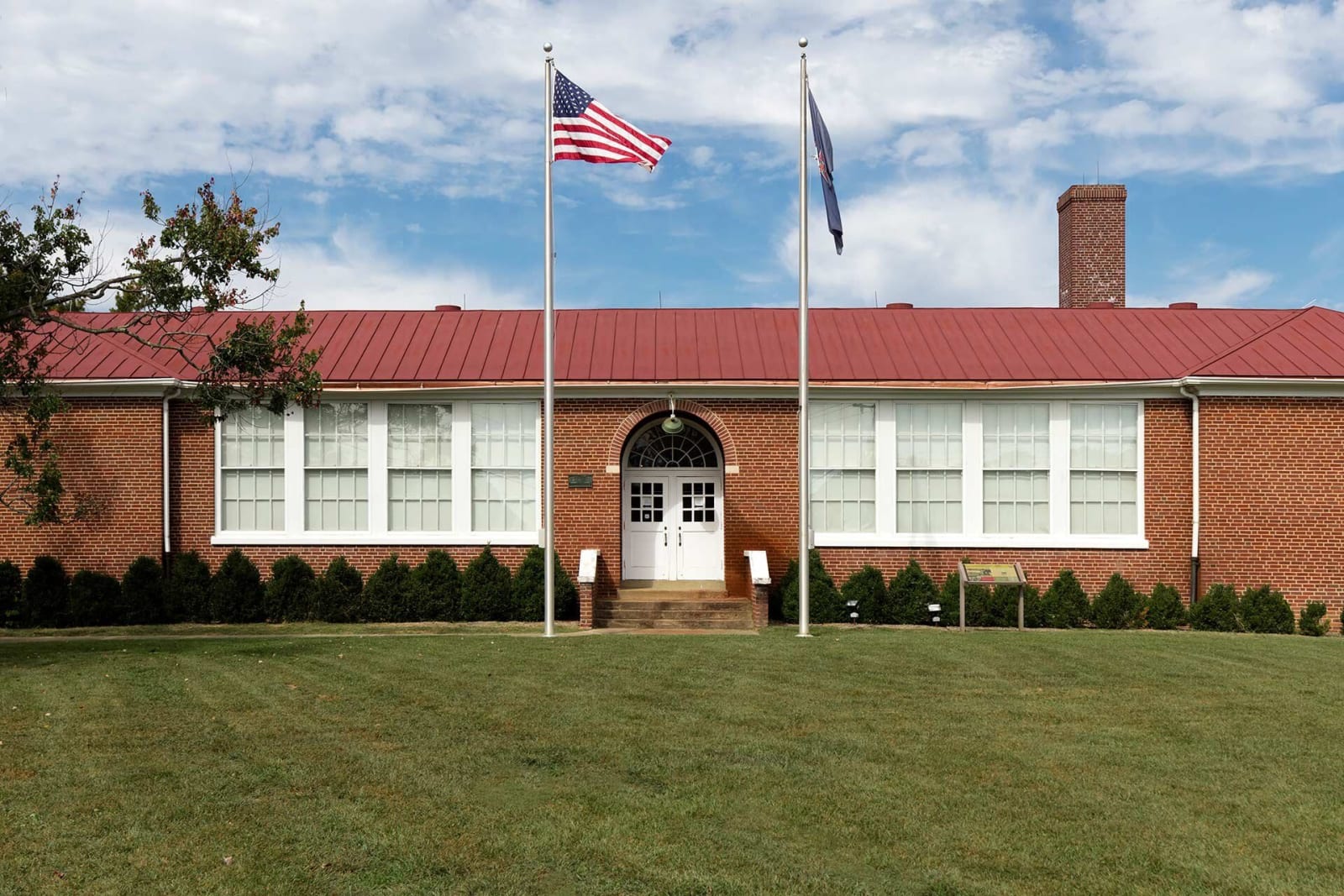
The school opened as a museum on the strike's fiftieth anniversary in 2001. It is a National Historic Landmark and, since 2022, an affiliated area of Brown v. Board of Education National Historical Park. Six galleries start in the auditorium where the walkout began and include a tar-paper classroom with its original stove. Parking on site is limited; the overflow lot is across Griffin Boulevard.
Visitor Info
On the Map
Nearby
The closest stops worth working into your route
Historical markers nearby
Roadside plaques and monuments within a short detour