 Carol M. Highsmith / public domain via Library of Congress
The Story
The upper Monongahela was Native country long before the fort. The Monongahela people grew corn and lived in circular, stockaded villages along this river north of present Fairmont from about 1200, until the Seneca dispersed them in the 1630s. In the eighteenth century Shawnee, Mingo, Wyandot and Lenape (Delaware) people lived and hunted through the upper Ohio Valley, and the land settlers took up after the French and Indian War was land those nations claimed. Lenape fighters had struck the first settlement at the mouth of Deckers Creek, present Morgantown, in 1759.
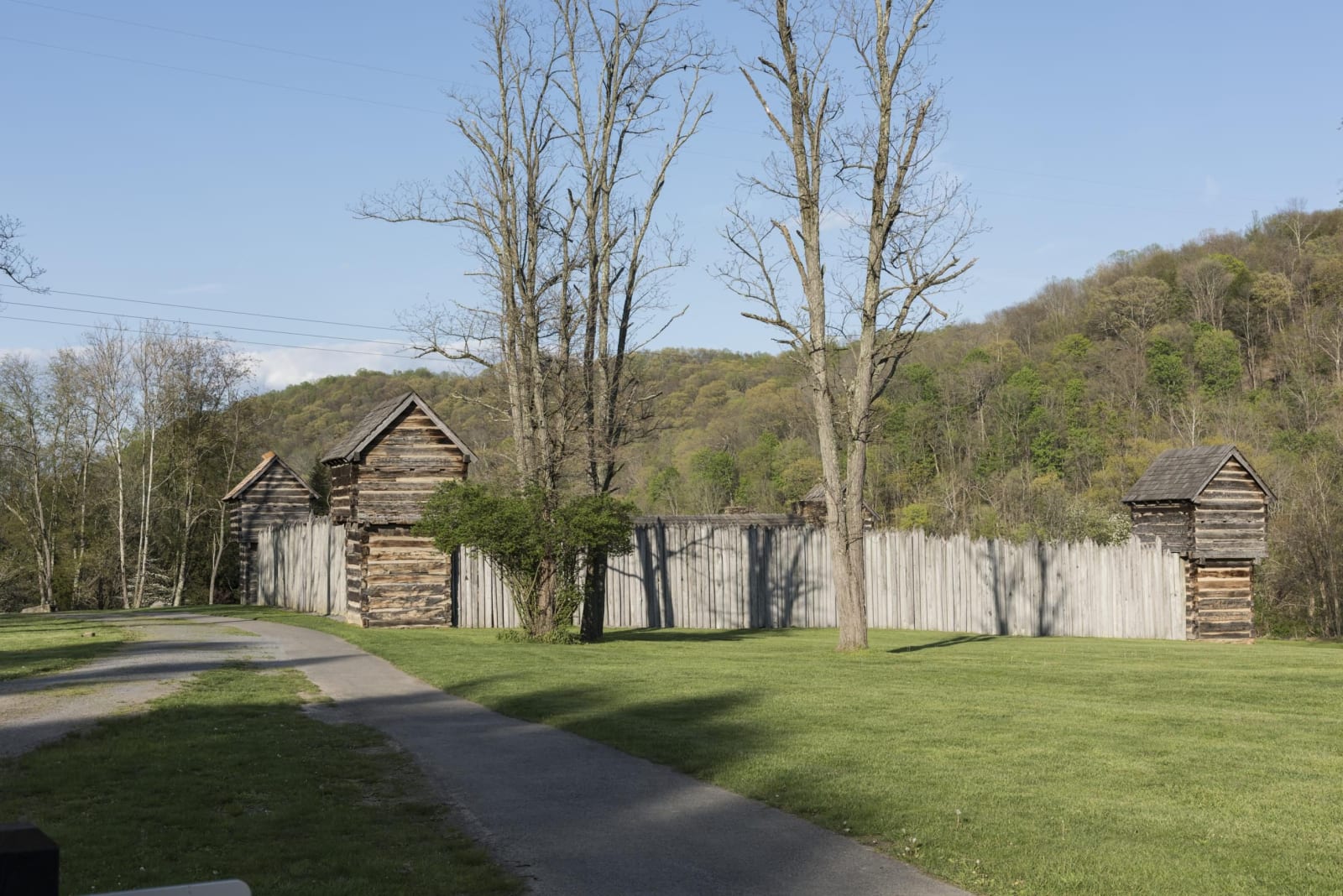
In 1774, the year of Dunmore's War, the local militia under Capt. Jacob Prickett built a refuge fort where Pricketts Creek meets the Monongahela, about ten miles from three major Native trails. It was a civilian shelter, not an army post. When raids threatened, up to 80 families crowded into its cabins for days or weeks, and settlers long remembered forting up as a hard time. The fort was never directly attacked. The Pricketts stayed on the land for nearly two centuries, and Zackquill Morgan, who founded Morgantown, is buried in the family cemetery here.
The fort was rebuilt in 1974 as near the original site as could be judged and opened as a state park in 1976: a 110-foot square of 12-foot log walls with two-story blockhouses at the corners, small cabins along the walls, and a meetinghouse and storehouse in the common. Costumed interpreters work as blacksmiths, weavers and hearth cooks, and the tour takes in the brick Job Prickett House, begun about 1859.
Visitor Info
On the Map
Nearby
The closest stops worth working into your route
Historical markers nearby
Roadside plaques and monuments within a short detour