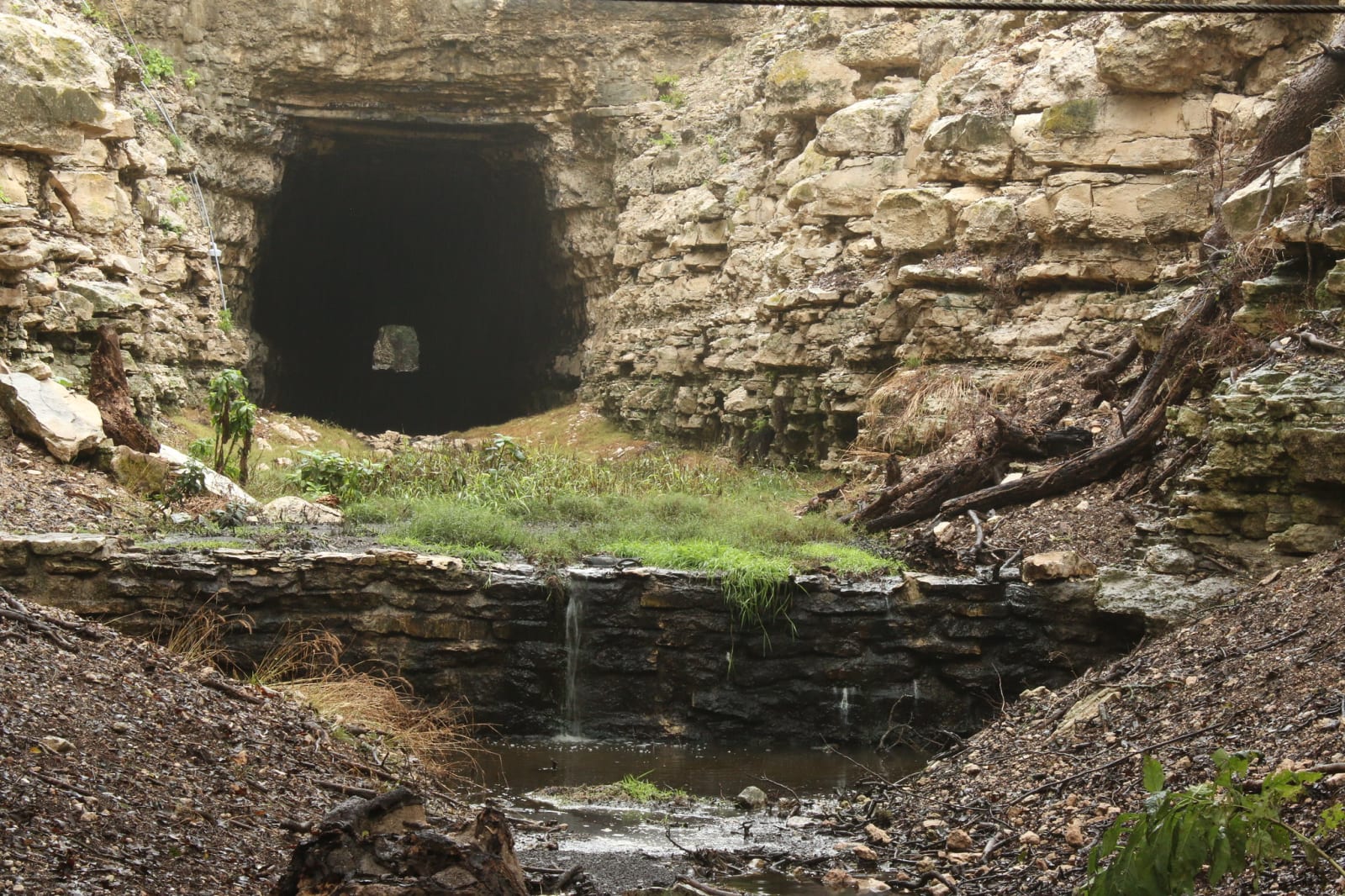
 Tracy Keller / CC BY-SA 2.0 via Flickr
The Story
The railroad left this tunnel in 1942, and the bats moved in. From May through October up to three million Mexican free-tailed bats and about 3,000 cave myotis roost inside, and each evening they fly out in search of food and water. Rangers give programs on bat history and ecology on the nights the bats are in residence and staff are available.
The park opens after 5 p.m. in bat season only to ticket holders, and every person, children included, needs a ticket bought in advance; none are sold at the gate. There are two viewing areas. The upper holds 100 people. The lower holds 70, is open Thursday through Sunday, usually sells out two weeks ahead, and is closed to children under four. Visitors are asked to arrive an hour before recent emergence times. Cell service is limited, so a screenshot of the ticket helps.
By day the park has a nature trail of less than half a mile, where visitors can look into the tunnel and read signs on bat lore and the railroad. There is no drinking water in the park; bring your own.
Visitor Info
On the Map
Nearby
The closest stops worth working into your route
Historical markers nearby
Roadside plaques and monuments within a short detour