 Carol M. Highsmith / public domain via Library of Congress
The Story
Parkersburg sat at the mouth of the Little Kanawha, and from 1860 that river carried oil. Barrels came down from the Burning Springs field in Wirt County and later from Volcano and the other fields around the town, and the money stayed. Johnson Newlon Camden opened one of the country's first refineries here in 1869, sold it in secret to John D. Rockefeller's Standard Oil in 1875 and went on running it as if it were still his own, helping Standard reach its near-total grip on the trade. Camden later served two terms in the United States Senate.
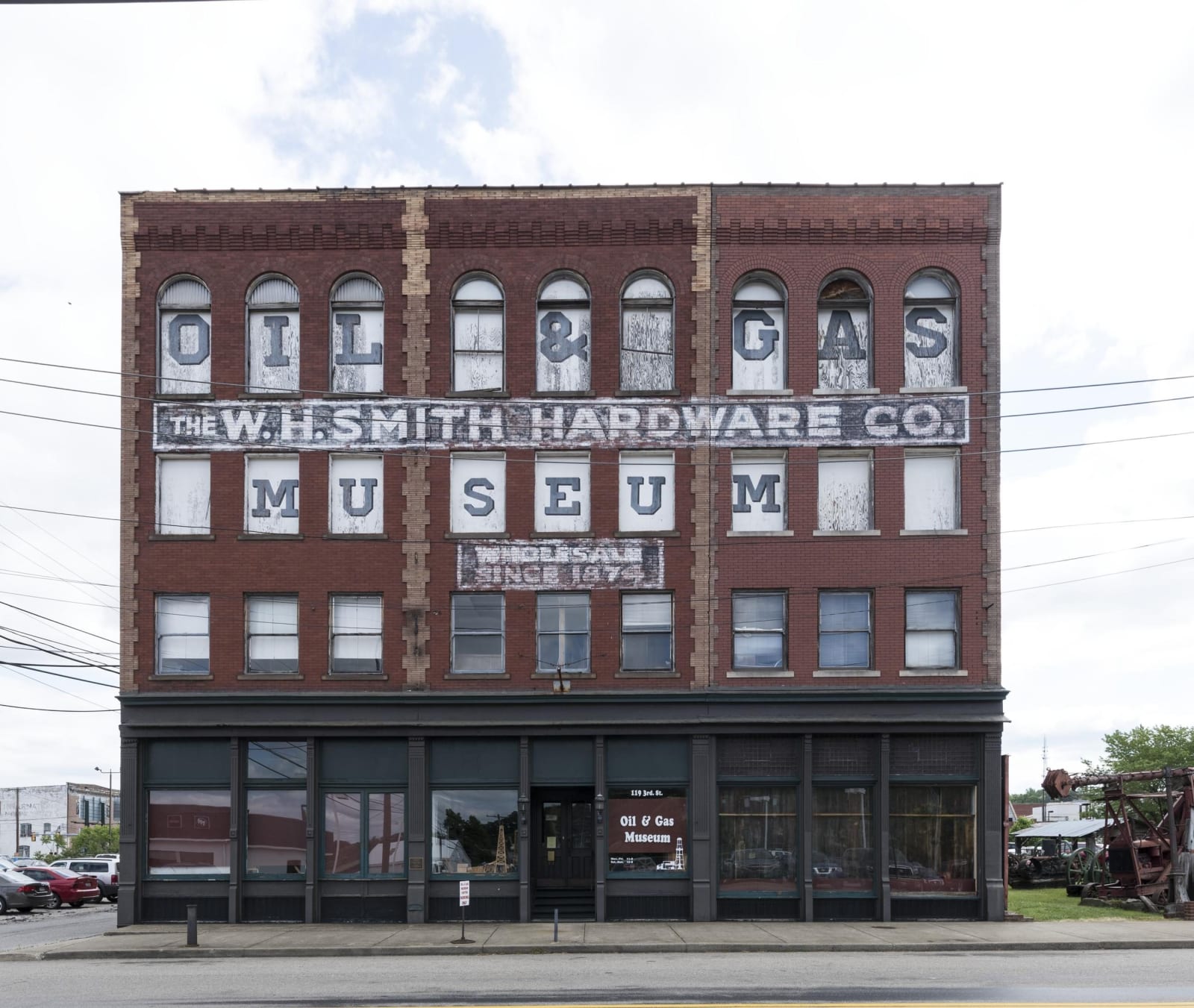
The museum fills the three floors of the old W. H. Smith Hardware Company building on Third Street, listed in the National Register. Some of the oldest oil and gas equipment that survives anywhere shares space with pumps and engines from the later fields, glass made by the valley's factories, a period general store and rooms on the Civil War and the region's soldiers. Oil and statehood run together here. The three men painted on the side of the building, Peter G. Van Winkle, Arthur I. Boreman and William E. Stevenson, were Parkersburg men who helped carve the new state out of Virginia during the war: Van Winkle as one of its first two senators, Boreman as its first governor and Stevenson as its third.
The collections are dense, and the museum sells a multi-day ticket for people who want to take breaks. Parking is on the street and behind the building.
Visitor Info
On the Map
Nearby
The closest stops worth working into your route
Historical markers nearby
Roadside plaques and monuments within a short detour