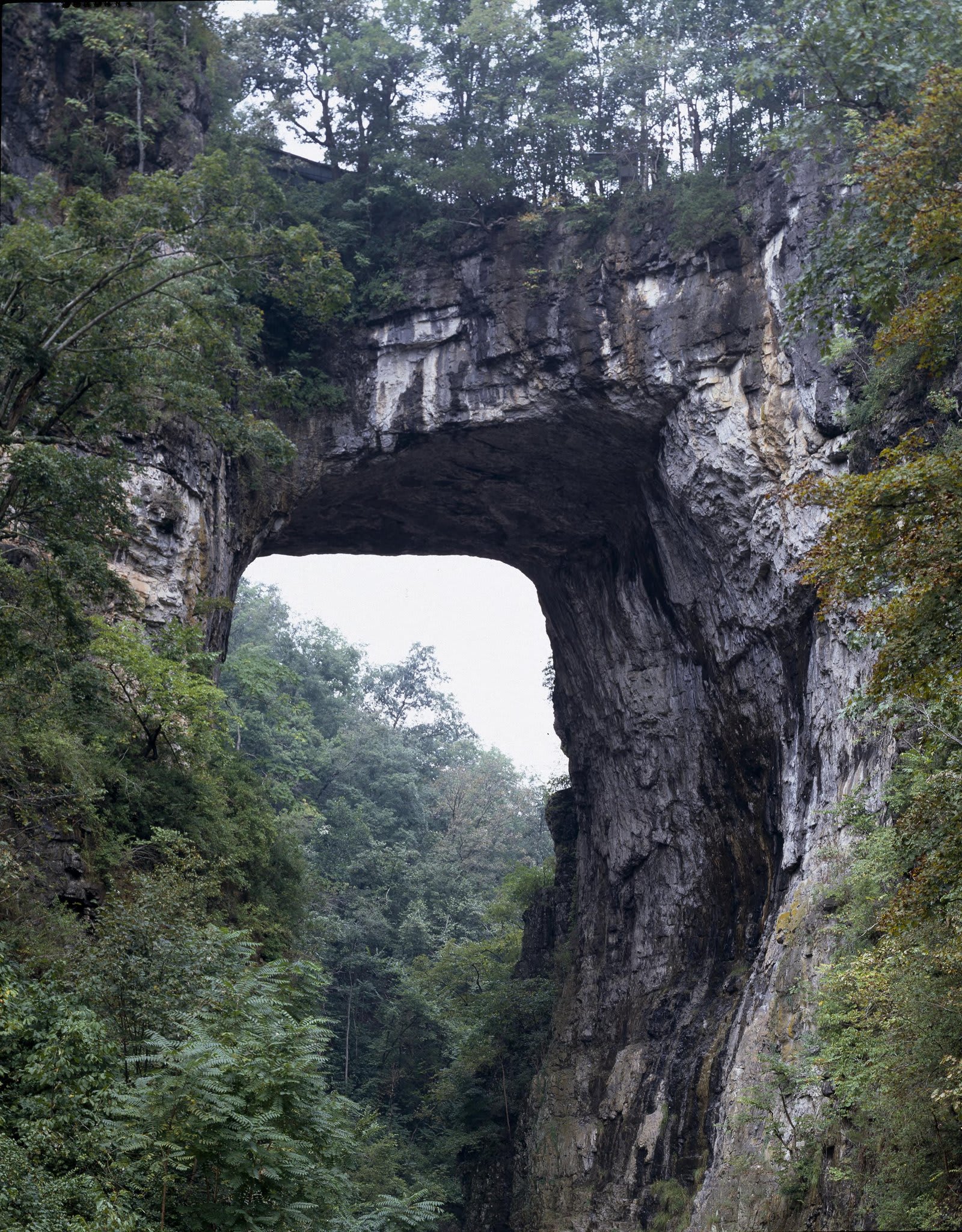
 Carol M. Highsmith / public domain via Library of Congress
The Story
To the Monacan the stone arch over Cedar Creek is sacred, the work of the Creator, and they call it the Bridge of God. Their oral tradition remembers it as the place where ancestors pursued by enemies found a way across the gorge and were saved. Before the bridge became a park, Monacan people had to pay admission like any tourist to stand beneath it. The Monacan Indian Nation, federally recognized in 2018, built a re-created Monacan village along the creek trail with the site's private owners, and the state kept it when the park opened.
The bridge stands about 200 feet tall, the last surviving piece of the roof of a cave or tunnel through which Cedar Creek once flowed, cut through limestone and dolomite laid down roughly 470 million years ago. Thomas Jefferson bought 157 acres including it from George III in 1774 for 20 shillings, called it "the most Sublime of nature's works" and built a two-room log cabin for himself and his guests. US 11 still runs across the top.
For generations private owners ran it as a roadside attraction, with a hotel, a wax museum and a gift shop in front of the arch. A conservation fund bought the property and arranged its transfer, and it was dedicated as Virginia's 37th state park on September 24, 2016. From the visitor center the Cedar Creek Trail drops 137 steps and passes under the bridge to Saltpeter Cave, the Lost River and the 50-foot cascade of Lace Falls.
Visitor Info
On the Map
Nearby
The closest stops worth working into your route
Historical markers nearby
Roadside plaques and monuments within a short detour