 carlfbagge / CC BY 2.0 via Flickr
The Story
People lived in these sandhills long before Aiken. An archaeological survey from 2015 to 2017 found sites far denser than usual, with projectile points thousands of years old and artifacts from the Paleo-Indian period, along with an eighteenth-century whiskey still and bottles. In 1833 the South Carolina Canal and Railroad Company's line from Charleston to Hamburg, then the longest railroad in the world, ran through the woods; the Cathedral Aisle Trail past Black Gum Pond follows its bed, and a piece of the old track turned up at the end of the survey.
Aiken's winter colony began in earnest in the early 1890s, when the New Yorkers Thomas and Louise Hitchcock invited friends south for a season of horses and golf. Whitneys, Vanderbilts and hundreds of other northern families followed for sixty years, building cottages and riding to hounds. In 1939 the Hitchcock family set aside 1,190 acres in a foundation for the town's use, and it has since grown to about 2,100 acres, protected by a conservation easement. Its keepers have restored longleaf pine and wiregrass and brought back the red-cockaded woodpecker.
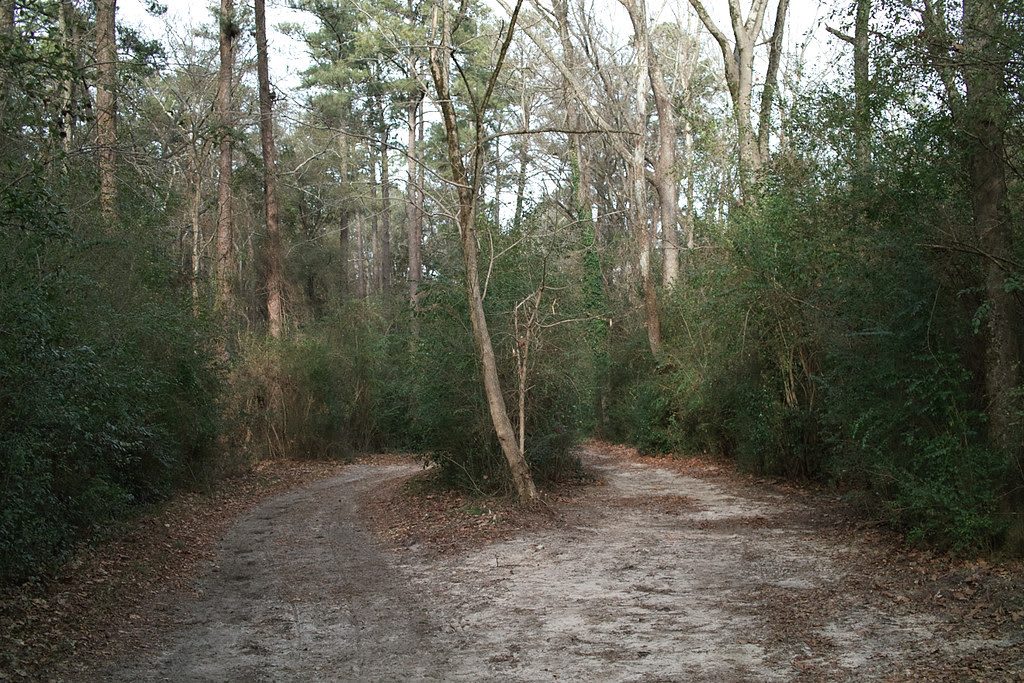
Seven entrances lead in from the edge of town. Riders and walkers share the soft sand trails, and Sand River, a dry wash, can run with water after heavy rain. The Aiken Horse Show is held in the woods each spring, and the Aiken Hounds hunt here from mid-October to mid-March.
Visitor Info
On the Map
Nearby
The closest stops worth working into your route
Historical markers nearby
Roadside plaques and monuments within a short detour