 Ken Lund / CC BY-SA 2.0 via Flickr
The Story
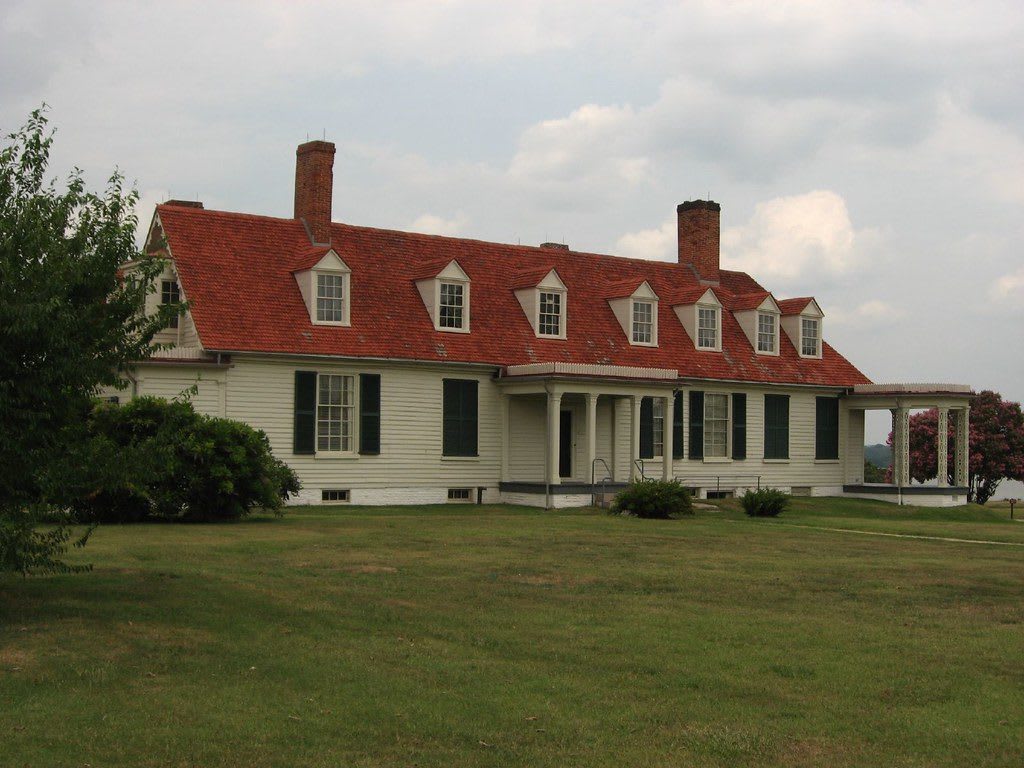
City Point stands on a bluff where the Appomattox River runs into the James, in country the Appomattoc knew long before the English. Captain Francis Eppes took up the land in 1635, and the house his family called Appomattox dates to about 1751. In 1861 Dr. Richard Eppes held nearly 130 people in slavery across three plantations. When his family fled in 1862, nearly all of the people he enslaved left with the Union army, freeing themselves the moment the chance came.
Two years later the war came back. Grant arrived on June 15, 1864, and pitched his headquarters tent on the east lawn, eight miles behind the Union lines at Petersburg. Through the ten-month siege City Point became one of the busiest ports in the world. On an average day the army kept about 9 million meals and 12,000 tons of hay and oats here, a bakery turned out 100,000 bread rations a day, and the Military Railroad was rebuilt to the front lines in 22 days. Black men did much of that work as pickets, railroad hands and laborers, "discharging the ships, wheeling the dirt, sawing the timber and driving the piles," and many cooked at the Depot Field Hospital.
The Eppes family later gave the house and grounds to the Park Service, and they are now the City Point unit of Petersburg National Battlefield, free to visit. Walk out to the edge of the bluff, where the two rivers meet, and picture the wharves and ships that once filled the water below.
Visitor Info
On the Map
Nearby
The closest stops worth working into your route
Historical markers nearby
Roadside plaques and monuments within a short detour