 Ken Lund / CC BY-SA 2.0 via Flickr
The Story
For weeks in the summer of 1864, men of the 48th Pennsylvania, many of them coal miners, dug a tunnel under Elliot's Salient, a Confederate fort in the lines east of Petersburg, on a plan put forward by their commander, Lt. Col. Henry Pleasants. They packed it with about 8,000 pounds of powder, and at 4:45 on the morning of July 30 the explosion tore a gap some 200 feet wide in the line.
The Fourth Division of the IX Corps, regiments of the United States Colored Troops, had trained for about two weeks to lead the assault. The day before, Meade ordered them out of the lead, and a white division under Ledlie went in first and bogged down in the pit. The Black regiments went in last, in their first battle, and pushed farther than any other Union unit before William Mahone's counterattack drove them back. After the fiercest hand-to-hand fighting of the siege, the Union men in the crater surrendered, and Confederates killed Black soldiers who were trying to give up or being marched to the rear as prisoners. The division's losses ran far beyond the others'. Mahone's fame as one of Lee's best young generals rests on this day.
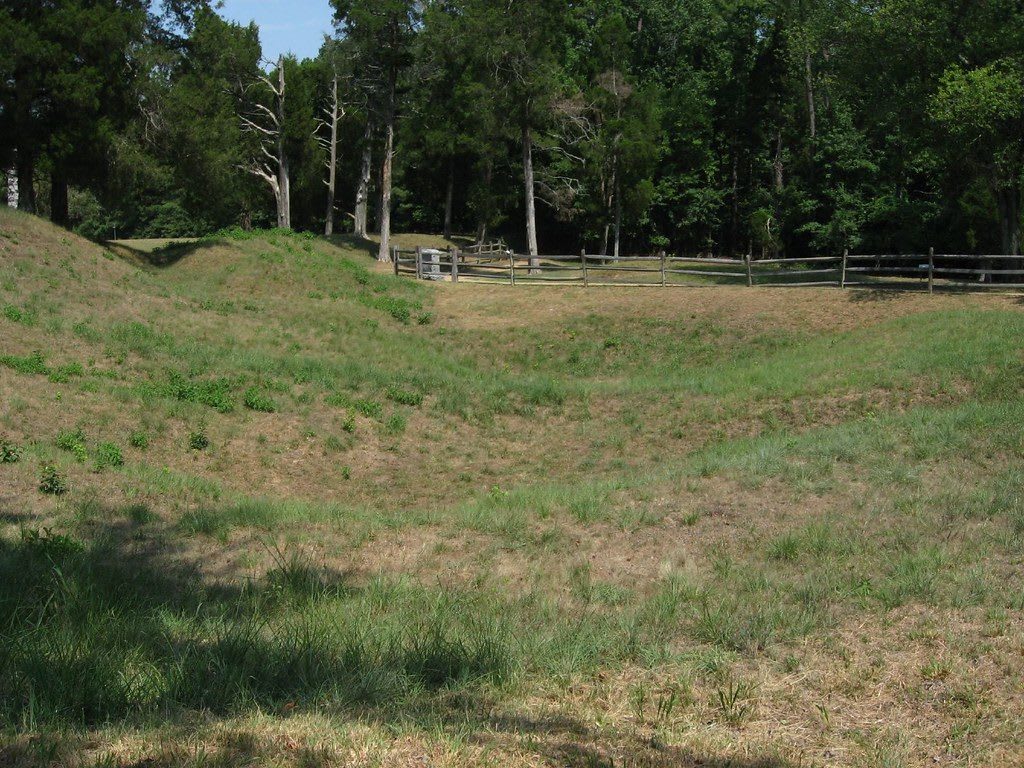
The crater is still here, a grassy hollow on the Eastern Front tour road of Petersburg National Battlefield, and sunken ground traces the line of the tunnel. Stand at the rim and look back toward the Union side to see how short the distance was. The park charges no entrance fee.
Visitor Info
On the Map
Nearby
The closest stops worth working into your route
Historical markers nearby
Roadside plaques and monuments within a short detour