 Billy Hathorn / CC BY-SA 2.5 via Wikimedia Commons
The Story
Carrizo Springs began in 1865 when fifteen families from Atascosa County, led by Levi English, settled beside a spring-fed tributary of the Nueces. It was named for carrizo, the native cane that grew there, and became the seat when Dimmit County was organized in 1880. Coahuiltecan peoples lived in the region before the settlers; Apaches and Comanches moved in later, and the Handbook says Native people were forced out by 1877 after pursuit by Rangers and local volunteers.
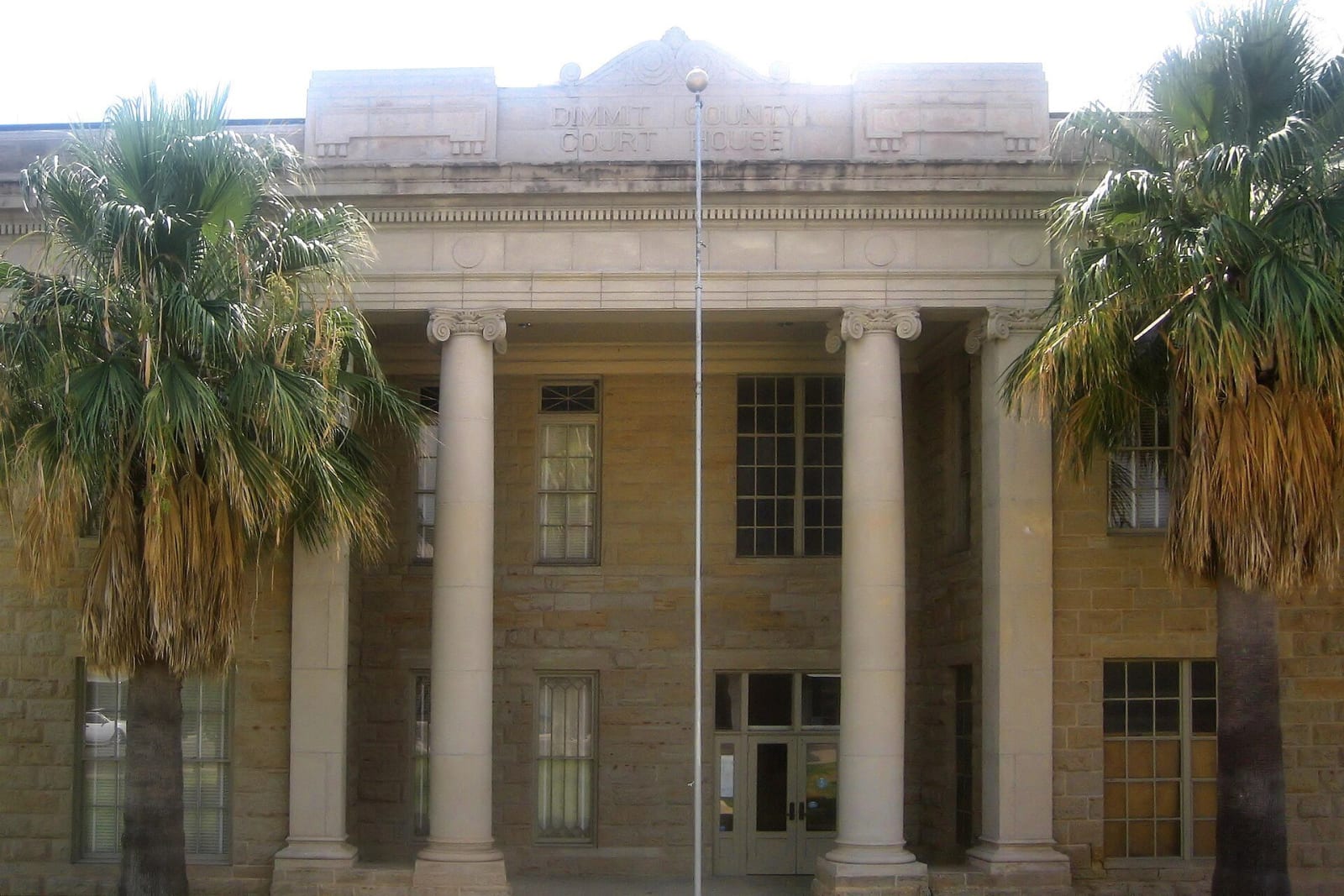
In November 1883 the commissioners first picked architect Alfred Giles, then switched to J. C. Breeding & Sons of San Antonio, who built the sandstone courthouse in 1884 in the Italianate style. In the 1920s San Antonio architect Henry T. Phelps enclosed it in Classical Revival dress: wings at each end, four massive columns, a recessed porch on the west side and a new cornice. The state marker records the change. A restoration finished in late 2004 removed dropped ceilings and uncovered plaster ceilings and a 1940 painted wainscot.
The county government that met here had a darker record. In 1914 the White Man's Primary Association was formed, and the Handbook of Texas says it excluded Mexican Americans from county politics for nearly fifty years. Artesian wells drilled from 1884 and a dam on the Nueces begun in 1899 made the county part of the Winter Garden, and Mexican Americans from Cotulla were encouraged to settle at Big Wells during the boom.
Visitor Info
On the Map
Nearby
The closest stops worth working into your route
Historical markers nearby
Roadside plaques and monuments within a short detour