 Carol M. Highsmith / public domain via Library of Congress
The Story
Williamsburg was Middle Plantation until 1699, when Virginia's capital moved here from Jamestown after another statehouse fire, and it remained the seat of government until 1780, when Governor Thomas Jefferson moved it to Richmond, farther from British raids. In the Revolutionary years more than half the people who lived in this town were Black, most of them enslaved. They built and kept the houses, shops and taverns along Duke of Gloucester Street, and a walk through the restored town is a walk through their workplaces.
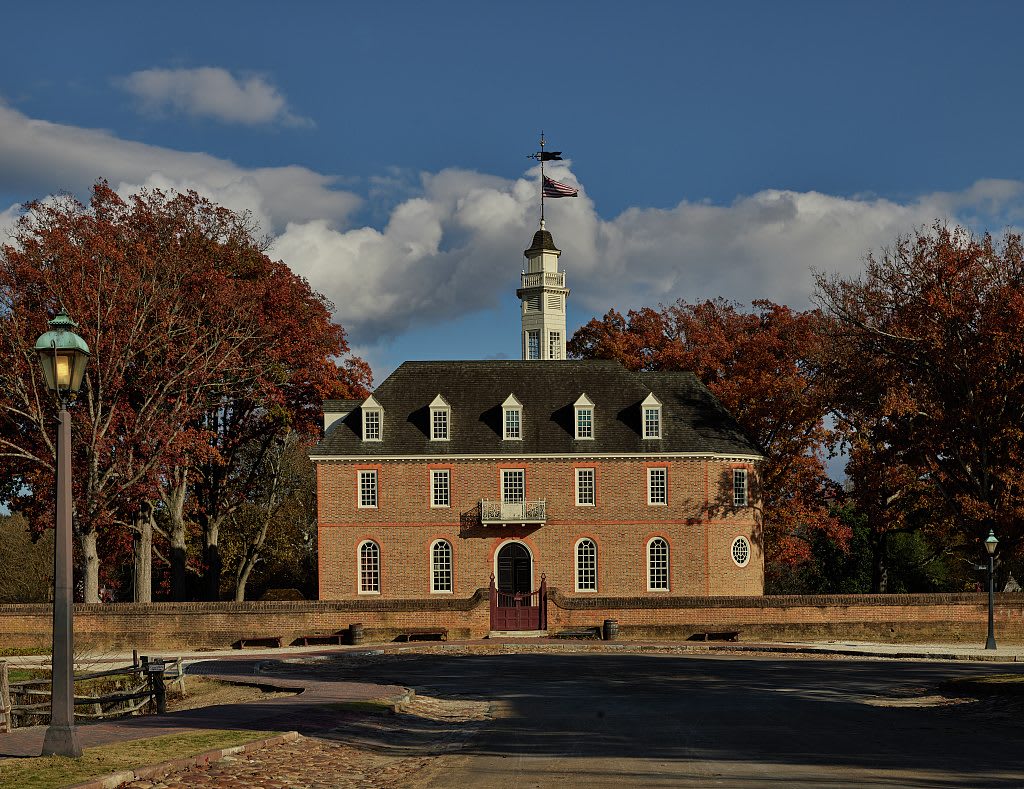
The restoration began in the late 1920s with the Rev. W. A. R. Goodwin of Bruton Parish and the money of John D. Rockefeller Jr., who committed to it in 1927. About 500 buildings were restored or rebuilt, 88 of them original; the Capitol at the east end of the street is a reconstruction. For half a century the town told mostly its white story. A full program on Black history began only in 1979, when Rex Ellis first portrayed Gowan Pamphlet, the enslaved preacher who led the Black congregation that became officially Baptist under him in 1781 and later gained his freedom.
In 1760, at Benjamin Franklin's suggestion, the Williamsburg Bray School opened to teach free and enslaved Black children, with Ann Wager as schoolmistress, and it ran until 1774. Tree-ring dating confirmed its building in 2020; it was moved into the Historic Area in 2023 and opened to visitors on Juneteenth 2025. Park at the Visitor Center: the streets are free, and a ticket opens the buildings.
Visitor Info
On the Map
Nearby
The closest stops worth working into your route
Historical markers nearby
Roadside plaques and monuments within a short detour