County guide · Texas
La Salle County
2 places to stop and 14 historical markers in La Salle County, Texas.
Towns: Cotulla (12), Artesia Wells (2), Encinal (1), Millett (1)
Places to stop
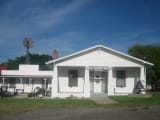
cultural · Cotulla
Brush Country Museum
La Salle County's local museum, with a segregated-schools display that sets the scene for the Welhausen School, where Lyndon Johnson taught Mexican American children in 1928-29.
natural · Artesia Wells
Chaparral Wildlife Management Area
A 15,200-acre South Texas brush country research tract in La Salle and Dimmit counties, open to the public in spring and summer, with a short accessible trail and a long ranching past.
Historical markers
Cotulla · Erected 1977
Capt. Jasper N. Daniel
Judge Daniel took office in a county where politics had been settled with force. An early election-day slogan was Vote right or fight.
Cotulla · Erected 1982
Cotulla City Park
The town around the park grew fast. The railroad depot went up in 1882 and Joseph Cotulla sold lots, and by 1883 the town had a post office, a jail, a hotel and stores…
Cotulla · Erected 2009
Cotulla Ranch
Joseph Cotulla reached Galveston in January 1857, about twelve years old, with his widowed mother and an aunt, Silesians from a part of the Prussian Empire now in…
Cotulla · Erected 2009
Cotulla's First School
By 1885 the Cotulla school enrolled 135 students, a measure of how fast the railroad town filled.
Encinal · Erected 1980
Encinal Presbyterian Church
Encinal began as a rail stop. An 1882 railroad map shows only a place called Burro here, and a settlement called Ancaster may have stood nearby before the…
Cotulla · Erected 1978
First Deep Artesian Well
Water turned La Salle County from a ranching county into a farming one, for a while. Between 1900 and 1910 twenty-three towns were surveyed, among them Artesia Wells and…
Cotulla · Erected 1978
First Presbyterian Church of Cotulla
One Presbyterian pastor tied two railroad towns together. The Rev. Harry W. Hamilton took the Cotulla pulpit in 1909 and from 1910 also served Encinal, 27 miles south on…
Cotulla · Erected 1936
Fort Ewell
Fort Ewell took its name from Lieutenant Thomas Ewell, killed at Cerro Gordo on April 18, 1847. Captain Andrew J.
Artesia Wells · Erected 1977
John M. Ramsey
Artesia Wells, where Ramsey became a community leader, began as a railroad water stop called Bart on the International-Great Northern.
Cotulla · Erected 1936
La Salle County
Who held power in La Salle County shows in its numbers. People of Mexican descent were about half the county in the state census of 1887 and about two-thirds, 5,492…
Cotulla · Erected 1982
The Amanda Burks School
In the spring of 1871 Amanda Burks went up the trail with her husband William's herd to Abilene, Kansas, and she is considered the first woman to travel with a trail…
Cotulla · Erected 1980
The First United Methodist Church of Cotulla
The Methodist Episcopal Church, South, took its name from a split over slavery. At the 1844 General Conference, delegates voted to ask Bishop James O.
Cotulla · Erected 1936
The Nueces River
The river that the plaque calls a boundary was a contested one. In 1689 Alonso De Leon named it Rio de las Nueces for the pecans along its banks; earlier maps called it…
Millett · Erected 1978
William A. Waugh
Waugh's ranch had a longer history than the plaque's one date. He began at the Cibolo Creek crossing in 1856, left in 1858 and returned in 1861, and by 1879 his place…