County guide · Tennessee
Putnam County
2 places to stop and 16 historical markers in Putnam County, Tennessee.
Towns: Cookeville (12), Monterey (3), Brotherton (2), Buffalo Valley (1)
Places to stop
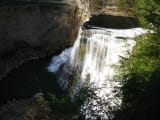
natural · Cookeville
Burgess Falls State Park
A day-use park on the Falling Water River, where a short trail passes three smaller falls on its way to a drop of more than 130 feet into a limestone gorge.
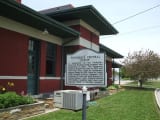
historical · Cookeville
Cookeville Depot Museum
The 1909 Tennessee Central Railroad depot in Cookeville's west side, now a museum with a model of the town in 1955 and a steam engine in the yard.
Historical markers
Buffalo Valley
Buffalo Valley School
Buffalo Valley sits where Big Indian Creek meets the Caney Fork, and at its height it was a transport hub with three grist mills, four general stores, a bank, a timber…
Cookeville
Capshaw School
The school's namesake belongs to the story of Cookeville's college. Robert Byrd Capshaw helped found Dixie College, established in 1909 by the Church of Christ.
Brotherton
Cherokee Oak
The tree stands on the old Walton Road, and the story attached to it is a Cherokee (Tsalagi) one.
Cookeville
Darwin School
Darwin School was one of the Tennessee schools built with Rosenwald money, and the arithmetic of that program is telling.
Monterey
Gen. John T. Wilder
Before the war made him a colonel, Wilder was a mechanic. Born in Hunter, in New York's Catskills, in 1830, he apprenticed as a millwright at a Columbus, Ohio, foundry…
Cookeville
Israel Putnam 1717 - 1790
The county's namesake rose from a Connecticut farm and a tavern. In the French and Indian War he served in Rogers' Rangers and was captured by Mohawk warriors, who were…
Cookeville
Last Stagecoach Hold-Up
The coach was robbed eight years before the first railroad reached Cookeville. The Nashville and Knoxville Railroad arrived from the west in 1890, and the Tennessee…
Brotherton
Mount Granger
Gideon Granger was a Connecticut lawyer and Jeffersonian pamphleteer who became Postmaster General in 1801 and served until 1814, the longest tenure of anyone in the…
Cookeville
Putnam County's Only Public Execution
Joseph and George Brassell were hanged after nearly two years of legal continuances. One retelling says the brothers and two companions, drinking whiskey from the…
Cookeville
Richard Fielding Cooke
Putnam County had to be created twice, and Cooke's name is on the second try. The legislature formed it in 1842 from pieces of Jackson, Overton, Fentress and White…
Cookeville
Site of WHUB Radio's First Studios
The station first went on the air at 1 a.m. on July 10, 1940, in a test that ran until 5:30 in the morning, with program director Gene Edwards at the microphone, local…
Monterey
Standing Stone
Settlers named the place for the stone, and the town was called Standing Stone until it was incorporated in 1901.
Monterey
Stokes' Atrocity
The Upper Cumberland's war was fought by irregulars as much as armies. Champ Ferguson, the Confederate guerrilla whose company the six dead men had joined, claimed more…
Cookeville
The Walton Road
William Walton won permission from Governor William Blount in 1795 to cut a road from the junction of the Cumberland and Caney Fork Rivers to Brotherton, where it met…
Cookeville
Town Spring
Water chose Cookeville's site. After Putnam County was re-established in 1854, Tennessee law required a county seat, and the land bought from Charles Crook was chosen…
Cookeville
White Plains
White Plains was one of the stands the Walton Road was built to feed. The 1801 turnpike provided for tollgates and stands, the inns of the day, along its length.