County guide · Louisiana
Rapides Parish
6 places to stop and 73 historical markers in Rapides Parish, Louisiana.
Towns: Alexandria (32), Pineville (22), Long Leaf (11), Forest Hill (5), Lecompte (3), Gardner (1), Castor Plunge (1), Libuse (1), Elmer (1), Tioga (1)
Places to stop
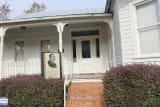
cultural · Alexandria
Arna Bontemps African American Museum
The restored Alexandria house where the Harlem Renaissance writer Arna Bontemps was born in 1902, on the Louisiana African American Heritage Trail.
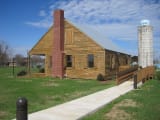
historical · Alexandria
Epps House: Solomon Northup's Gateway to Freedom
The Creole cottage Solomon Northup helped build for the man who enslaved him, moved twice and now a small museum on the LSU Alexandria campus.
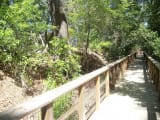
historical · Pineville
Forts Randolph and Buhlow State Historic Site
Two Confederate earthen forts on the Red River at Pineville, built with enslaved labor and never attacked, beside the remains of Bailey's Dam.
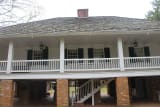
historical · Alexandria
Kent Plantation House
Rapides Parish's oldest known standing building, a Creole house with a February tour and a 2023 memorial that put the enslaved first.
historical · Pineville
Louisiana Maneuvers and Military Museum
A National Guard museum in a replica WWII barracks at Camp Beauregard, built around the huge 1940-41 war games in Central Louisiana. Free.
recreational · Gardner
Valentine Lake Recreation Area
A 46-acre Kisatchie National Forest lake dug by Civilian Conservation Corps crews in the 1930s, with a campground and the head of the Wild Azalea Trail.
Historical markers
Forest Hill
African-American Soldiers at Camp Claiborne
Black soldiers trained at Camp Claiborne in a segregated Army. The 91st and 93rd Engineer General Service Regiments, mostly African American, built the railroad between…
Alexandria
Alexander Fulton Park
The park carries the name of a man whose story is mostly about land. Alexander Fulton, a Scottish-born Pennsylvanian pardoned in 1797 for the Whiskey Rebellion, ran a…
Alexandria · Erected 1988
Alexandria
The two cities face each other across the Red River, and the older settlement is Pineville's, which grew around a military post of 1722 or 1723.
Pineville · Erected 1966
Alexandria Hall
Alexandria Hall went up in 1920, drawn on blueprints dated August 28 of that year, with C. Scott Yeager of Alexandria among its associate architects.
Alexandria
Alexandria Holocaust Memorial
The memorial is an obelisk 18 feet high that weighs about 15 tons, and the height is deliberate: the Hebrew letters for 18 spell life.
Alexandria · Erected 1990
Alexandria Library
Books came to Alexandria long before this building. A library society held a legislative charter as early as 1824, though no record of its building survives.
Pineville
Alexandria National Cemetery
The government bought 8.2 acres from a local resident, Francois Poussin, in 1867 and brought in Union dead from the Red River Campaign: Cotile Landing, Fort De Russy…
Alexandria
Alexandria's Oldest Hospital
The Alexandria Sanitarium opened in January 1903, started by six area physicians in a two-story wooden building at Second and Lee streets downtown.
Alexandria
Arna Wendell Bontemps Home
Arna Bontemps was baptized at St. Francis Xavier and left Alexandria around age three, when his Creole family joined the Great Migration to Watts.
Pineville
Bailey's Dam
Maine loggers of the 29th Maine Infantry worked the east bank, while Black troops of the 97th and 99th U.S.
Pineville · Erected 2022
Camp Beauregard - 761st Tank Battalion
The 761st Tank Battalion was activated at Camp Claiborne on April 1, 1942, trained on light M5 Stuart tanks, and moved to Fort Hood for medium Shermans.
Forest Hill
Camp Claiborne
Camp Claiborne began in 1930 as Camp Evangeline, named for the Evangeline District of Kisatchie National Forest, and was later renamed for Louisiana's first governor.
Forest Hill
Camp Claiborne (Birthplace of the 82nd and 101st Airborne Divisions)
In May 1942 Sergeant Alvin C. York, the World War I Medal of Honor recipient, spoke to the 82nd Infantry Division at its first assembly at Camp Claiborne.
Forest Hill
Camp Claiborne, LA
Little of Camp Claiborne remains: part of a gate, building footings and slabs, old streets and parking lots, and a few fenced shells.
Castor Plunge
Camp Packard - Company 1446
The corps arrived in a forest that was new and a landscape that was spent. Kisatchie National Forest was established on June 10, 1930, after about thirty years of…
Pineville
Central Louisiana State Hospital Cemetery
The hospital opened in January 1906 as the Louisiana Hospital for the Insane, and its first superintendent, Dr. George A. B.
Long Leaf
Clyde Log Skidder
A skidder dragged logs to the railroad, and what the loggers left behind was a landscape.
Alexandria
Cook Home
By late 1904 contractor J. D. Bragg was erecting the frame, and the house that resulted has double-wall brick walls, longleaf yellow pine joists and a pyramid roof.
Long Leaf
Crowell and Spencer Engine #400
Caleb T. Crowell, an Arkansas lumberman who had formed the Black Lake Lumber Company at Dubberly in 1889, stopped at Glenmora in 1893 and fell in with Alexander B.
Pineville
Deserting soldiers and the end of the war
Forts Randolph and Buhlow saw no action, yet the story told about them has grown. Free Black people and enslaved people, conscripted for labor, did most of the digging…
Long Leaf
Dry Kilns, Old & New
The older kiln was a brick building with three long chambers, and steam did the drying.
Alexandria · Erected 1992
Emmanuel Baptist Church
The 1950 sanctuary was designed by the New Orleans firm of Favrot and Reed in the English Decorated phase of Gothic Revival.
Alexandria
England Air Force Base History
Beyond its fighter wings, England had a quieter job: watching the sky. Air Defense Command put a radar squadron on the base in November 1954, fed by gap-filler sites at…
Alexandria · Erected 1980
Epps House
Edwin Epps held Solomon Northup from about 1843 until January 1853, and the book Northup published that year made the cottage famous.
Alexandria
Epps House (Solomon Northup's Gateway To Freedom)
The rescue of Solomon Northup ran through the mail. In 1852 a Canadian carpenter named Samuel Bass, working for Epps, heard Northup's abolitionist views, and Northup…
Pineville · Erected 1926
First Louisiana Seminary
Two cannons give the seminary an afterlife. Sherman, its first superintendent, later donated a pair of guns that now stand at LSU in Baton Rouge, and a popular legend…
Alexandria
Headquarters 1st Calvary Division, Army of West La., May 8, 1864
General Richard Taylor had perhaps 6,000 men to face Banks's 33,500, which is why Confederate cavalry in early May 1864 could harass the Union camp at Alexandria but not…
Alexandria · Erected 2017
Huie Dellmon House
The house outlasted the neighborhood around the paper. It went up in 1897 as a one-story Queen Anne cottage, the year Myrtle Huie was born, and a 1933 remodel gave it…
Pineville
Jefferson Highway
The Jefferson Highway, nicknamed the Palm to Pine Highway, was an auto trail inspired by the Lincoln Highway, and its original route was finalized in December 1916.
Alexandria
Kent Plantation House
Kent House takes its name from Robert Hynson's birthplace, Kent County, Maryland. He bought the house from the Baillio heirs in 1842, and he and Mary Hynson added Greek…
Pineville
Kolin Czech Colony
The Czech colonies came with hard terms. The Louisiana Investment Securities Company bought cutover land that lumber companies were willing to unload at 50 cents an acre…
Lecompte
Lecompte High School
When Lecompte's historic buildings were surveyed, about 103 survived, nearly all modest vernacular structures from the late 1800s and early 1900s.
Alexandria
Lee Street Riot of 1942
On the night of January 10, 1942, Black soldiers on leave from Camp Claiborne were on Lee Street when a white military police officer reportedly fired on a man leaving…
Libuse
Libuse Czech Colony
Needlework carried Libuse's Czech families through the hard years. Embroidery, crochet and sewing were set aside during the early pioneer period and revived in the late…
Alexandria
Little Walter
Marion Walter Jacobs, born in Marksville in 1930 and raised in Rapides Parish, changed what a harmonica could do.
Long Leaf
Long Leaf Depot
For a company town, the depot was the connection to everything else. In the 1920s the Red River and Gulf ran a passenger train, mixed trains six days a week to Lecompte…
Long Leaf
Long Leaf Planer Mill
A board leaves the saw with a rough surface, and the planer mill is where it became a product.
Long Leaf
Long Leaf Sawmill (1)
A log's trip through the mill began uphill. Logs rode an inclined trough from the pond to the sawing floor, where the band saw added in 1910 cut them into planks.
Long Leaf
Long Leaf Sawmill (2)
The pond was only the last stop for the logs. They arrived by rail from timberland the company owned, and the supply behind them was thinning: the last stand of…
Long Leaf
Long Leaf Sawmill (3)
The mill stopped on February 14, 1969, and then simply sat. For about 25 years the buildings stood as the crews left them, workers' lunch pails included.
Alexandria
Louisiana Baptist Convention
The thirteen Baptists who met at Mount Lebanon in 1848 first called themselves the Baptist State Convention of North Louisiana.
Pineville · Erected 1988
Louisiana College
Louisiana College opened on October 3, 1906, in tents in Pineville, with four professors and 19 students. Edwin O.
Alexandria
Melady House
Local belief makes this an antebellum house, but the architectural evidence points later.
Elmer
Moon Tree
The seeds nearly did not make it back. Forest Service chief Ed Cliff asked Stuart Roosa, whom he knew from smokejumping days, to carry seeds on Apollo 14, and Roosa took…
Pineville
Mount Olivet Cemetery and Chapel
The ground for the chapel was bought with a schoolteacher's earnings. Mrs. A. D. McCoy, wife of St.
Alexandria · Erected 1987
Old Rapides Bank Building
A bank became a gallery here. The Alexandria Museum of Art opened in 1977 in the Rapides Bank and Trust Company Building, a Renaissance Revival structure the National…
Alexandria
Pinckney Benton Stewart Pinchback
Pinchback's term as governor lasted about six weeks. He took the oath on December 9, 1872, after the legislature impeached Henry Warmoth, and left office on January 13…
Alexandria
Post-Civil War Alexandria
Union troops burned most of Alexandria in 1864, and one account says only two buildings were left standing.
Pineville
Rapides Cemetery
Rapides Cemetery began as the public burial ground beside a Spanish military post dated to 1722 or 1723, and was in use by about 1769.
Alexandria
Rapides Parish Governors
Two of the four governors lived through the same war on opposite sides, and both held enslaved people.
Alexandria
Rapides Parish Library
The building exists because voters said yes. On July 25, 1961, they approved a $600,000 bond, 731 to 405, and the board bought half the block from Mrs. John H.
Alexandria
Red River
The Great Raft, a log jam more than 160 miles long, stood on the Red River for almost two millennia.
Long Leaf
Red River and Gulf RR Locomotive #106
The railroad exists because of a freight-rate dispute. Crowell and Spencer had run a private log tramway out of Long Leaf since 1895, west and southwest to its first…
Lecompte
Smith's Landing
Ralph Smith Smith was an engineer, planter and steamboat operator, and his railroad was a link in a cotton chain.
Alexandria · Erected 1988
St. Francis Xavier Cathedral Complex
Alexandria's Catholic church is the one church said to have survived the burning of 1864, and a long-told story credits Father J. P.
Pineville · Erected 1964
State Seminary of Learning and Military Academy
The state bought 438 acres here in 1853 for $3,190, picked for its central location, river access and reputation for healthfulness, and added 80 more acres in 1855.
Pineville
Superintendent William T. Sherman
Sherman reached Alexandria in November 1859 as the seminary's first superintendent, and he worked as a schoolmaster as much as a soldier.
Long Leaf
The "Roundhouse", The Machine Shop and the "Car Knockers Shed"
At its peak the Red River and Gulf and the Crowell woods railroad ran as many as thirty locomotives, and the shops in this complex kept them going.
Long Leaf
The Commissary
Lumber towns were built to be temporary, and most lasted about twenty years, until the pine ran out.
Pineville
The Dam Works
The dam was an exercise in arithmetic. When Porter's flotilla reached the falls on April 28, the river stood at 3 feet 4 inches and the boats needed 7.
Pineville
The Foot of Red Hill
The storm that gave this corner its history struck on the evening of April 4, 1923. It came from the northwest, crossed north Alexandria and ran up Pineville's Main…
Alexandria
The Hotel Bentley
Joseph Bentley, the timber baron who built this hotel, lived in it until his death in 1938.
Alexandria · Erected 1987
The James Wade Bolton House
The house was built by the man who would later run the town's bank. James W. Bolton raised it in 1899, with no architect named, and went on to preside over the Rapides…
Pineville
The Jewish Cemetery
Henry Michael Hyams, who came up from New Orleans in 1830 and later served as lieutenant governor, is counted among the first Jewish settlers in the Alexandria area.
Alexandria
The Jewish Temple (Congregation Gemiluth Chassodim)
Congregation Gemiluth Chassodim was founded in 1859 by Jews from Alsace, growing out of a Hebrew benevolent society formed in 1852 to provide a Jewish cemetery.
Pineville
The Red River Campaign
General Banks ordered Alexandria spared, but as the last Union units marched out on May 13, 1864, soldiers looted and set fires, and most of the town was lost: historian…
Alexandria
Thomas Courtland Manning
Thomas Courtland Manning came to Alexandria in 1855 from Edenton, North Carolina, and built a large law practice.
Tioga
Tioga Sawmill Commissary
The commissary is a single-story frame building with a gable at each end and a gallery of thirteen bays on chamfered posts, and inside it is one large room with two rows…
Lecompte · Erected 2006
Town of Lecompte
Lecompte's name comes from a racehorse. LeComte, owned by the Wells family, whose plantation lay south of town, won races at the Fair Grounds in New Orleans, and the…
Forest Hill
Training At Camp Claiborne / Life At Camp Claiborne
Camp Claiborne trained railroad soldiers as well as infantry. The Claiborne-Polk Military Railroad, begun in September 1941, ran about 48 miles west to Camp Polk with…
Cheneyville · Erected 1979
Trinity Episcopal Church
Trinity Church, designed by William Henry Chase and finished in 1860, is a five-bay brick basilica in the Gothic Revival style, counted among about a dozen such…
Pineville
Who was Fort Buhlow named after?
The two forts took their names from the two men who built them. Christopher Meyer Randolph was the construction engineer, and Lieutenant Buhlow assisted him.
Pineville
Why was Fort Randolph Built?
Fort Randolph is named for Captain Christopher M. Randolph, who oversaw its construction in late 1864.