County guide · Georgia
Sumter County
3 places to stop and 7 historical markers in Sumter County, Georgia.
Towns: Americus (9), Plains (1)
Places to stop
architectural · Americus
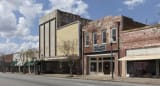
Americus Historic District
The Sumter County seat of 1832, with the towering 1892 Windsor Hotel, the Rylander Theatre and the streets of the 1963-65 Americus Movement.
historical · Plains
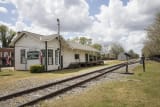
Jimmy Carter National Historical Park
Plains High School, the 1888 depot that ran the 1976 campaign, the boyhood farm at Archery with the Clark family's house, and the garden where Jimmy and Rosalynn Carter are buried.
historical · Americus
Koinonia Farm
The interracial Christian farm Clarence and Florence Jordan founded near Americus in 1942, boycotted, shot at and bombed in the 1950s, and the birthplace of Habitat for Humanity.
Historical markers
Americus · Erected 2009
Americus Colored Hospital
When the hospital closed in 1953, the building kept serving Black Americus. The City Federation of Colored Women took it over for social services and after-school…
Americus · Erected 2014
Calvary Episcopal Church
Cram was already the country's leading Gothic revivalist when Calvary's church went up.
Americus · Erected 1961
Federal Headquarters
Howell Cobb, the house's owner, turned from Union man to secessionist and lived to see the result.
Americus
Georgia Southwestern State University
The school began on 270 acres that Sumter County granted along the Seaboard Air Line Railroad, and its first mission was practical: farming, farm business and basic…
Americus · Erected 1985
Lindbergh's Solo Flight
Lindbergh had the field nearly to himself. The last Army personnel had gone, and he slept in a vacant hangar while his crated Jenny was assembled; the only witness to…
Americus · Erected 1960
Speaker Crisp
Crisp was born in Sheffield in 1845 to Eliza and William Crisp, American touring actors visiting their native England; his father later managed a theater in Savannah…
Americus · Erected 1954
Sumter County
The general this county honored was 97, and the last surviving general of the Revolution, when the act passed in 1831.