John R. Lynch Street ran through the middle of Jackson State College, named for a Black Mississippian who served in Congress during Reconstruction. It was also a public road. For years students said white drivers used it to harass them, shouting slurs, throwing objects, speeding at people crossing and, in at least one case, hitting a student. Their demands included closing the street through campus.
The night of May 14
On the evening of May 14, 1970, a false rumor spread that Charles Evers and his wife had been killed. An unknown person set a parked dump truck on fire in the street, and firefighters put it out. About 100 students and onlookers stood in front of Alexander Hall, a women's dormitory. Some 75 Jackson police officers and Mississippi Highway Patrol troopers arrived near midnight with an armored vehicle and advanced on the crowd.
Survivors say that after an officer spoke through a bullhorn, a bottle shattered on the pavement and the police opened fire. The officers said they had seen a sniper in the dormitory. No sniper was ever confirmed, and an FBI search found no evidence of one.
The shooting lasted about 28 seconds. Counts of the rounds fired vary, from more than 150 to several hundred, and an FBI examination found nearly 400 bullet and buckshot strikes on the dormitory. Every window on the street side shattered.
Phillip Lafayette Gibbs, 21, was a junior and a pre-law student, a husband and the father of an 18-month-old son, who had come to campus to pick up his sister. James Earl Green, 17, was a senior at Jim Hill High School and a student-athlete, walking home from a part-time job. Both died. Twelve other people were wounded, and falling glass cut others. The killings came eleven days after Kent State and drew far less national attention.
The inquiries
President Nixon created the President's Commission on Campus Unrest on June 13, 1970, and former Pennsylvania governor William Scranton chaired it. It called the gunfire "an unreasonable, unjustified overreaction," and said a barrage was never warranted in answer to unconfirmed sniper fire. A local grand jury declined to indict any officer, and a federal grand jury that heard from about 40 patrolmen and 26 city officers was discharged in December without an indictment. A civil suit by the families and wounded students, led by attorney Constance Slaughter-Harvey, ran for ten years. In 1974 the Fifth Circuit held that the officers had overreacted but could not be held liable for the deaths, and in 1982 the Supreme Court declined to hear the case. No one has been held accountable.
What stands
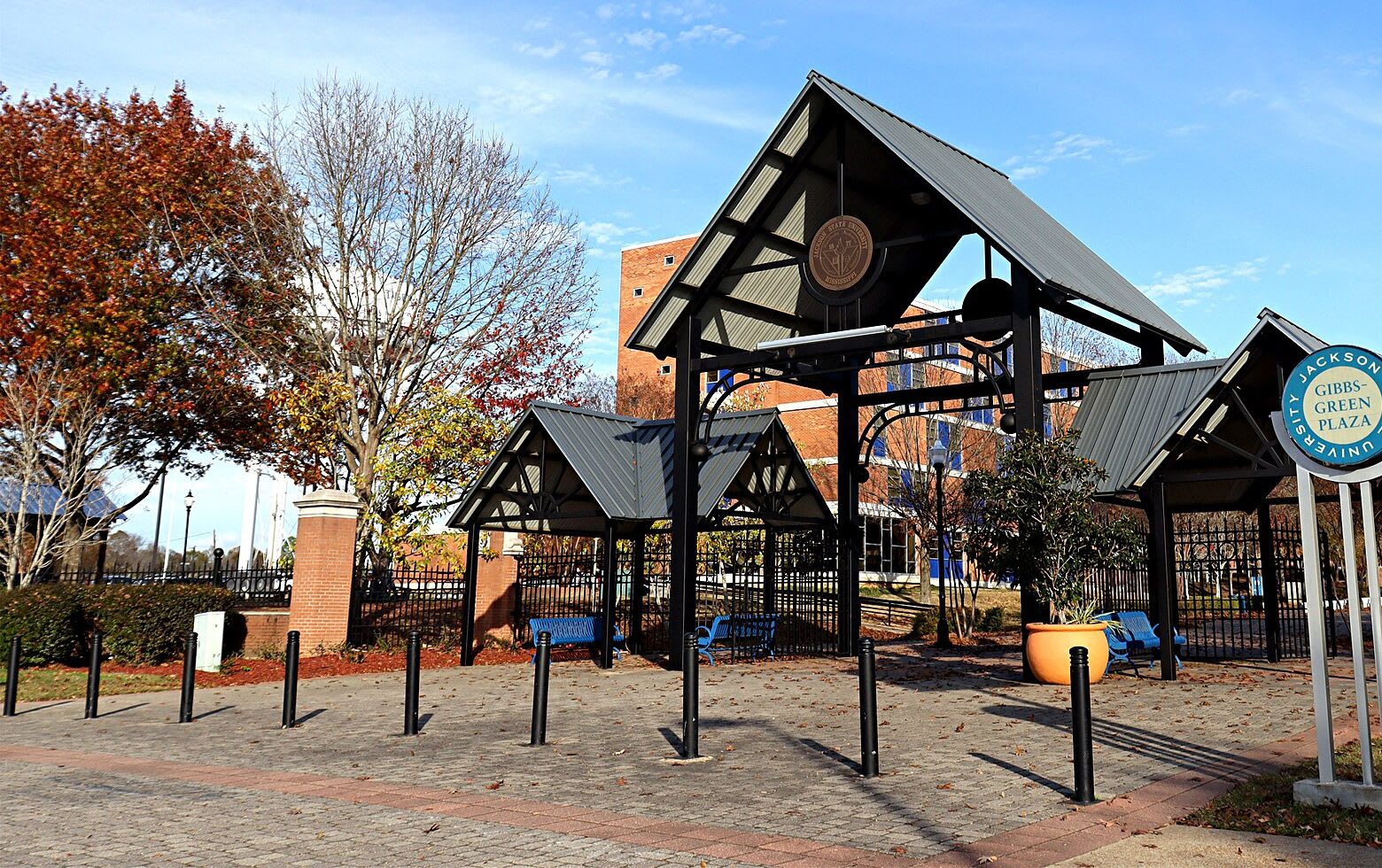
Jackson State closed for the rest of the semester, and the Class of 1970 had no commencement. The city later closed Lynch Street through campus, and the Gibbs-Green Plaza now stands in front of Alexander Hall, with a stone monument to the two men. Bullet damage is still visible on the building. Survivor James Lap Baker told students in 2024 to "Know your history."
The movement that preceded these deaths is told at the Mississippi Civil Rights Museum, which covers 1945 to 1970.