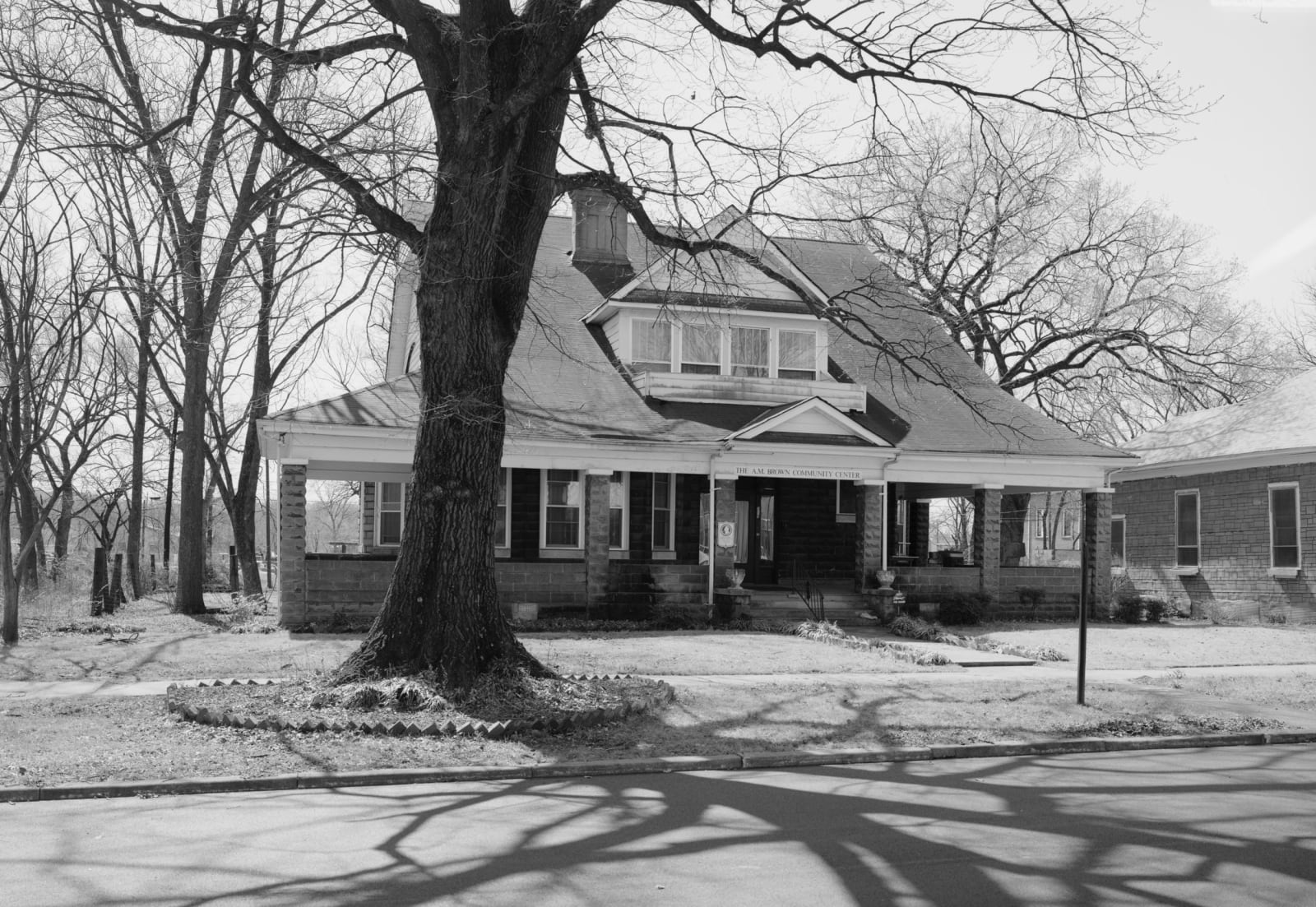
In the late 1940s Mary Means Monk owned land on Center Street in North Smithfield, and the city of Birmingham would not give her a permit to build a house, because the block was zoned white. The city's zoning law, dating to 1926 and carried into the 1944 code, barred Black residents from living in areas marked for white occupancy and white residents from Black ones. Center Street was the line: the west side white, the east side Black.
The lawyer and the ordinance
Her lawyer was Arthur Shores, born in Birmingham in 1904 and admitted to the bar in 1937. Shores later recalled a client who built on the white side, was refused a certificate of occupancy, won in federal court, and then lost the house to dynamite. In 1949 Public Safety Commissioner Bull Connor answered the court rulings with new ordinances, one of which made it a misdemeanor for a Black person to move into an area historically recognized as white.
Monk sued, with Shores and the NAACP's Thurgood Marshall; the city hired Horace Wilkinson, a Klan member, to defend it. The house of the Rev. Milton Curry Jr. at 1100 Center Street North was dynamited on July 28, 1949, again on August 2, and a third time on April 22, 1950. On December 16, 1949, Judge Clarence Mullins declared the zoning ordinances unconstitutional.
Dynamite Hill
The Monks moved into their house at 950 North Center Street in December 1950. The next night, December 21, it was bombed. Monroe and Mary Monk and their boarder, C. W. Askew, escaped without serious injury. A month later, on January 25, 1951, the federal appeals court upheld Mullins, writing that property "is more than the mere thing which a person owns," and the Supreme Court declined to hear the city's appeal.
White families sold to Black families, and the bombs did not stop. Historians count about fifty bombings in Birmingham between 1947 and 1965, most of them against Black homes and churches, and the historian Horace Huntley has said more than forty remain unsolved. Neighbors started calling the ridge Dynamite Hill. By one account, residents paid a white informant to attend Klan meetings and warn them, and armed men waited in the dark and fired on the bombers, after which the attacks slowed for a time. John and Addine Drew, whose house at 1108 Center Street was a meeting place for movement leaders, rebuilt behind eight-foot brick walls and moved the bedrooms to the back.
1963
As Birmingham schools prepared to admit Black students, the bombers came for Shores himself. His house was bombed on August 20, 1963, and again on September 4; the second blast injured his wife, Theodora. Within hours a crowd gathered outside, police fired submachine guns, rifles and shotguns over it, and John L. Coley was killed. First reports said he had fired a gun; he was later found to have been unarmed.
The Drews' son Jeff, born in 1951, still lived behind the brick wall in 2021. Shores was appointed the first Black member of the Birmingham City Council in 1968. North in Collegeville, Historic Bethel Baptist Church tells the story of Fred Shuttlesworth's church, bombed three times.