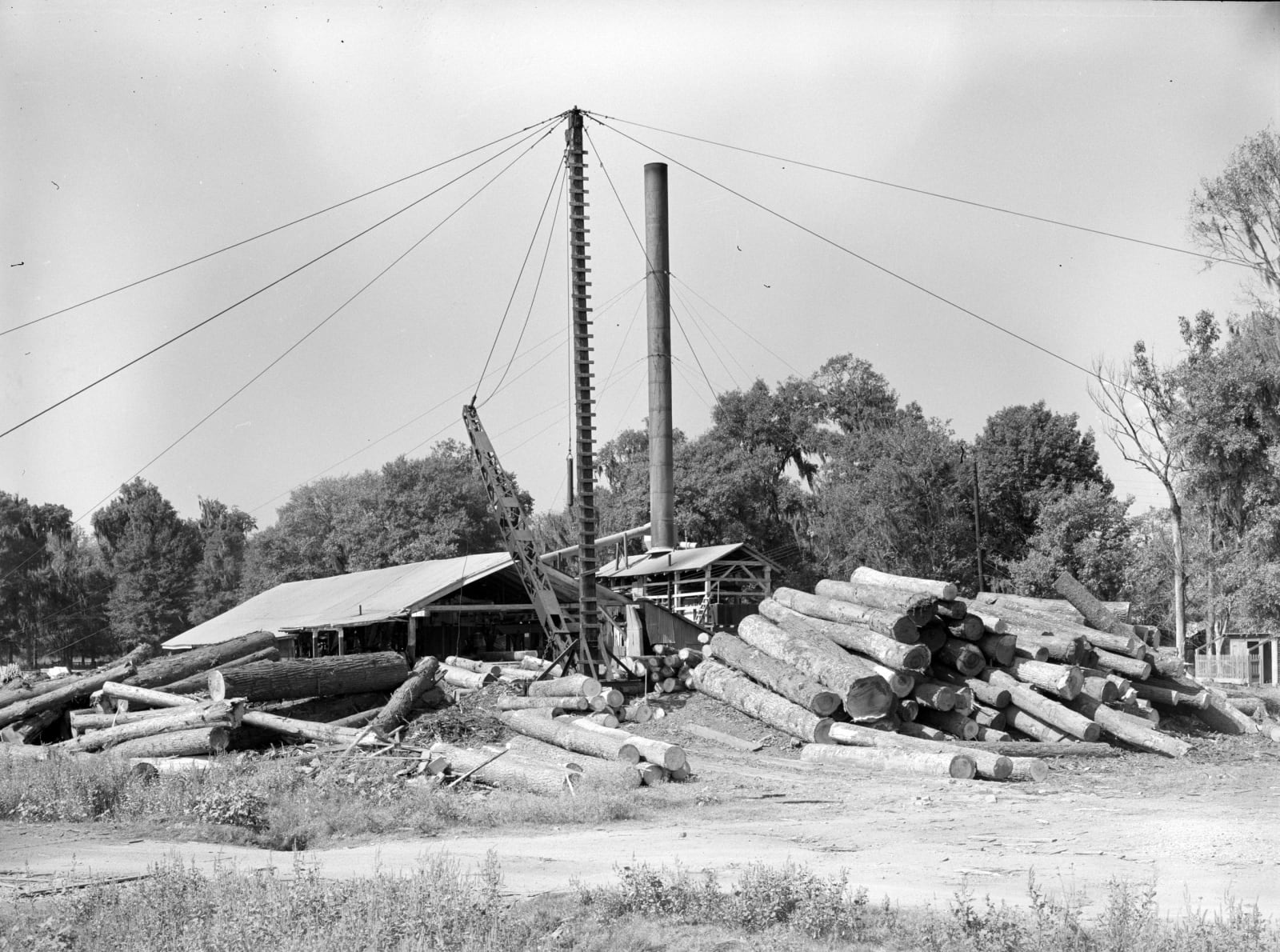
In December 1910 Arthur Lee Emerson and Jay Smith organized a first local of the Brotherhood of Timber Workers at Carson, Louisiana. Delegates met at Alexandria in June 1911, and the constitution welcomed women, Black members and workers in any sawmill job. According to the Handbook of Texas, Emerson and Smith joined Black and white workers partly because operators could otherwise hire nonunion Black men as strikebreakers. Louisiana was among the country's top three lumber states. The mill hands were mostly Black and white, paid little, and lived in company-owned towns, and the owners had formed the Southern Lumber Operators Association to fight unions.
Grabow
On July 7, 1912 the union held rallies around DeRidder. At Grabow, near the mill of John Galloway, gunfire broke out as Emerson prepared to speak. An estimated 300 shots were fired. At least four people were killed and about forty wounded, some of them women and children. Union men said they were ambushed. The company said a mob had broken into its guards' homes. Sheriff Henry Reid arrested dozens of workers, and a grand jury indicted union men but no company man. Sixty men and three women tied to the union were charged. The Louisiana National Guard arrived the next day, and the shooting did not resume.
The jail
The defendants were denied bail and held at Lake Charles in the Calcasieu Parish jail through the summer heat, in one cell with a single faucet and a single toilet, and kept indoors for months. Investigators called the jail a cesspool. Women from Beauregard and Calcasieu parishes brought food to the prisoners.
The verdict
The trial of the first nine defendants, Emerson among them, opened in Lake Charles on October 7, 1912. The jury deliberated an hour and acquitted them, and the other charges were dropped. Wikipedia reports that evidence that the company men had been drinking and fired first weighed with the jury. The defense of Emerson and the eight others cost the union what it had left. The Brotherhood had voted to join the Industrial Workers of the World that year, and the IWW co-founder Bill Haywood had spoken at fundraising rallies.
The company's answer came in Merryville. While the trial ran, the operators took control of the American Lumber Company's mill there, which had signed a union contract, and fired fifteen union men who had testified for the defense. The workers struck and set up a hall in an abandoned church. The Brotherhood's secretary, Fredonia Stevenson, wrote the Bureau of Investigation asking for an inquiry into the mill owners' abuses. In February 1913 an armed mob wrecked the hall, attacked pickets and tore down the soup kitchen tent, beating some strikers and driving others from town. No one was prosecuted. The Handbook of Texas puts the end of the union's effectiveness at spring 1913, though a few holdouts lasted to early 1916.
The Imperial Calcasieu Museum on West Sallier Street in Lake Charles holds photographs of the early town, where the jail stood and the trial was held.