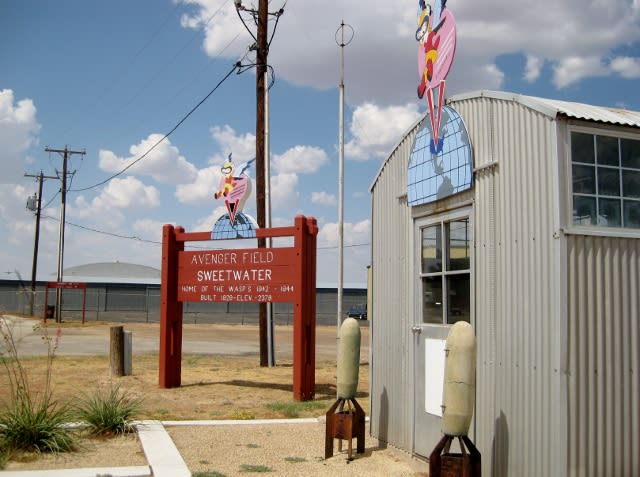
Avenger Field in Sweetwater became what historians call the only all-female air base in history, apart from its male instructors and support crews. The first Women Airforce Service Pilots trainees arrived on February 21, 1943, under Jacqueline Cochran's direction. More than 25,000 women applied to the program and 1,830 were accepted. In fourteen classes at Sweetwater, 1,074 earned their wings. They flew for the Army Air Forces as civil-service employees, not soldiers, and that status decided what happened to them when they died.
The thirty-eight
Thirty-eight WASPs died in service, and the university archive that keeps their roll counts eleven of them as trainees. Several died around Sweetwater. Jane Champlin was killed on a night training flight on June 7, 1943, in a BT-15 near Westbrook, forty miles west of the field. Margaret Seip and Helen Severson died on August 30, 1943, eleven days before graduation, when their plane crashed on a navigation flight from Sweetwater to Big Spring. Jayne Erickson and Mary Howson died on April 16, 1944, when their planes collided on approach to Avenger Field. Howson bailed out too low for her parachute to open.
Because the women were not military, the government paid no funeral costs. Congress's own findings, written into the 2009 medal law, say the bodies went home in simple pine boxes, that families or classmates often paid, that coffins could not carry a flag and that parents could not hang a gold star in the window.
Who was let in
Cochran sought recruits from every region, but she felt unable to accept the Black pilots who applied, believing their presence would endanger the program. Mildred Hemmons Carter, licensed in 1941 through the Civilian Pilot Training Program, was told she was not eligible because of her race. She was recognized as a WASP decades later. Federal histories count five women of color among the 1,074 graduates.
Hazel Ying Lee, born in Portland, Oregon, in 1912 to immigrant parents, had been turned away by China's air force in 1933 and again after 1937 because she was a woman. She trained at Avenger Field in early 1943 and became one of about thirty women qualified on fighters. On November 23, 1944, her P-63 collided with another on approach to Great Falls, Montana. She died on November 25, the last of the thirty-eight. Maggie Gee of Berkeley towed gunnery targets, as did Ola Mildred Rexroat, an Oglala Lakota from Class 44-W-7, at Eagle Pass.
Disbanded, then recognized
In 1944 a bill to militarize the WASPs was defeated, largely by lobbying from male civilian pilots. With the war in Europe nearly won and pilots in surplus, the program ended on December 20, 1944, and the women's records were classified. President Carter signed Public Law 95-202, granting veteran status, on November 23, 1977. The Congressional Gold Medal followed under Public Law 111-40, signed July 1, 2009, and presented in 2010.
The National WASP WWII Museum stands in Hangar 1 at Avenger Field, where the women's photographs, wings and records are kept.