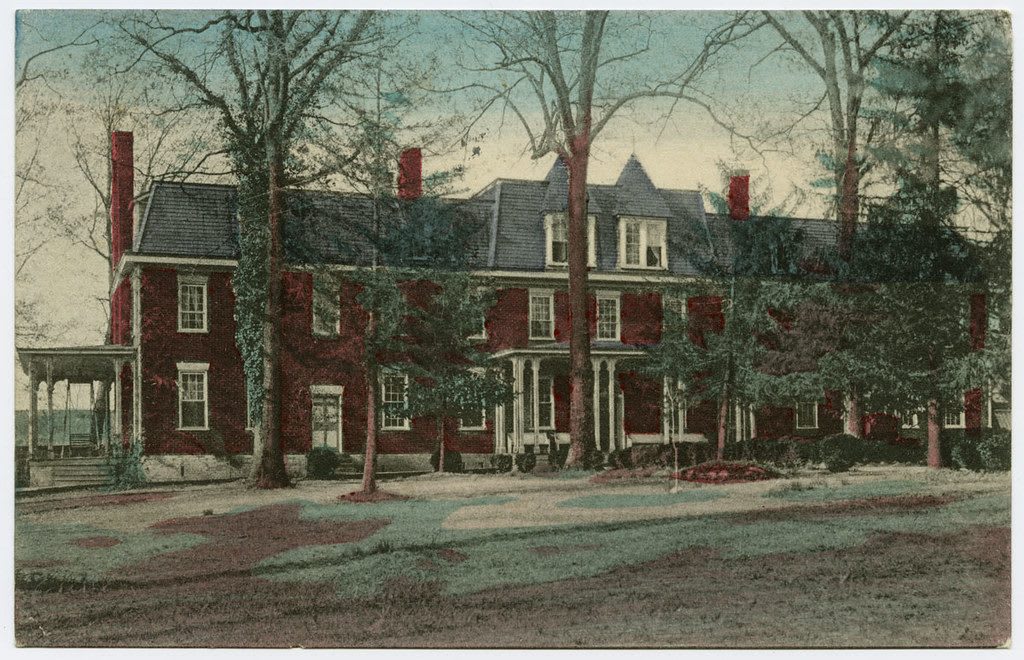
Jack Barnes had been promised his freedom. His enslaver, a Mr. Barnes of eastern North Carolina, freed him by will, but in March 1822 a court set the will aside and a reward was offered for his capture. Jack had already reached New Garden, the Quaker settlement west of what is now Greensboro, where he hid with Levi Coffin's family and at the farm of Levi's cousin Vestal Coffin. Friends arranged for Levi's uncle, Bethuel Coffin, to carry him to Indiana by wagon over the mountains by way of the Kanawha.
The meeting and its neighbors
Quakers moving south from Pennsylvania began worship at New Garden in 1751, and it became a monthly meeting in 1754. North Carolina Friends forbade members to hold people in slavery and petitioned the legislature against it, and when the law blocked manumission they sometimes bought enslaved people to protect them. The meeting dates its earliest documented Underground Railroad case to 1819, when members helped John Dimery, an emancipated man, reach lasting freedom in the North.
Levi Coffin, born near New Garden in 1798, wrote that he turned against slavery at about seven, when he saw a coffle of chained men driven south on the road to Salisbury. At fifteen he met Stephen, a free-born man kidnapped in Baltimore and sold into Georgia. With help from Tom, an enslaved man, Stephen reached Coffin's father, whose letters to the Lloyd family in Pennsylvania sent Hugh Lloyd, Dr. George Swain and Henry Macy to Georgia; after about six months, affidavits about his free mother won his release. Vestal Coffin, aided by an enslaved man named Sol, went to court for others who had been kidnapped. Coffin also recorded Ede, who hid in the woods with her baby rather than be parted from her husband and three children, and came to the Coffin house when the child fell sick. Her enslaver, Dr. Caldwell, let her stay with her family.
Sam
In the spring of 1822 Sam, enslaved by a man named Osborne, fled after repeated beatings and hid in the hay-mow of Coffin's father's barn. David Grose agreed to take him to Indiana, with Sam traveling by night. In Virginia he lost the party, and in Wythe County he was caught and jailed. Osborne claimed him, put him in irons and later said he had sold him to a trader in Salisbury. No one could confirm it, and nothing more was heard of Sam.
The schoolhouse
The summer before, the cousins had opened a Sunday school for enslaved people in the brick schoolhouse near the meetinghouse, with permission from some of their owners. Other slaveholders, saying the school made enslaved people discontented, threatened the law, and it closed that same summer. Thousands of Quakers left the state for the free Northwest. Levi Coffin moved to Indiana in 1826 and later to Cincinnati, where he sheltered hundreds more. Vestal and his wife, Alethea, are buried in the New Garden cemetery.
The boarding school Friends founded in the 1830s became Guilford College, and its woods and the meetinghouse are now sites on the National Park Service's Network to Freedom. In March 1781, during the battle at Guilford Courthouse, Friends nursed the wounded of both armies in the meetinghouse.