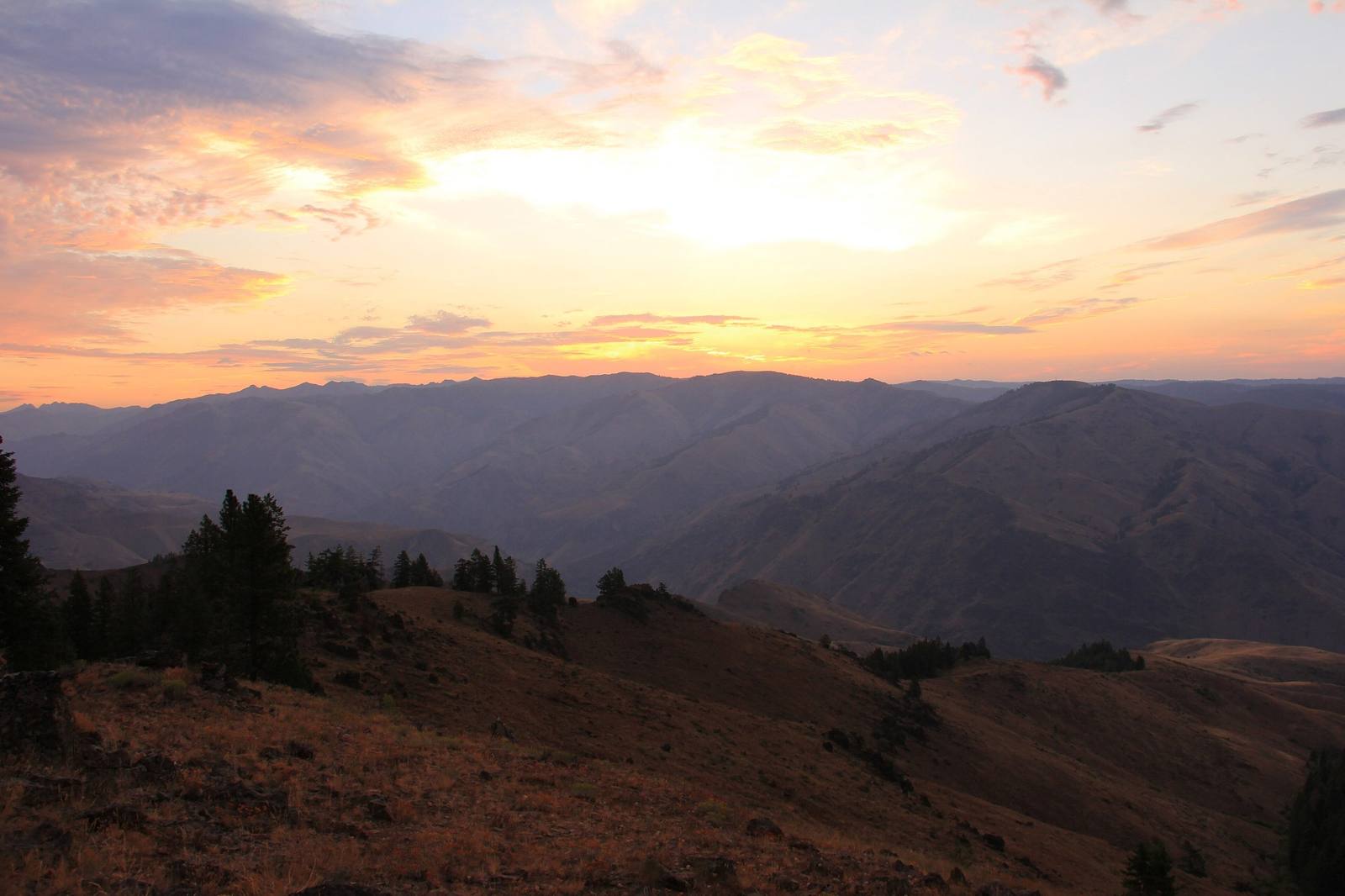
In 1995 Charlotte McIver, the county clerk of Wallowa County, was cleaning out an old safe that was no longer used so it could be given to the county museum. Inside she found a bundle of handwritten court papers more than a century old. They were the records of a crime the county had spent a hundred years not talking about.
Deep Creek
In the spring of 1887 a party of Chinese gold miners was working a bar at Deep Creek, on the Oregon side of the Snake River deep in Hells Canyon. Late that May a gang from Wallowa County, horse thieves and schoolboys, one of them only fifteen, came down on the camp. Over two days they killed as many as thirty-four men and robbed them of their gold. The bodies went into the river. The first reports spoke of ten dead.
The crime was found weeks after it happened, and for nearly a year nothing was done. Then one of the gang, Frank Vaughan, the son of a well-known settler family, confessed and turned state's evidence. In 1888 a grand jury indicted six men and boys, all from the Wallowa country, for murder. The three regarded as the ringleaders, Bruce Evans, known as Blue, Titus Canfield and a man named LaRue, fled and were never caught. The others went to trial, and a jury found them innocent; one witness later admitted the jury had little interest in convicting anyone. Years later the youngest of the gang, Robert McMillan, confessed his part to his father on his deathbed in Walla Walla.
What the safe held
A cover-up followed, the story went quiet, and the records disappeared from view. The papers McIver found included a copy of the 1888 grand jury indictment, details of an escape from jail by Blue Evans, a long deposition by Frank Vaughan giving his account of how the murders were done, and notes from the trial. A Wallowa County judge, Ben Boswell, told the Associated Press that summer that the records were more than lost; they seemed to have been hidden.
The find came to the attention of Greg Nokes, then a reporter for The Oregonian, who began writing about it as a news story and kept going. He published a long account in the Oregon Historical Quarterly in 2006 and a book, Massacred for Gold, in 2009. His work led the federal Board on Geographic Names to name the site Chinese Massacre Cove, the first official recognition of the crime, and in 2012 Nokes and others set a memorial at the cove.
The courthouse
The papers had sat for a century in the Wallowa County courthouse while the canyon kept its own record. Chinese Massacre Cove lies deep in Hells Canyon, far from any road, reached by the river or a long walk along it, and the memorial there speaks in Chinese, English and Nez Perce.