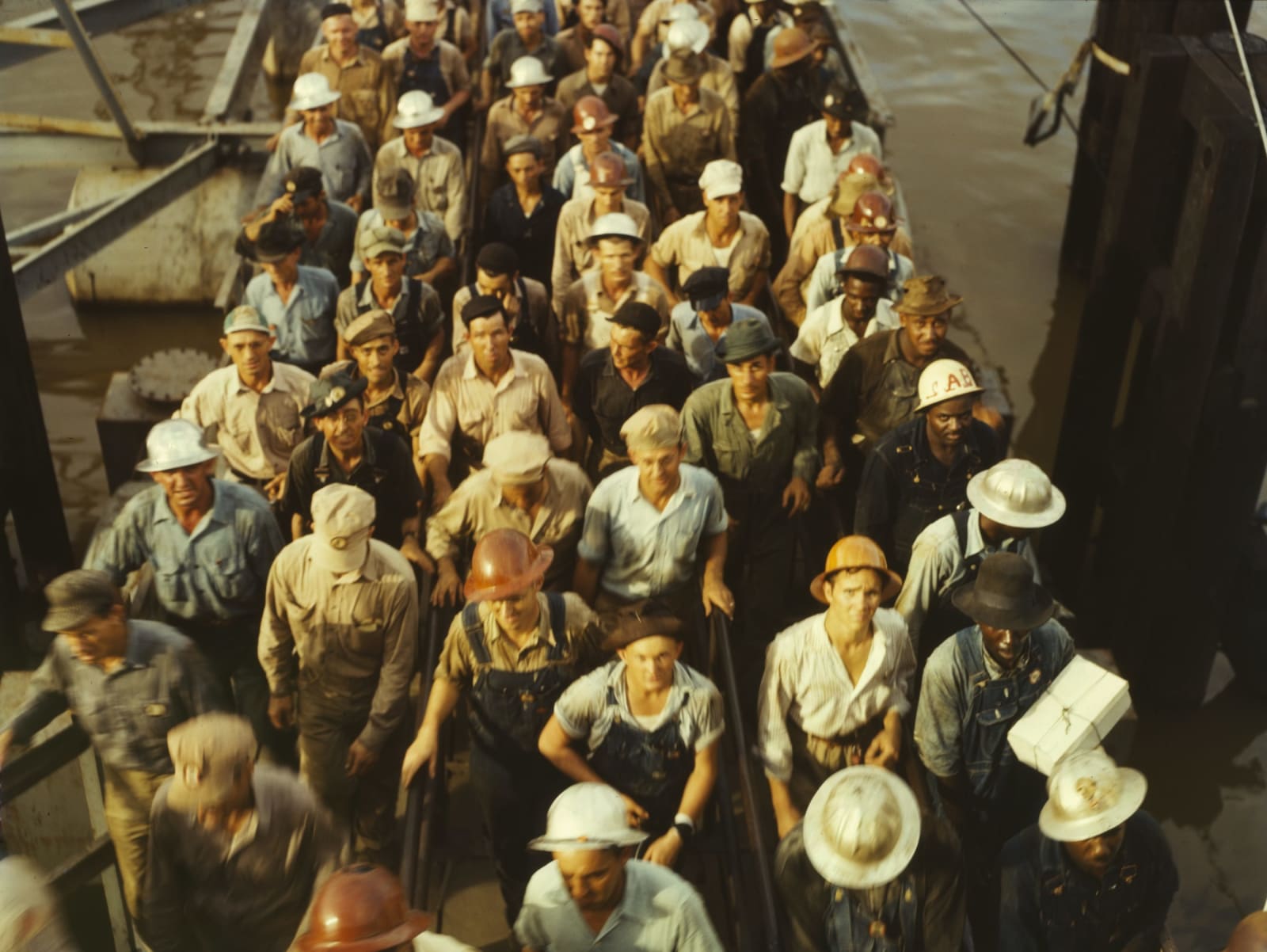
Beaumont's economy prospered in the Second World War on shipbuilding and oil refining. Jefferson County gained 56,671 people between 1941 and 1948, and more than 18,000 of them settled in the city in 1942 and 1943. In 1941 President Roosevelt's Executive Order 8802 barred discrimination by defense contractors, and Black workers began to get semiskilled and skilled jobs in the plants. According to the Handbook of Texas, housing was so short and services so thin that the races were pushed into close quarters, and by early June 1943 separate commuter transportation was running to end fights on overcrowded buses. Three days before the violence, the regional food administrator wired Washington that meat and canned goods were short enough to be "conducive to riot." A Klan chapter was planning a regional convention for June 29, and Black Beaumont was getting ready for Juneteenth on June 19, when hundreds of visitors from East Texas were expected.
The march
On June 5, an eighteen-year-old telephone operator accused a Black man of assaulting her. Police shot and killed him; the Handbook gives their account, that he was resisting arrest. On June 15 a second accusation reached the Pennsylvania shipyard, and more than 2,000 workers and perhaps 1,000 others marched toward City Hall. The crowd may have reached 4,000. The woman could not pick the suspect out among the Black men held in the city jail. The crowd then broke into small bands that smashed into stores in the Black section of downtown and carried guns, axes and hammers into neighborhoods in central and north Beaumont. Many Black residents were beaten, restaurants and stores were looted, buildings were burned and more than 100 homes were ransacked.
Martial law
Mayor George Gary called out the State Guard late that night. Governor Coke Stevenson and the lieutenant governor were both out of Texas, so acting governor A. M. Aikin Jr. declared martial law. About 1,800 guardsmen, 100 state police and 75 Texas Rangers came, most after the worst was over. Roads were closed, buses stopped, Beaumont was put off limits to servicemen, and Black workers were kept from their jobs. Juneteenth was canceled along with every public gathering. The county fairgrounds became a stockade. By June 20 a military tribunal had reviewed 206 arrests and sent 29 cases to the civil courts on charges of assault, unlawful assembly and arson. The rest were released, mostly for want of evidence. The Handbook counts fifty injured and two dead, one Black and one white, with a second Black man dying of his injuries months later. Other accounts give higher numbers.
What came after
Beaumont had been segregated since Reconstruction. In the mid-1950s the Handbook says its NAACP chapter won two desegregation suits in a row, one of them at Lamar State College. In 2016 Gordon S. Williams of Lamar University made a short film set during the riot, The Example.
Orange, the next city east, took in the same wartime flood of workers. Its marker on the Riverside Addition describes the government housing built for the shipyard crews. The Spindletop-Gladys City Boomtown Museum in Beaumont tells the earlier boom that made the city.