Pink Anderson was born in Laurens on February 12, 1900, and grew up in Greenville and Spartanburg, where as a boy he played the guitar on the street for coins. At fourteen he joined Dr. W. R. Kerr of Spartanburg, who toured every summer with what he called his Indian Remedy Company. His first show was in Greenville. For decades afterward Anderson's job was to draw the crowd.
The show
Medicine shows had worked the rural South since before 1900, rolling into small towns, county fairs and crossroads stores with music, comedy and bottles of patent medicine. The entertainer came first. Anderson sang blues and comic songs, told the old show jokes and, in the early years, danced a little, until enough people stood in front of the platform for the doctor to begin his pitch. He said Kerr "taught me everything I know about entertaining." In winter he stayed on as a handyman, keeping up the stage, the props and the vehicles in Kerr's Spartanburg warehouse.
Between tours he played the streets and house parties with Simmie Dooley, a blind guitarist born in Hartwell, Georgia, who met him around 1916, taught him guitar and probably taught him many of his songs. On April 14, 1928, the two recorded four sides for Columbia in Atlanta, among them "Papa's 'Bout to Get Mad" and "C.C. and O. Blues."
The second hearing
Twenty-two years passed before he recorded again. In May 1950 the folklorist Paul Clayton found him playing at the Virginia State Fair, and some of those songs came out on a 1956 Riverside album he shared with the Reverend Gary Davis. In the 1950s Anderson worked the medicine show of Leo Kahdot, billed as Chief Thundercloud, often beside Arthur Jackson, the one-legged harmonica player known as Peg Leg Sam. By the middle of the decade the medicine show was dying out, and illness slowed him down.
In 1961 and 1962 Samuel Charters came to Spartanburg and recorded him at length. The result was three albums on the Bluesville label, Carolina Blues Man, Medicine Show Man and Ballad and Folksinger, and later a Folkways set of medicine show hokum and blues. Anderson played folk festivals and appeared in a 1963 documentary, The Blues. He lived on South Forest Street, a neighborhood he put into his songs, along with the city jail on Broad Street. Dooley died in Spartanburg in January 1961.
Pink, and Floyd
In England in the 1960s, a young Syd Barrett found Anderson's name in the liner notes of a 1962 Blind Boy Fuller album beside that of the North Carolina bluesman Floyd Council, and joined the two to name his band.
A stroke in the late 1960s ended his guitar playing, though a former student, Roy Book Binder, helped arrange a last tour to Boston and New York in the early 1970s. Anderson died of a heart attack in Spartanburg on October 12, 1974, and is buried at Lincoln Memorial Gardens. His son, Alvin "Little Pink" Anderson, born in Spartanburg in 1954, went on to play in his father's style.
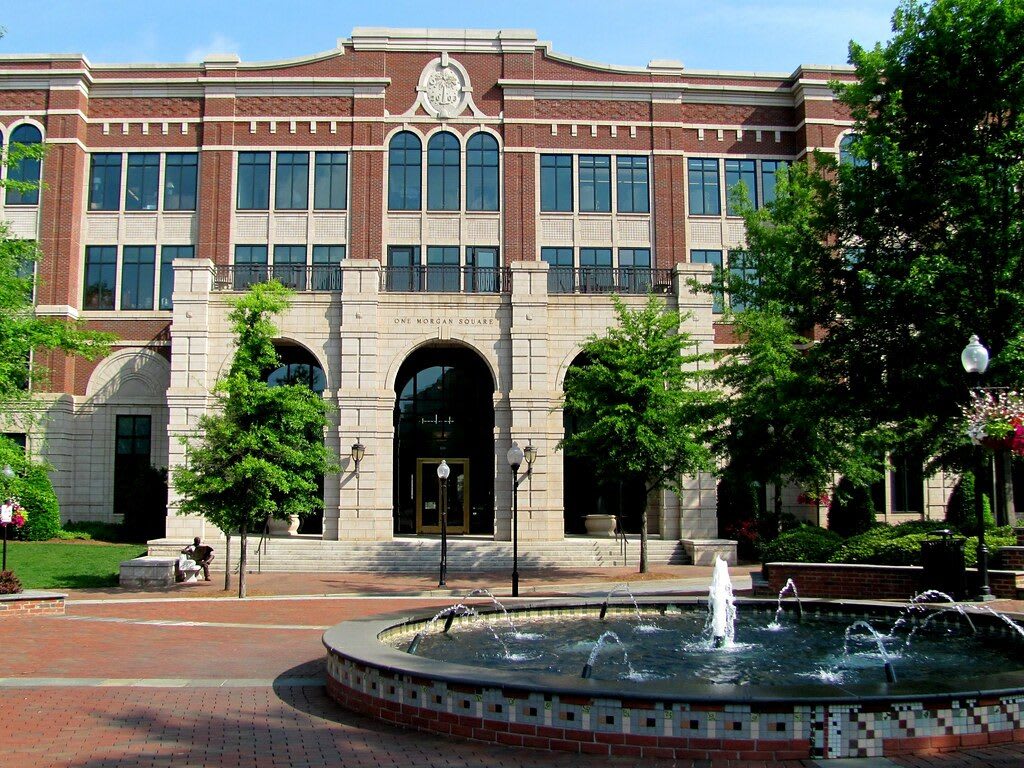
A Spartanburg Music Trail marker downtown tells Anderson's story, in the city where he spent his winters and recorded for Charters.