High in the Sangre de Cristo Mountains above Taos Pueblo lies Blue Lake, the source of the creek that runs between the pueblo's two great houses. It is the most sacred place of the Taos people, the site of pilgrimages and ceremonies kept private from outsiders, and when President Nixon finally signed it back to them he spoke of seven hundred years of worship there.
1906
In 1906 the federal government made the lake and the mountains around it part of a national forest, later the Carson. The pueblo's ceremonies went on, but now on federal land, under federal management, open to grazing, logging and anyone who cared to walk up.
Refusing the money
In the 1920s Congress created the Pueblo Lands Board to settle the loss of Pueblo lands, but the board could only pay for land, not return it, and Taos would not take money for the lake. A cooperative agreement in 1927 with the Secretary of Agriculture gave the pueblo some say over the area without giving it back. When the Indian Claims Commission later upheld the pueblo's claim, Taos offered to waive any award entirely if it got back the lake and the land around it.
Vote after vote
Bills to return the land passed the House and stalled in the Senate, where Clinton Anderson of New Mexico, a senior figure on the Interior Committee, had long resisted returning the full acreage. Fred Harris of Oklahoma answered by threatening to attach the Blue Lake bill to every measure that came out of that committee. In July 1970 Nixon met the pueblo's delegation at the White House and declared his support, folding the return into a new federal policy of tribal self-determination. In early December the Senate passed the bill 70 to 12. The pueblo's aged cacique, Juan de Jesús Romero, stood in the gallery holding up two canes, one given to the pueblo by Abraham Lincoln and one by Nixon that summer.
December 15, 1970
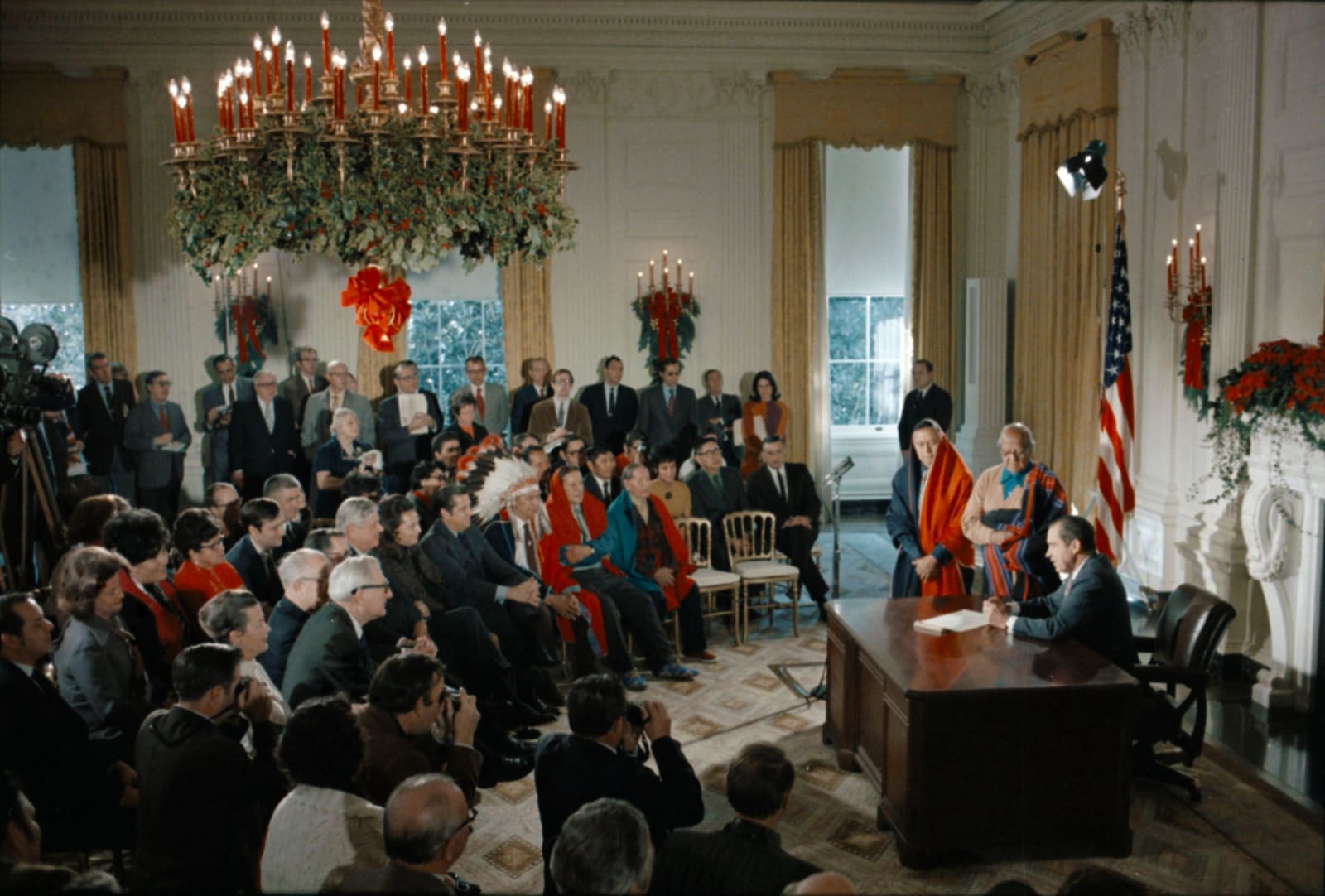
On December 15, 1970, Nixon signed Public Law 91-550, returning 48,000 acres with the lake at their center. Beside him were the cacique, Governor Quirino Romero and council secretary Paul Bernal, who translated the cacique's thanks from Tiwa. The Nixon Library describes it as the first time land itself, rather than money, was restored to an American Indian tribe, and the case became a model for others that followed.
The lake remains closed to everyone but the people of Taos Pueblo. From the plaza at Taos Pueblo, visitors can look up at the mountains it lies in and watch the creek that comes down from it.