Five Points takes its name from a single awkward intersection northeast of downtown Denver, where Welton Street, Washington Street, Twenty-Seventh Street and Twenty-Sixth Avenue all meet. The name was in use by 1881. Over the following decades, as discrimination kept Denver's Black families out of other neighborhoods, Five Points became the center of Black life in the city, and Welton Street its main street.
The Rossonian
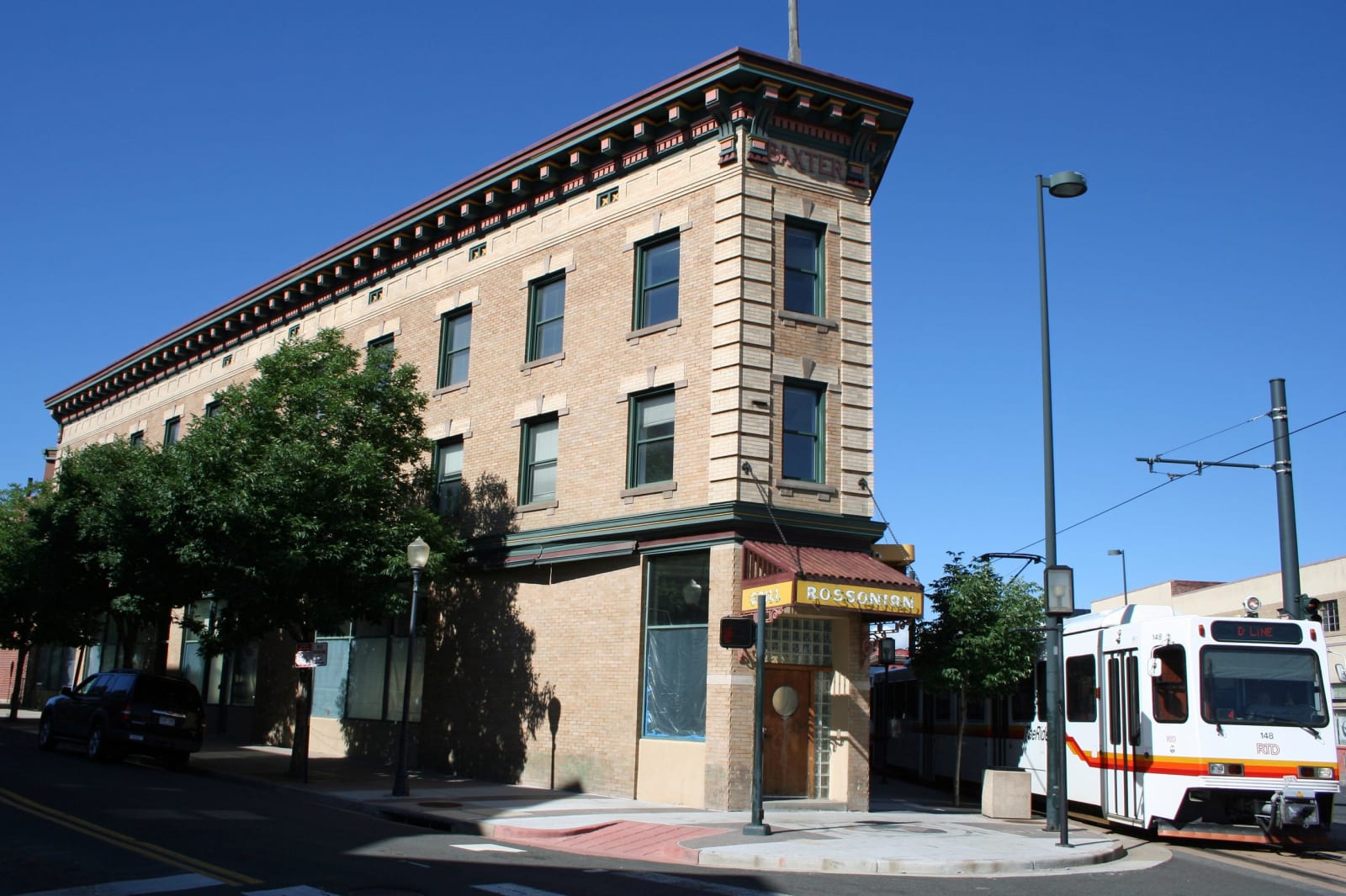
In 1912 the Baxter Hotel went up at the point of the intersection. Renamed the Rossonian in 1929, it opened a lounge on its ground floor that became one of the most important jazz rooms between St. Louis and the West Coast.
The reason was segregation. Black stars playing Denver's big downtown venues were not allowed to stay in downtown hotels, so they stayed in Five Points, and after their concerts they came back to the Rossonian and played again, late, for a neighborhood crowd. Duke Ellington, Louis Armstrong, Count Basie, Nat King Cole, Dinah Washington, George Shearing, Ella Fitzgerald and Billie Holiday all stayed or played there.
Welton Street
The Rossonian was the crown, not the whole of it. In the 1930s Benny Hooper opened the Casino dance hall beside his Ex-Servicemen's Club, at the time the largest and finest of the Five Points clubs, and expanded his hotel in 1945. Lil's and a string of smaller rooms filled out the street, along with the barbershops, churches, newspapers, restaurants and doctors' offices of a self-contained community. Some old residents remember mail addressed simply to Five Points, Colorado.
What changed
Integration, when it came, emptied the Rossonian of the very visitors it had been built around: musicians could now stay closer to their gigs. Families with means moved to neighborhoods that had been closed to them. And from the 1960s into the 1980s, in the name of urban renewal or simply to make room for parking, many of Five Points' older buildings were torn down. The neighborhood remained the heart of Black Denver, but Welton Street lost much of its fabric.
Recognition came late. The Rossonian was listed on the National Register of Historic Places in 1995, though the building has stood empty since the 1990s. In 2002 the Welton Street corridor became a Denver historic cultural district, renamed the Five Points Historic Cultural District in 2015. The Blair-Caldwell African American Research Library, on Welton Street, holds collections on Black history in Colorado and the West. The old Casino ballroom is now Cervantes' Masterpiece Ballroom, still booking music. A light-rail line runs down Welton to the Five Points station, and plans to restore the Rossonian with a hotel and a jazz club have been moving, slowly, through the city's renewal authority.