Thomas Brown was born in 1750 at Whitby, on England's North Sea coast, the son of a wealthy merchant. When he was about 24 his father fitted out a ship for him, and he recruited more than seventy indentured servants in Yorkshire and the Orkney Islands. In November 1774 they founded Brownsborough in St. Paul Parish, above Augusta, on land just taken from the Muscogee (Creek) and Cherokee, and Governor James Wright made him a magistrate.
August 2, 1775
Brown spoke against the Continental Association, the boycott of British trade. On August 2, 1775, about 130 Sons of Liberty came to his house and told him to join their cause. He refused, saying he could not take up arms against the country that gave him being. They fractured his skull with a musket butt, tied him to a tree, burned him, partly scalped him and tarred and feathered him, then carted him through the settlements until he swore to their side. He lost two toes and had headaches for the rest of his life. He took the oath back as soon as he was free.
He fled to East Florida, where Governor Patrick Tonyn commissioned him in June 1776 as lieutenant colonel of the Florida Rangers. His men raided the Georgia frontier, and in 1779 he became the Crown's superintendent to the Muscogee and Cherokee. He came into Augusta with the British in January 1779, left after Kettle Creek, and returned in June 1780 to hold the town with his King's Rangers.
The trading house
In September 1780 Elijah Clarke led about 600 Georgians against him. For four days Brown held a fortified trading house, wounded again, until John Harris Cruger marched in from Ninety Six. Thirteen American prisoners were then hanged. Brown's biographer Edward Cashin writes that Brown or Cruger gave the order under a standing order from Cornwallis; other historians judge it the accepted penalty for men who had broken their paroles, not an act of spite.
Fort Cornwallis
Brown pulled down St. Paul's Church and built Fort Cornwallis on its grounds by the river. On May 21, 1781, Patriot troops took the Galphin trading house twelve miles south and soon captured Fort Grierson, half a mile from Brown's walls. Accounts say Colonel James Grierson was shot after he gave up.
About 1,600 men under Andrew Pickens, Henry Lee and Clarke surrounded Fort Cornwallis, defended by about 300 Loyalist troops and some 200 Black men. With a single cannon, the besiegers built a wooden tower about 30 feet high and fired down into the fort from June 1. They put off their assault a day for the king's birthday, and on June 5 Brown asked for terms. Nathanael Greene sent him under escort to Savannah, fearing Georgia militiamen would kill him.
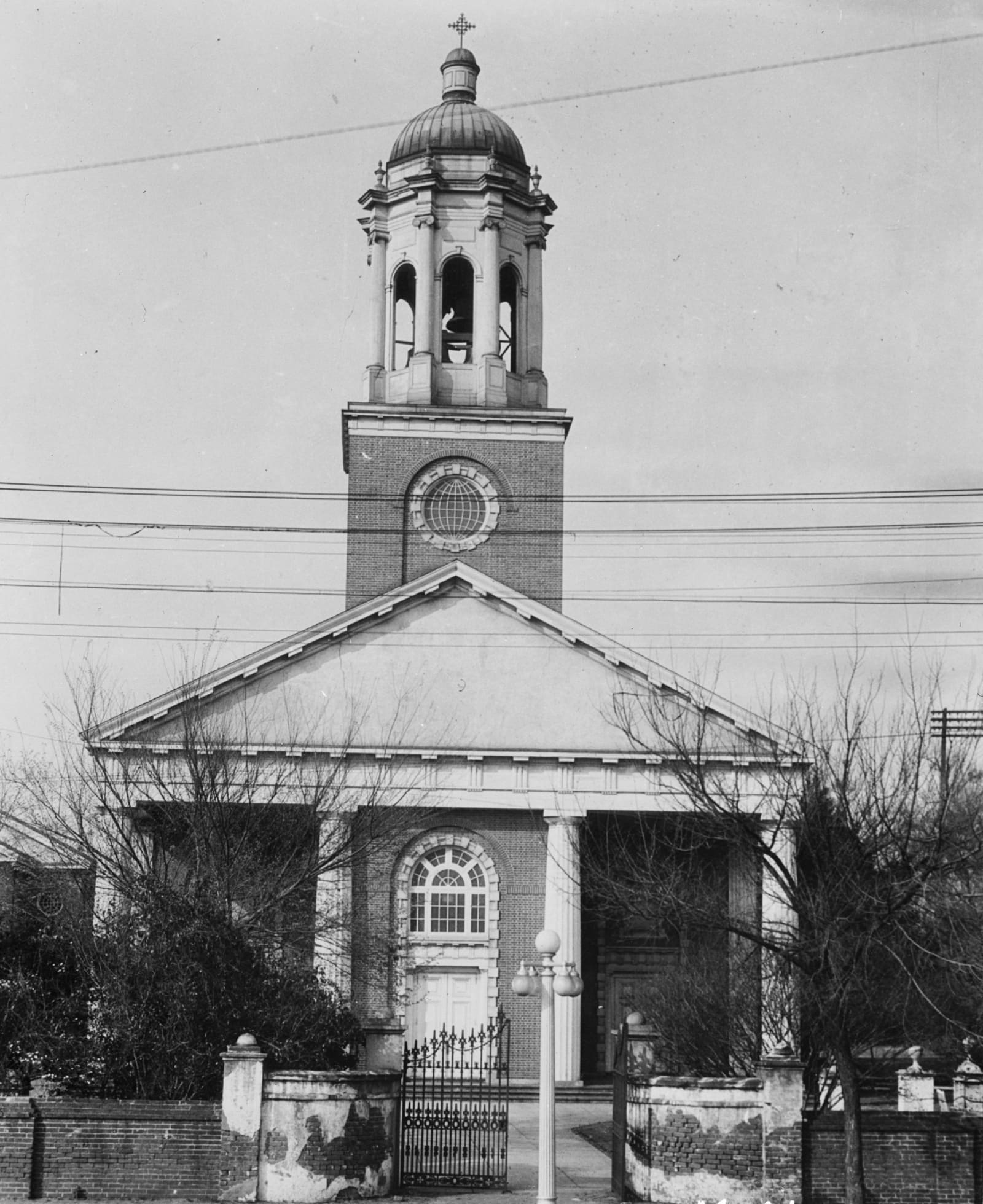
Brown went on to the Bahamas, where Loyalists elected him to the legislature, then to St. Vincent, where a disputed land grant brought a fraud conviction and prison. He died a prosperous sugar planter in 1825, at 75. A later St. Paul's Church stands on the fort's ground.
The war over these lands continues at Kettle Creek Battlefield in Wilkes County, where the Ceded Lands' militia met Boyd's Loyalists in 1779.