One minute after midnight on May 29, 1952, fireworks went up over a sagebrush flat three miles north of Moses Lake, and fifty carpenters, electricians and other tradesmen started building a house by floodlight. At four in the morning the tractors arrived to level the fields. By noon a barn, a machine shed and a chicken coop were standing, and volunteers were planting potatoes and beans. At four that afternoon a farm-equipment salesman named Donald Dunn was handed the deed to all of it: a furnished seven-room house, outbuildings, livestock, a dog and a cat, and sixty-three and a half acres of irrigated ground that had been desert the day before.
Water, and a veteran to give it to
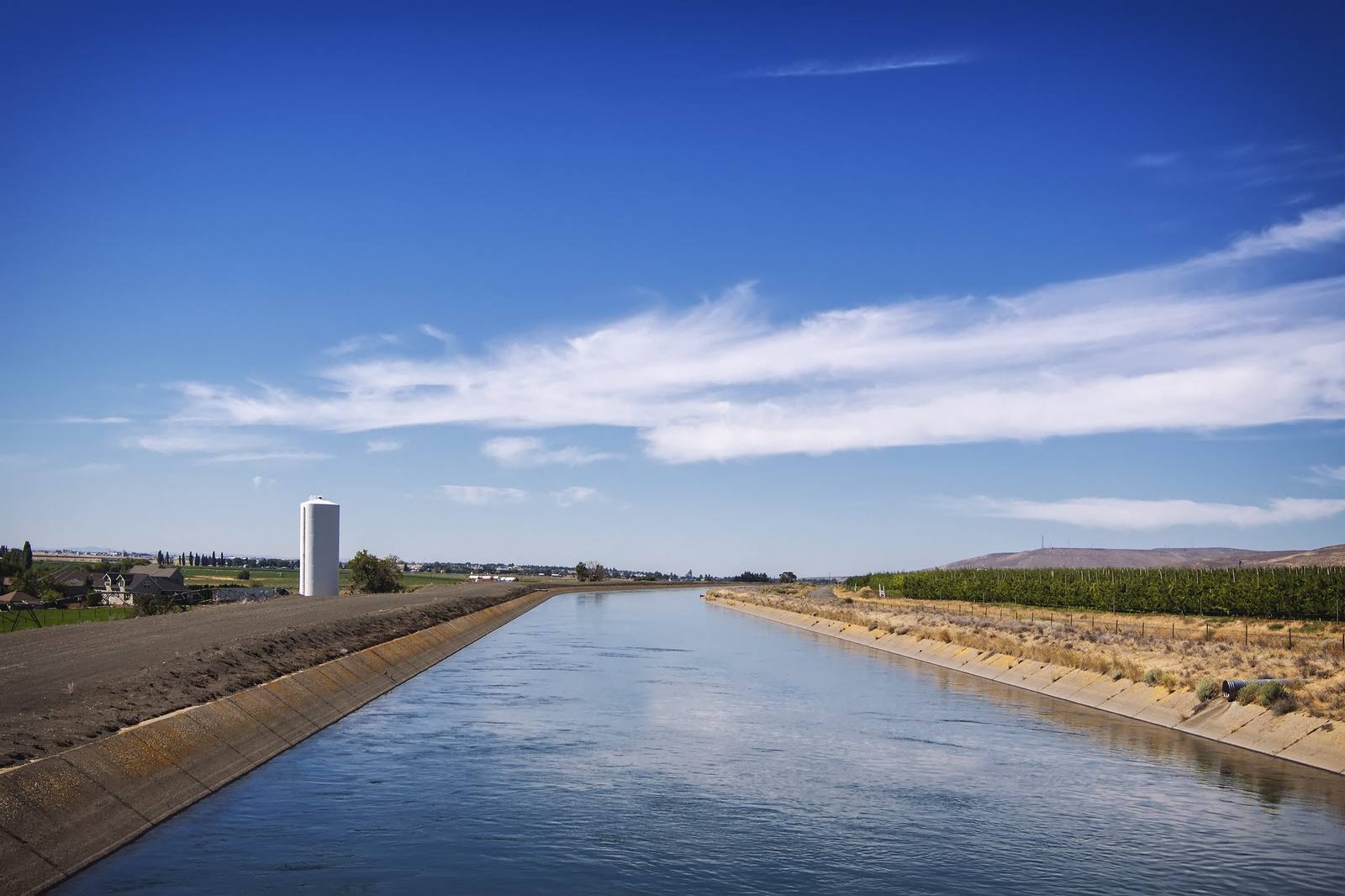
That spring the Columbia Basin Project delivered its first irrigation water. Grand Coulee Dam had been finished a decade before, but the war had put its power to work for war industry, Hanford among them, and the canals to carry its water across the basin had waited. This had been the country of the Sinkiuse, whose reservation to the north the government dissolved in 1884. Now the project needed settlers. To celebrate the water and sell the land, Grant, Adams and Franklin counties staged an eleven-day Columbia Basin Water Festival, and the Veterans of Foreign Wars ran a national contest for its centerpiece: a farm, built in a day, for the most worthy veteran it could find. Thousands with farming backgrounds applied. A board of judges from the Department of Agriculture, the Farm Bureau and the Grange chose.
Dunn was thirty. He had grown up on his father's farm near Marion, Kansas, and left school at fourteen to help run it when his father fell ill. He drove tanks through France and Germany and came home with three battle stars, then borrowed to rent land and paid the loans off. In July 1951 the Cottonwood River flood took his crops, his house and most of his stock and equipment, and he moved his family to Yakima on $2,000 borrowed from a friend.
The day
The land was donated by the Northern Pacific Railway and nearly everything else by somebody: lumber, wiring, appliances, seed, labor. While the house went up, a dozen civil engineers directed about a hundred men and twenty-five tractors over the fields, and agricultural experts from Washington State College gave talks on irrigation farming from microphones around the site. A stiff wind blew most of the day. Some forty-four thousand people came to Moses Lake to watch. Taking the deed, Dunn said he thought a thing like this could happen only in a country like this one. The family moved in that night with the electricians still at work, and a week later the Dunns' third daughter was born.
That first season, by an accountant's tally that left out the free seed, fertilizer and labor, the farm cleared just over $8,000. Dunn reckoned fifty sightseers a day came by to look at it.
The rest of the million acres
In March 1955 Dunn sold the farm, saying only that the sale was for the benefit of the whole basin. One later account says the boosters had misjudged how much land a family needed to make a living, and that the Dunns went back to the Midwest.
The project behind the pageant ran into its own limits. Congress authorized it to water 1,029,000 acres. The canals were built out through the 1950s and 1960s, with some land added as late as 1985, and stopped at about 671,000 acres, roughly two-thirds of what was promised. The Farm-in-a-Day was put up in twenty-four hours. The rest of the million acres was never built at all.