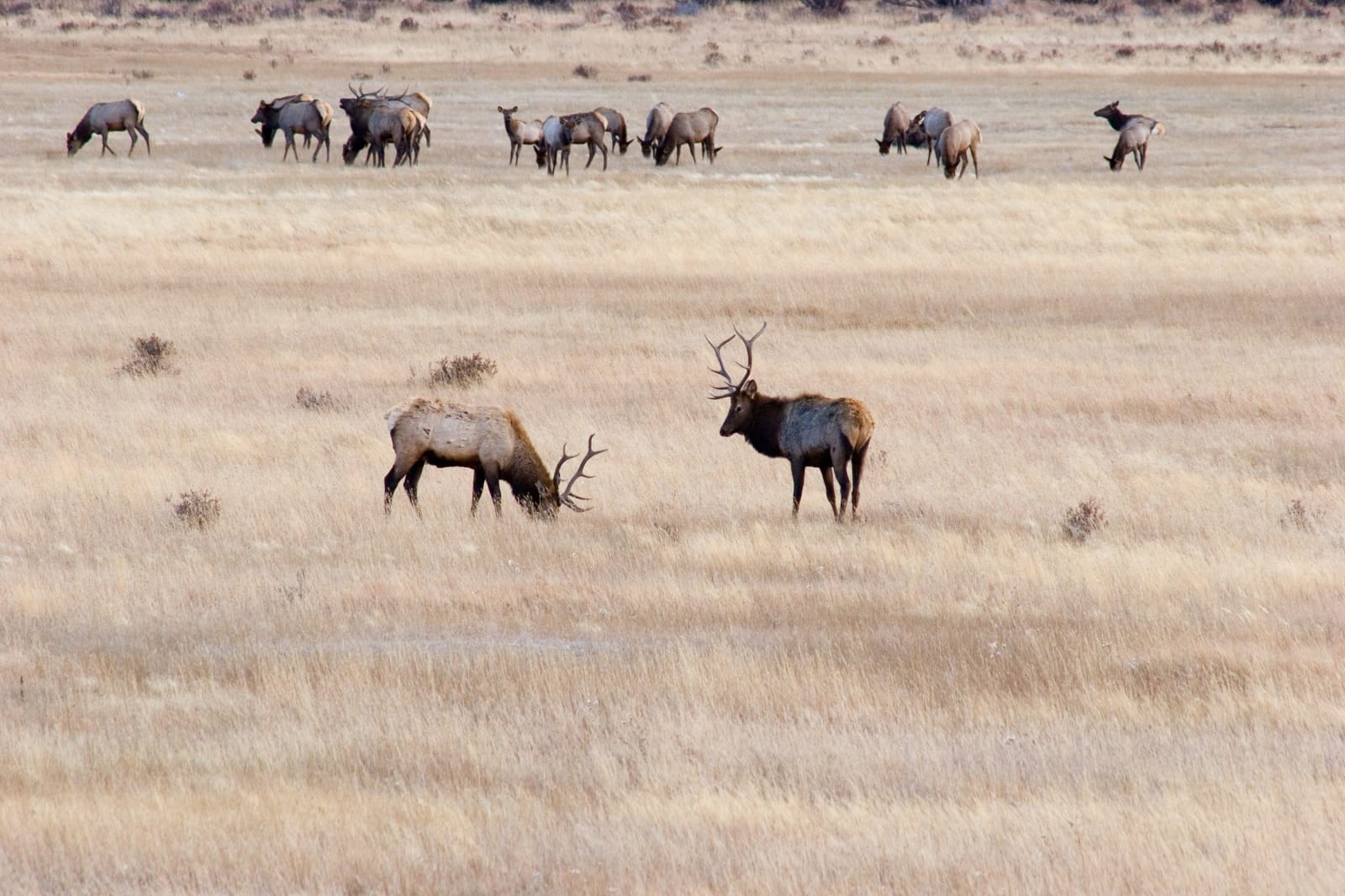
Elk are the first animal most people see in Rocky Mountain National Park, grazing the meadows of Moraine Park and Horseshoe Park or crossing the golf course in Estes Park in the autumn rut. It is easy to assume they have always been there. They have not. By the 1870s heavy, unregulated hunting had eliminated elk from the Estes Valley altogether.
The restocking
The animals came back by design. In 1913 and 1914, two years before the park existed, local boosters and the Forest Service brought elk from the Yellowstone area and released them in the Estes Valley. Accounts of how many disagree, from about two dozen to forty-nine. When Congress established Rocky Mountain National Park on January 26, 1915, those elk had a refuge.
What they did not have was anything to fear. Settlers had killed off the region's wolves and grizzlies, and with hunting barred in the park and no large predators left, the herd grew. By the 1940s rangers judged that it was eating the meadows bare. Beginning in 1944 the park culled elk, shooting animals on its winter range in campaigns through the early 1950s, and removed others alive.
Letting nature take its course
In the late 1960s, under public pressure and a new philosophy in the Park Service, Rocky Mountain stopped. From 1969 the policy was natural regulation: leave the elk alone and let the population find its own level. It found a high one. By the early 2000s some 3,000 elk lived in the park and the Estes Valley, many of them year-round town residents that hardly migrated at all.
The damage showed in the willows and aspen of the winter range, browsed down to stunted shrubs along streams where young trees should have been growing. Research begun in 1994 concluded that the winter range was out of balance and would stay that way without intervention.
The plan of 2008
The park's Elk and Vegetation Management Plan, adopted in 2008, set a ceiling of about 800 elk wintering in the park. It allowed culling by park staff and qualified volunteers working under them, fencing of the most damaged willow and aspen stands so they could regrow, and replanting. The idea of bringing back wolves was raised in public comment and set aside; the park argued that it was too small and too hemmed in by towns for wolves to do the job they had done in Yellowstone.
The culling turned out to be needed only briefly. Since 2011 winter counts have stayed at or below the ceiling, and the exclosure fences around willow and aspen stands in the park's meadows now do most of the work. Chronic wasting disease, a fatal prion illness of deer and elk, is watched for across the herd.
The wolves after all
The wolves came back anyway, by a different road. In November 2020 Colorado voters approved a measure requiring the state to reintroduce gray wolves west of the Continental Divide, and in December 2023 the first animals were released in Grand County, on the far side of the mountains from Estes Park. Whether any of them, or their offspring, take up the work of moving the park's elk around is a question the next few winters will answer.