In the fall of 1868, St. Landry Parish had two political newspapers and a presidential election coming. The Opelousas Courier spoke for the Democrats. The St. Landry Progress spoke for the Republicans, who needed Black voters, and it was edited by Emerson Bentley, an eighteen-year-old from Ohio who also taught at the Freedmen's Bureau school in Opelousas, with a French editor, C. E. Durand. Early in September Bentley found a note on the schoolhouse door: a coffin, a skull and a bloody dagger, signed "E. B. Beware! KKK."
The beating
On September 13 the Republicans marched to a meeting in Washington while armed men of the Seymour Knights, the local branch of the Knights of the White Camellia, lined the streets. One Democratic editor put their number at more than 3,000, in a parish with 13,776 white residents. A rifle went off by accident, and both parties agreed to a truce. Bentley's printed account of the day, which portrayed the Democrats as intimidators, was read as a breach of it. On September 28 John Williams, James R. Dickson and the constable Sebastian May came to his school, made him sign a retraction, and Dickson caned him in front of his pupils. In his affidavit Bentley counted about 25 blows. The children ran out saying their teacher was dead.
Counting the dead
That day armed Black men gathered near Opelousas, at Hilaire Paillet's place, and were met by mounted white men. The U.S. Army officer sent to investigate, Lt. J. M. Lee, reported that 14 or 15 freedmen captured there were taken from the jail about September 29 and killed. Later historians write that 27 of 29 prisoners were executed. Lee judged the killings "designedly, deliberately, and secretly" done, and counted at least 2,000 armed white men in Opelousas. Durand was taken out of town and murdered, and the Progress's printing materials were destroyed on September 29.
The totals have never been settled. On October 8 Lee wrote that the freedmen killed could safely be put at 25, against two white dead. Some observers at the time said about 30 in all. Republicans claimed 200 to 300, and historians now give figures from 150 to 300, with 200 and 250 the most often repeated. Whatever the figure, it is counted among the deadliest massacres of Reconstruction in Louisiana.
The empty column
On Election Day, November 3, Ulysses S. Grant won the presidency, and St. Landry Parish counted no Republican votes at all. A registration supervisor later wrote that no man could have voted any other ticket "and not been killed inside of twenty-four hours." The historian Matthew Christensen writes that the parish party had no organization for four years and no Republican paper until 1876. Bentley had left for New Orleans by steamboat about ten days after the beating.
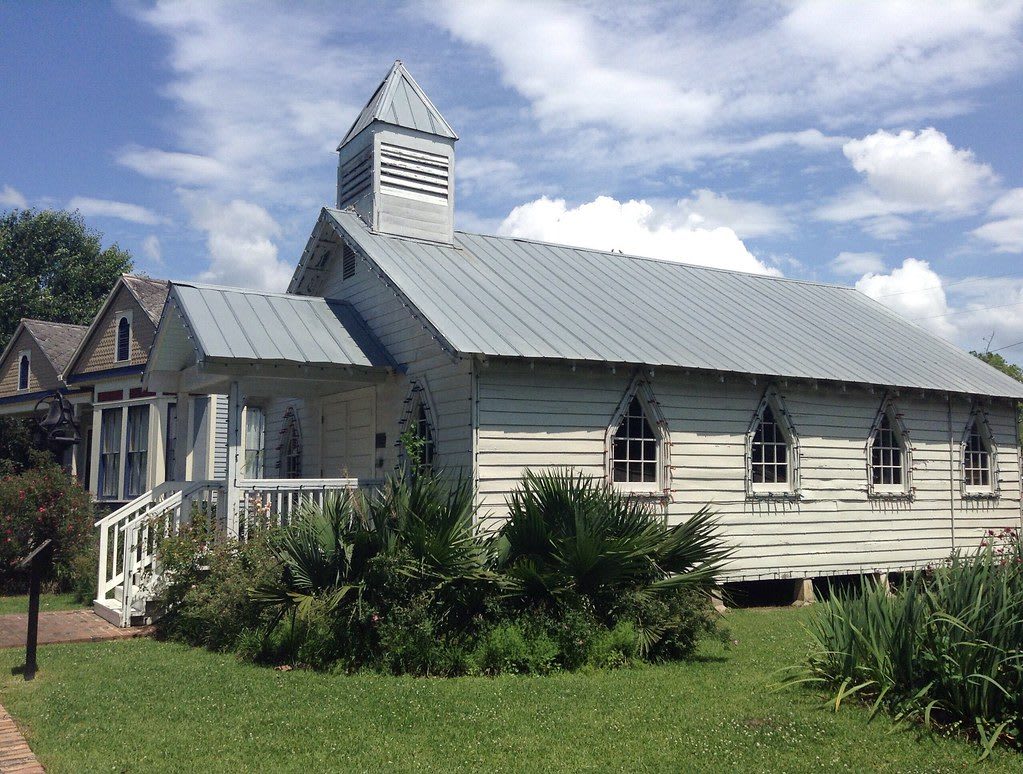
Le Vieux Village in Opelousas is a heritage park and visitor center whose grounds hold an old schoolhouse and a Methodist church. It is a quiet place to stand in the town where Bentley taught, and where the count of that autumn was never finished.