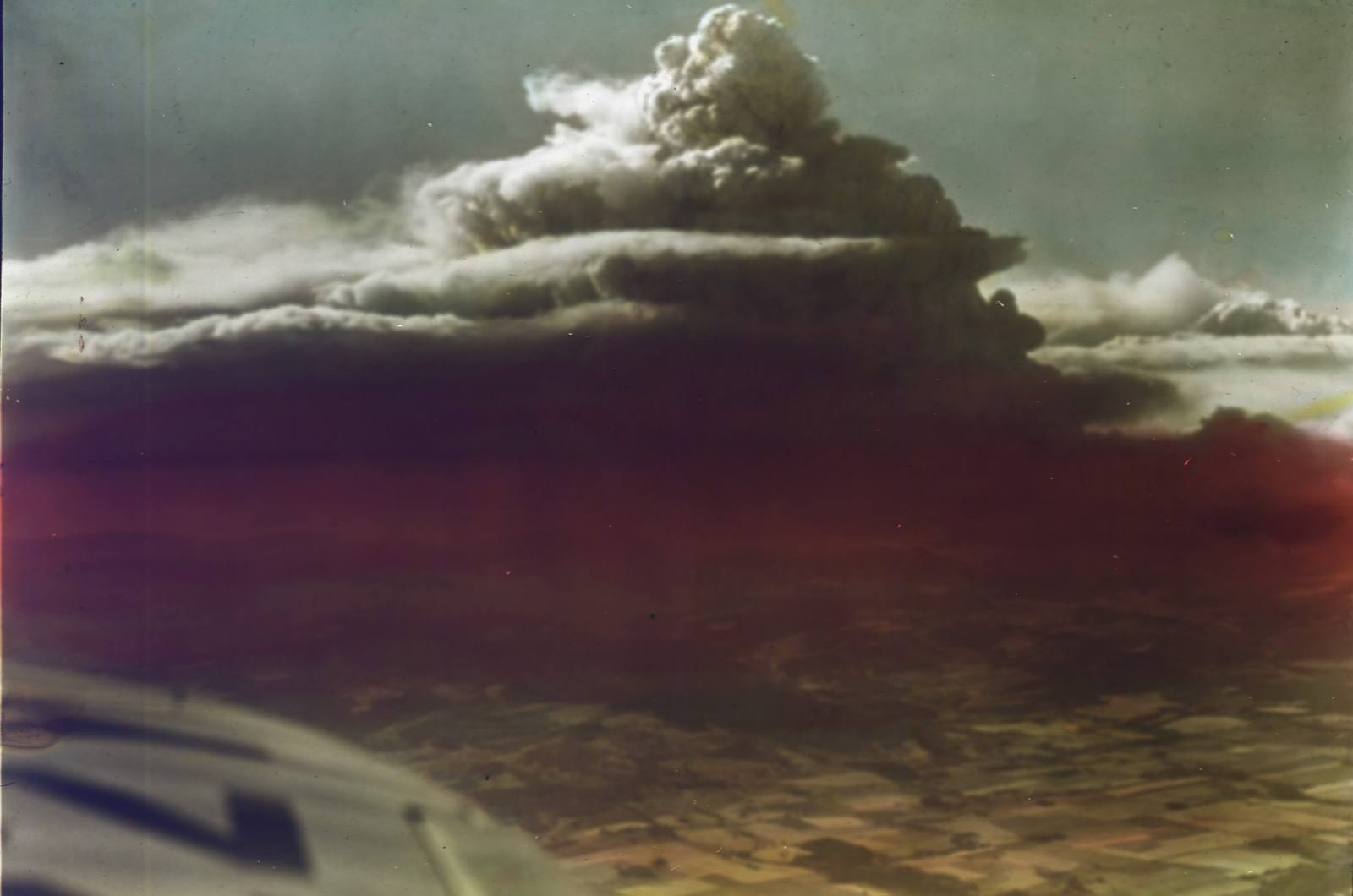
Highway 6 climbs west from Forest Grove over the Coast Range to Tillamook through a forest that looks old enough. Very little of it is. Within living memory this was a gray waste of standing dead snags to the horizon, and the trees that cover it now were planted by hand.
Noon, August 14, 1933
The summer of 1933 was dry, and on August 14 the temperature in the woods neared a hundred degrees with the humidity around twenty percent. About noon, at a logging operation on the slopes above the North Fork of Gales Creek, west of Forest Grove, fire got into the logging slash. Within an hour sixty acres were burning. The logging operation itself was blamed for the start.
For ten days crews held it to about forty thousand acres, and it seemed it might be brought under control. Then, on the evening of August 24, a hot, dry east wind came down over the Coast Range. In twenty hours the fire ran across some 240,000 acres of mostly virgin Douglas fir, one of the fastest-spreading forest fires recorded in the twentieth century, and debris from it fell on ships at sea. It crept on until rains in early September finally stopped it.
Every six years
Salvage loggers moved in to take what they could, and the snags and slash left behind primed the ground for the next fire. In 1939 the burn caught again, and about 209,000 acres burned, most of it the same ground. In 1945 two fires burned some 182,000 acres, nearly all of it already burned at least once. In 1951 two more fires burned 32,700 acres. The first fire had spared enough seed cones to start a new forest; the second burned the seedlings that had come up from them. Altogether the fires blackened about 355,000 acres, some 554 square miles, and by the end of the 1940s people wondered whether trees would ever grow in the Tillamook country again.
Planting it back
Much of the burned land had passed into the hands of the counties. The state proposed a deal: the counties would deed the land to Oregon, state foresters would replant it, and when the new forest was eventually logged the counties would share in the money. Oregon voters approved a constitutional amendment allowing bonds to pay for the work, and in 1949 what was then the largest reforestation project ever undertaken began, its first plantings at a place called Owl Camp.
Forestry crews, prison inmates and volunteers planted, and helicopters dropped something like a billion Douglas fir seeds. Between 1950 and 1970 more than twenty thousand schoolchildren came up by bus to plant as well. They put in perhaps a million seedlings, a small share of the seventy-two million planted by hand in all, but for a generation of Oregonians a day on the Burn with a planting tool was a school memory that lasted.
The forest it became
In 1973 Governor Tom McCall came to Owl Camp, where the replanting had begun, and declared the work done. The Tillamook Burn would now be the Tillamook State Forest. To many Oregonians, he said, it would always be the Burn, and if the name kept reminding them to be careful with fire it would serve them beyond measure.
The forest that came back is not the one that burned. It was planted almost entirely to Douglas fir, so the mix of trees is narrower than the old forest's, and the old giants are gone for centuries. It was also always meant to be cut; the bargain with the counties depended on it, and how much to log has been argued ever since, with the timber industry and county governments on one side and conservationists on the other. The Tillamook Forest Center on Highway 6, with a replica fire lookout to climb, tells the story.