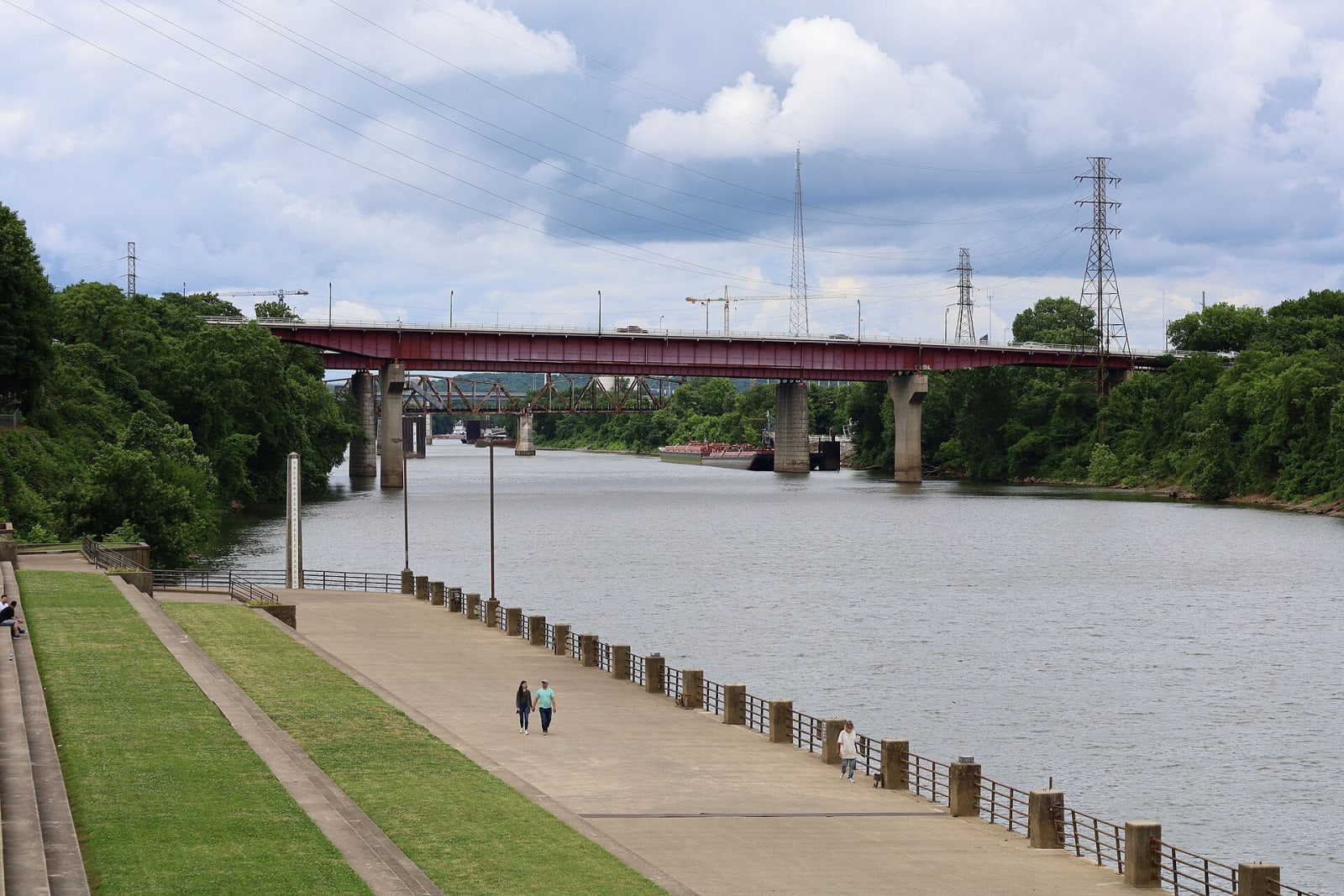
On April 30, 1892, a crowd of thousands took Ephraim Grizzard out of the Davidson County jail in Nashville, dragged him through downtown streets in daylight and hanged him from the east side of the Woodland Street Bridge over the Cumberland River. They shot his body hundreds of times. He had not been tried or convicted. He had been accused, with others, of assaulting two white sisters, Mollie and Rosina Bruce, daughters of a dead Confederate veteran, near Goodlettsville, where their widowed mother kept a tollgate, and the sisters had not positively identified him.
Henry, then Ephraim
Ephraim's brother Henry was seized first and hanged without trial near Goodlettsville; the Equal Justice Initiative records it as April 25 at Mansker's Creek. Reports that Henry confessed and named Mack Harper have never been confirmed. Ephraim was jailed in Nashville with Harper and Manuel Jones, and police released another brother, John, for lack of evidence.
On the night of April 29 about 300 white men from Goodlettsville came to the jail. Gov. John P. Buchanan arrived before 2 a.m., and shooting began soon after, with the mob firing from outside and guards from within. Reports differed on whether two white men hit, Charles Rear and N. D. Guthrie, died. Buchanan asked the crowd to let a court decide. By 5 a.m. it had gone.
The afternoon
At 2 p.m. the next day a larger crowd gathered, estimated from 6,000 to 10,000. One newspaper reported that they reached Grizzard apparently without interference from officers. After the hanging his body was carried back to Goodlettsville and burned, which the Equal Justice Initiative says was meant to terrorize Black residents. Black Nashvillians who protested were threatened, and some were forced to flee. On May 1 a Nashville paper opened a fund for the Bruce family. One paper noted the town had expected a lynching, though not so early, and reported no inquest.
What Ida B. Wells found
Ida B. Wells investigated and concluded that Grizzard had been friendly with one of the Bruce sisters and was killed for that, not for any proven assault. She noted that a white man held in the same city for raping an eight-year-old Black girl was not mobbed. The friendship rests on Wells's reporting, and no court ever tested the charge. It was one of 233 lynchings reported in Tennessee between 1877 and 1950.
Naming him
For more than a century the killings went largely unmarked. In 2017 a service was held in Fisk Memorial Chapel, and St. Anselm's Episcopal Church placed a plaque naming Ephraim, Henry and Samuel Smith of Nolensville. On June 19, 2019, We Remember Nashville and the Equal Justice Initiative placed a downtown marker for the Grizzard brothers, beside one for David Jones and Jo Reed. The Equal Justice Initiative counts six people lynched in Davidson County after Reconstruction. A suspension bridge had stood on the site from 1850 until the Confederate army destroyed it in 1862; the bridge of 1886 was replaced in 1966.
The 2017 service was held on the campus of Fisk University and Jubilee Hall.