In October 1816 Cherokee leaders approved a school on Chickamauga Creek, and the American Board of Commissioners for Foreign Missions opened it the next March. It was called Brainerd, after the eighteenth-century missionary David Brainerd. Over two decades more than 300 Cherokee boys and girls enrolled, and about 100 gained a firm command of English reading. Cherokee historians have noted that it stood apart because Cherokee families sought it out. It was the only federally funded school for Native children in Tennessee, and it opened two years before Hamilton County existed.
Catharine Brown
One of those who came was a young woman of about seventeen or eighteen, Catharine Brown. According to a memoir published in 1825 by Rufus Anderson of the mission board, she heard of the school while living some hundred miles away and asked her parents to send her. She entered on July 9, 1817, and was baptized on January 25, 1818, the first Cherokee the board's missionaries baptized. Her father took her home twice that year, planning to move west of the Mississippi, and she came back each time when the plan fell through. Her letters mention two brothers who had gone west. In 1820 she opened a school for Cherokee girls in her own homeland. She died of tuberculosis at about twenty-three.
What families objected to
Students studied reading, writing, arithmetic, grammar and geography, along with Bible lessons and hymns. Boys learned stock-raising, gardening, smithing and carpentry, and girls learned spinning and weaving. The site held boys' and girls' quarters and schoolhouses, a church, two mills and a garden, and forty ministers and teachers worked there over the years.
The school dropped its tuition of one dollar a week in 1819 to draw students, and it ran on gifts and a federal grant of $1,000 to $2,000 a year. President James Monroe stopped in May 1819 and gave $1,000. Older pupils taught younger ones under the Lancastrian plan, and discipline included corporal punishment. Many parents objected to the beatings and to the field work required of boys, which they considered unsuitable for men. The missionaries favored bicultural students, and enrollment of full-blood children fell by a third between 1821 and 1825. In 1824 Cherokee leaders asked the National Council to bar further hiring by the superintendent, William Chamberlain, and the Council agreed.
What is left
A fire in March 1830 destroyed much of the central mission. Through the 1830s Brainerd sheltered missionaries driven from stations in Georgia, and by 1837 its church counted a record 110 members. Removal ended it. The last services were held in August 1838.
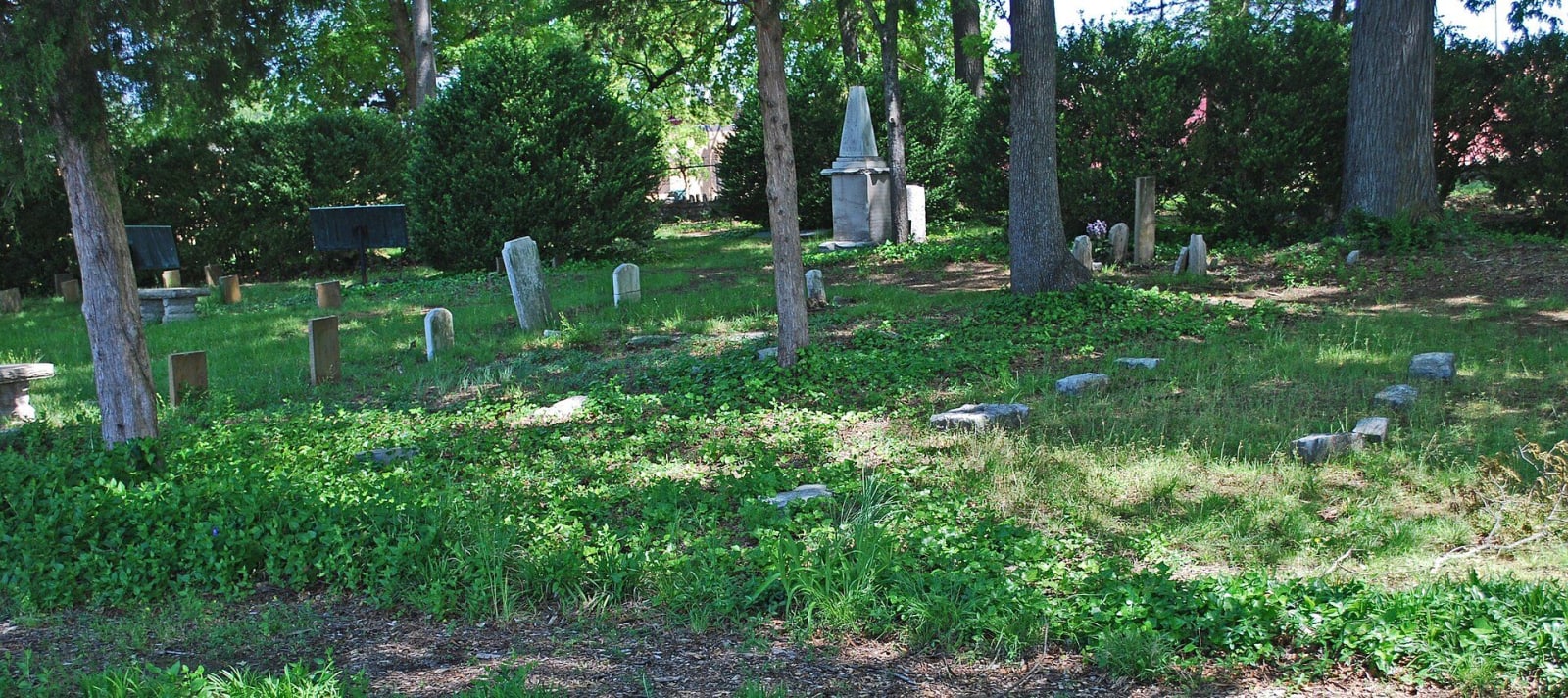
The site later became the Eastgate shopping area. What remains is a one-acre cemetery of about sixty graves, most of them missionary workers, cared for by the Daughters of the American Revolution and listed on the National Register in 1979. In 2022 the Interior Department's report on federal Indian boarding schools included Brainerd among the schools it identified.
The council ground where Cherokee leaders fought the removal is at Red Clay State Historic Park, and the 1838 departure by water is told at Ross's Landing.